Imagine two employees.
The first quietly completes all their work by 3 p.m.
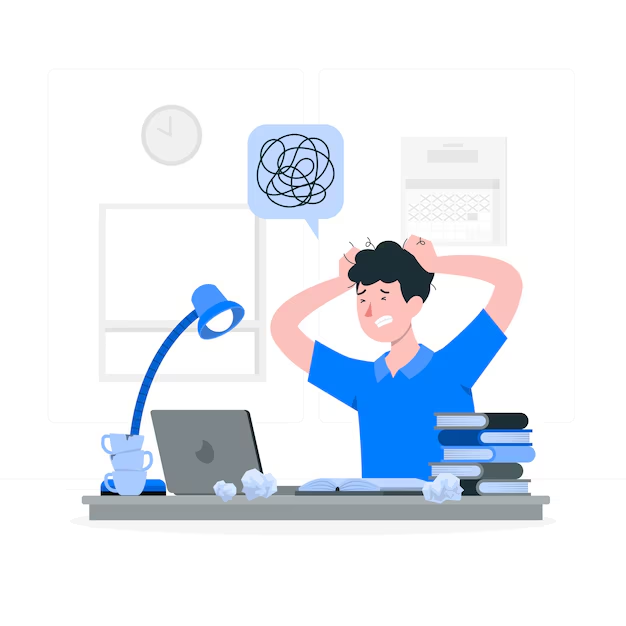
The second sends emails at 11:47 p.m., attends every meeting, constantly updates everyone about how overwhelmed they are, and somehow manages to look stressed even while opening a PDF.
Guess which one often gets praised more.
Welcome to The Productivity Theater Phenomenon.
In modern workplaces, schools, and even social media, productivity is no longer just about results.
It’s increasingly about appearances.
Looking productive.
Sounding productive.
Performing productivity.
And sometimes, performing productivity becomes more important than actual productivity itself.
Psychologists and organizational researchers have been studying variations of The Productivity Theater Phenomenon for years, although the rise of remote work, hustle culture, and personal branding has made it more visible than ever.
Let’s examine The Productivity Theater Phenomenon and why so many intelligent people accidentally get trapped in it.

1. Visibility Often Gets Rewarded More Than Results
One reason The Productivity Theater Phenomenon exists is surprisingly simple:
People can only evaluate what they can see.
Your manager may not know how efficiently you solved a problem.
But they notice:
- Late-night emails
- Long meetings
- Constant status updates
- Busy calendars
Psychologists call this a visibility bias.
Visible effort often receives more recognition than invisible effectiveness.
As a result, many people unconsciously learn that appearing busy is safer than quietly being efficient.
This is one of the foundations of The Productivity Theater Phenomenon.
2. Presenteeism Replaced Productivity
Most people know about absenteeism.
Fewer know about presenteeism.
Presenteeism occurs when employees show up physically or digitally but operate far below their actual capacity.
They’re present.
But not necessarily productive.
A major driver of The Productivity Theater Phenomenon is the belief that being available constantly equals being valuable.
People stay online longer.
Respond instantly.
Attend unnecessary meetings.
Remain visible.
Meanwhile, meaningful work often gets delayed.
3. Social Media Turned Productivity Into Performance
Before social media, most productivity happened privately.
Today productivity has become content.
Morning routines.
Reading trackers.
Study setups.
Habit apps.
Workstation aesthetics.
Productivity journals.
Suddenly productivity is not just something people do.
It’s something people display.
The rise of personal branding has intensified The Productivity Theater Phenomenon by rewarding the appearance of discipline and achievement.
Sometimes the performance receives more attention than the actual outcome.
4. Being Busy Feels Important
Psychologists have observed something fascinating:
People often associate busyness with status.
If someone says:
“I’m incredibly busy.”
Many people interpret it as:
“I’m important.”
This psychological shortcut fuels The Productivity Theater Phenomenon.
Busyness becomes a signal.
A badge.
A form of social currency.
The problem is that busyness and effectiveness are not the same thing.
A person can be overwhelmed and unproductive simultaneously.
5. Meetings Create the Illusion of Progress
Few things demonstrate The Productivity Theater Phenomenon better than excessive meetings.
Meetings feel productive because people are visibly working together.
Ideas are discussed.
Slides are presented.
Updates are shared.
Yet psychologists studying organizational behavior consistently find that excessive meetings often reduce deep work and concentration.
The appearance of activity can easily be mistaken for actual progress.
Sometimes the most productive employee is the one quietly working instead of attending their seventh meeting of the day.
6. Our Brains Love Measurable Activity
Humans prefer visible progress.
Crossing tasks off a list feels rewarding.
Answering emails feels productive.
Updating spreadsheets feels productive.
Unfortunately, many important tasks are difficult to measure.
Strategic thinking.
Creative problem-solving.
Learning.
Planning.
Reflection.
These activities often generate enormous value while looking inactive from the outside.
This mismatch helps sustain The Productivity Theater Phenomenon because visible work feels easier to evaluate than meaningful work.
7. Productivity Theater Creates Burnout
One of the most damaging consequences of The Productivity Theater Phenomenon is burnout.
When employees feel pressure to constantly demonstrate effort, work expands beyond necessity.
People stay online longer.
Answer messages faster.
Avoid breaks.
Perform urgency.
Eventually, exhaustion follows.
Ironically, organizations often create lower productivity by rewarding visible busyness instead of actual effectiveness.
The performance becomes more important than the result.
8. The Most Productive People Often Look Less Productive
This may be the most uncomfortable truth about The Productivity Theater Phenomenon.
Highly productive people frequently appear less busy.
They automate.
Delegate.
Prioritize.
Say no.
Protect focus.
Avoid unnecessary work.
From the outside, this can sometimes look like they’re doing less.
In reality, they’re accomplishing more.
Psychologically, we often confuse motion with progress.
But they are not the same thing.
Final Thoughts
The reason The Productivity Theater Phenomenon has become so common is that modern culture rewards visibility.
Being seen working often feels safer than quietly producing results.
The problem is that performing productivity consumes time, energy, and attention that could be spent on actual work.
The next time you feel pressure to send an unnecessary update, stay online longer than needed, or make yourself look busy, pause for a moment.
Ask yourself:
Am I being productive?
Or am I performing productivity?
Because one creates value.
The other creates an audience.
And understanding the difference may be one of the most important workplace skills of the modern era.
The growing influence of The Productivity Theater Phenomenon reminds us that work is not a performance.
Or at least, it shouldn’t be.
Results matter.
Learning matters.
Impact matters.
Looking busy is optional.
And psychologically speaking, that distinction matters far more than most people realize.
Subscribe to PsychUniverse
Get the latest updates and insights.
Join 3,084 other subscribers!
Niwlikar, B. A. (2026, June 9). 8 Eye-Opening Signs of The Productivity Theater Phenomenon: Why Looking Busy Has Replaced Getting Things Done. PsychUniverse. https://psychuniverse.com/the-productivity-theater-phenomenon/