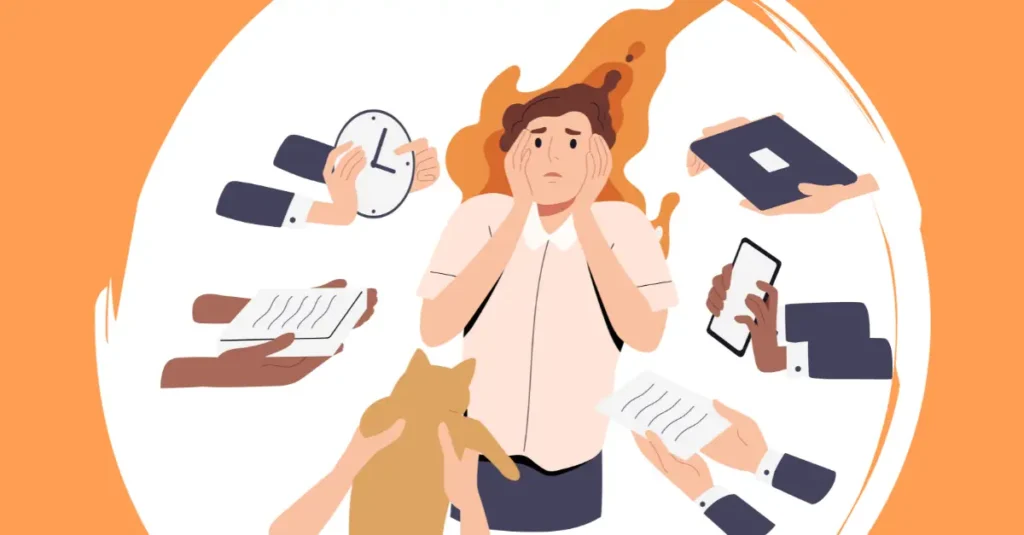
Toxic Guilt: When Feeling Bad Doesn’t Make You a Better Person
Have you ever apologized…
Only to keep apologizing to yourself for weeks?
Or replayed a mistake so many times that your brain started treating it like your full-time job?
Maybe someone has already forgiven you.
They’ve moved on.
Life has moved on.
Even your dog has moved on.
But your brain?
Absolutely not.
It has scheduled another 2 a.m. screening of “Every Embarrassing Thing You’ve Ever Done.”
Welcome to toxic guilt.
Unlike healthy guilt which nudges you to make things right, toxic guilt doesn’t know when to stop.
It doesn’t just remind you that you made a mistake.
It quietly convinces you that you are the mistake.
And that’s a huge psychological difference.
If you read our previous article on What Is Guilt, you’ll remember that guilt evolved to help humans cooperate.
It encourages us to apologize.
Repair relationships.
Learn from our actions.
Then it’s supposed to leave.
Toxic guilt missed that last memo.
Instead of helping you grow…
It keeps dragging you back to the same moment, over and over again.

What Is Toxic Guilt?
The simplest definition is this:
Toxic guilt is persistent, excessive, or misplaced guilt that continues long after you’ve taken responsibility—or even when you weren’t responsible in the first place.
Read that again.
That’s what makes it different.
Healthy guilt says,
“I should fix this.”
Toxic guilt says,
“I should keep suffering.”
Healthy guilt ends with learning.
Toxic guilt ends with self-punishment.
Understanding Toxic Guilt means understanding that feeling worse doesn’t automatically make you a better person.
Sometimes, it just makes you feel worse.
Healthy Guilt Has a Job. Toxic Guilt Doesn’t Know When to Go Home.
Imagine your kitchen smoke alarm.
Its job is simple.
It makes a loud noise when something is burning.
Once the fire is out…
The alarm stops.
Now imagine the alarm continues screaming for the next six months.
Every day.
Every night.
Even though there’s no smoke anymore.
Helpful?
Not really.
That’s exactly how toxic guilt works.
Your emotional alarm keeps ringing long after the danger has passed.
You apologized.
You learned.
You changed.
Yet your mind keeps saying,
“Yes… but remember what you did?”
Why Does Toxic Guilt Happen?
Psychologists believe toxic guilt rarely appears out of nowhere.
It’s usually shaped by the way we think, the way we were raised, and the experiences we’ve had.
Let’s look at some of the most common reasons.
1. You Were Taught That Making Mistakes Makes You “Bad”
Some children grow up hearing things like:
“Good children don’t behave like that.”
“You’ve embarrassed the family.”
“Look what you’ve done.”
“You’re so selfish.”
Notice something?
The focus isn’t always on the behaviour.
Sometimes it’s on the person.
Instead of hearing,
“That choice wasn’t okay.”
They hear,
“You aren’t okay.”
Over time, mistakes stop feeling like something you did.
They start feeling like something you are.
As adults, even tiny errors can trigger overwhelming toxic guilt because the brain has learned to connect mistakes with identity.
2. You’re a Perfectionist
Perfectionism sounds impressive.
Until you actually live with it.
Perfectionists often believe:
“If I make one mistake, I’ve failed.”
“If someone is disappointed in me, I’ve done something terrible.”
“If I don’t do everything perfectly, I’m letting everyone down.”
When perfection is the expectation…
Guilt becomes the default emotion.
No matter how much you achieve, your brain keeps searching for the one thing you could’ve done better.
That’s why perfectionism and toxic guilt often go hand in hand.
3. You Take Responsibility for Things You Can’t Control
Here’s a question.
Have you ever caught yourself thinking:
“If only I had said something…”
“Maybe it’s my fault…”
“I should’ve known…”
Psychologists call this over-responsibility.
It’s the tendency to believe you’re responsible for events that were never fully under your control.
This thinking pattern is common in anxiety disorders, OCD, trauma, and people-pleasing personalities.
The brain keeps asking,
“What could I have done differently?”
Even when the honest answer is:
“Probably nothing.”
Yet toxic guilt keeps insisting otherwise.
A Question Worth Asking Yourself
The next time guilt shows up, don’t immediately ask,
“Why am I such a bad person?”
Instead ask,
“Is this guilt asking me to grow… or simply asking me to suffer?”
Because those are two very different things.
And learning to tell them apart might be one of the healthiest psychological skills you’ll ever develop.
Signs You’re Experiencing Toxic Guilt
Not all guilt is unhealthy.
So how do you know when guilt has crossed the line?
Psychologists don’t diagnose toxic guilt as a separate mental disorder, but they recognize it as a pattern that can significantly affect emotional well-being.
Here are some common signs.
You Apologize… Constantly
You apologize for asking questions.
You apologize for needing help.
You apologize when someone bumps into you.
At this point, “sorry” has become punctuation.
While politeness is a good thing, constantly apologizing may suggest you’re carrying responsibility that doesn’t belong to you.
You Replay Mistakes on Repeat
Everyone reflects on past mistakes.
People experiencing toxic guilt often relive them.
Not once.
Not twice.
Hundreds of times.
Psychologists call this rumination, the repetitive cycle of thinking about the same distressing event without moving toward a solution.
Rumination doesn’t help you learn.
It keeps reopening emotional wounds that have already had a chance to heal.
You Find It Impossible to Forgive Yourself
Other people have moved on.
The situation is over.
Yet you’re still mentally sentencing yourself.
You keep thinking:
“I don’t deserve to feel happy.”
“I haven’t suffered enough.”
“If I stop feeling guilty, it means I don’t care.”
This is one of the biggest traps of toxic guilt.
Many people believe that continuing to feel guilty somehow proves they’re a good person.
In reality, endless self-punishment rarely benefits anyone.
You Feel Responsible for Everyone’s Happiness
Someone seems upset?
You assume it’s because of you.
A friend is unusually quiet?
You wonder what you did wrong.
Your partner has had a stressful day at work?
Somehow your brain joins the investigation.
This is often linked to over-responsibility, where people overestimate their role in other people’s emotions and experiences.
The truth is simple:
You can influence people.
You cannot control them.
The Thinking Traps That Keep Toxic Guilt Alive
One reason toxic guilt is so persistent is because it’s often fueled by cognitive distortions, automatic thinking patterns that make situations seem worse than they really are.
Some of the most common include:
Personalization
Believing everything is somehow your fault.
“They’re upset because of me.”
Even when there are countless other explanations.
Catastrophizing
Turning one mistake into a disaster.
“I forgot to reply to one message. I’ve ruined the friendship forever.”
Black-and-White Thinking
Seeing yourself as either completely good or completely bad.
“If I made a mistake, I must be a terrible person.”
Real life isn’t that extreme.
Good people make mistakes.
Kind people lose their temper.
Responsible people forget things.
Making a mistake doesn’t erase your entire character.
Here’s the Truth Psychology Wants You to Know
One of the most important lessons in psychology is this:
Punishing yourself isn’t the same as taking responsibility.
Read that again.
Many people confuse accountability with self-criticism.
But they’re not the same.
Accountability sounds like this:
“I made a mistake. I’ll apologise, learn from it, and try to do better.”
Self-punishment sounds like this:
“I made a mistake. Therefore, I deserve to keep feeling miserable.”
Only one of those leads to growth.
The other simply keeps you stuck.
How to Break the Cycle of Toxic Guilt
Breaking free from toxic guilt doesn’t mean pretending your mistakes never happened.
It means responding to them in a healthier way.
Here are a few psychology-backed strategies:
1. Ask Yourself: “Am I Actually Responsible?”
Separate responsibility from blame.
Not everything that goes wrong is yours to carry.
2. Repair What You Can
If you’ve hurt someone, apologize sincerely.
If possible, make amends.
Then allow yourself to move forward.
Healthy guilt inspires action.
Toxic guilt demands endless suffering.
3. Challenge Your Inner Critic
Notice the language you use with yourself.
Would you speak to a friend the same way?
If not, why is it acceptable when directed at yourself?
4. Practice Self-Compassion
Research by psychologist Dr. Kristin Neff shows that self-compassion doesn’t make people irresponsible.
It actually makes them more willing to acknowledge mistakes and grow from them.
Treat yourself with the same kindness you’d offer someone you care about.
Final Thoughts
Toxic guilt has a way of disguising itself as responsibility.
It whispers,
“If you keep feeling bad, it means you care.”
“If you forgive yourself too soon, you’re letting yourself off the hook.”
But psychology tells us something very different.
Feeling guilty forever doesn’t undo what happened.
It doesn’t erase the mistake.
And it doesn’t make you a better person.
Taking responsibility does.
Learning from the experience does.
Making amends where possible does.
Real growth isn’t measured by how long you punish yourself.
It’s measured by what you choose to do after you’ve made a mistake.
So the next time guilt shows up, don’t ask yourself,
“How long do I deserve to suffer?”
Ask yourself,
“What is this guilt trying to teach me?”
If the answer leads to accountability, empathy, and positive change, your guilt has served its purpose.
If the answer is nothing more than endless self-blame and emotional exhaustion, it may be time to stop carrying a burden that no longer belongs to you.
You are allowed to learn from your mistakes.
You are allowed to grow beyond them.
And most importantly, you are allowed to forgive yourself.
Subscribe to PsychUniverse
Get the latest updates and insights.
Join 3,088 other subscribers!
Niwlikar, B. A. (2026, July 25). Toxic Guilt: When Feeling Bad Doesn’t Make You a Better Person. PsychUniverse. https://psychuniverse.com/toxic-guilt/