For most of our lives, promotions are sold to us like the happy ending of a movie.
Work hard.
Stay late.
Meet your targets.
Get promoted.
Celebrate.
Live happily ever after.
Roll credits.
Unfortunately, real life has a habit of ignoring motivational posters.
Because while promotions absolutely can bring excitement, achievement, and financial rewards, psychologists have noticed something interesting:
Why Promotions Sometimes Make People Miserable is a surprisingly common workplace phenomenon.
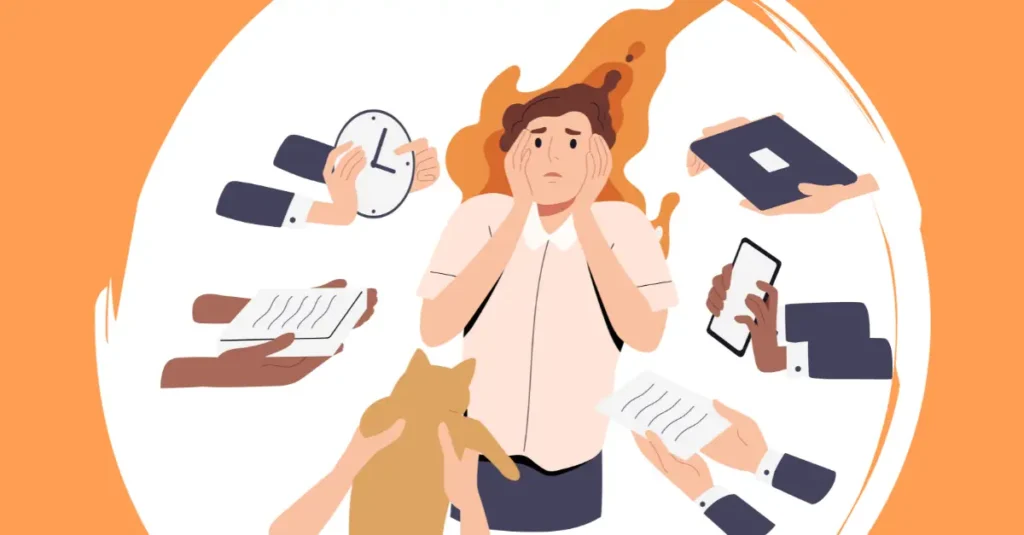
In fact, many people spend years chasing a promotion only to discover that the thing they wanted desperately has somehow made them more stressed, more anxious, and occasionally more confused than before.
Let’s unpack Why Promotions Sometimes Make People Miserable and what psychology can teach us about success, identity, and expectations.

1. You Didn’t Just Get a New Job. You Got a New Identity.
One reason Why Promotions Sometimes Make People Miserable is that promotions are rarely just about responsibilities.
They’re about identity.
Yesterday, you were a team member.
Today, you’re the supervisor.
Yesterday, you asked questions.
Today, people expect answers.
Yesterday, mistakes felt manageable.
Today, mistakes feel visible.
Psychologists often describe major role transitions as identity shifts.
The challenge isn’t learning new tasks.
The challenge is learning who you are in the new role.
That adjustment takes time.
Far more time than most people expect.
2. The Peter Principle Might Be Messing With You
One famous workplace theory is called the Peter Principle.
It suggests that people are often promoted based on their success in their current role until they reach a position where the skills required are completely different.
Think about it.
Being a great salesperson does not automatically make someone a great sales manager.
Being a brilliant therapist does not automatically make someone a great clinic director.
Being a strong employee does not automatically make someone a strong leader.
This helps explain Why Promotions Sometimes Make People Miserable.
The promotion often rewards one skill set while demanding another.
Suddenly competence disappears.
And confidence goes with it.
3. Imposter Syndrome Loves Promotions
If Imposter Syndrome had a favorite activity, it would probably be workplace promotions.
The moment people receive more responsibility, many begin questioning whether they deserve it.
Was I lucky?
Did they make a mistake?
Am I secretly underqualified?
Psychologists call this imposter syndrome.
And it’s one of the biggest explanations for Why Promotions Sometimes Make People Miserable.
Ironically, highly capable people often experience it most strongly.
Because they are aware of how much they still don’t know.
The result?
Achievement arrives.
Confidence doesn’t.
4. You Lose More Than You Gain
Promotions come with benefits.
But they also come with losses.
And humans are surprisingly sensitive to loss.
A promoted employee may lose:
- Close peer relationships
- Informal workplace interactions
- Familiar routines
- Comfort and predictability
The colleague who used to complain with you at lunch now reports to you.
The team dynamic changes.
The social environment shifts.
This hidden loss is another reason Why Promotions Sometimes Make People Miserable.
People prepare for the gains.
Few prepare for the losses.
5. Expectations Suddenly Explode
A fascinating psychological phenomenon occurs after promotions.
Expectations increase faster than confidence.
You receive more responsibility.
More visibility.
More accountability.
More pressure.
Yet internally you may feel exactly the same as before.
This creates a mismatch.
Everyone sees a leader.
You still feel like yourself.
This disconnect contributes heavily to Why Promotions Sometimes Make People Miserable.
Because external expectations often change overnight.
Internal adjustment does not.
6. Success Doesn’t Feel Like We Imagine
Psychologists call this affective forecasting.
Humans are surprisingly bad at predicting how future achievements will make them feel.
People imagine:
“When I get promoted, I’ll finally feel successful.”
Then the promotion happens.
And life continues.
Emails still arrive.
Stress still exists.
Laundry still needs to be done.
The brain quickly adapts to positive changes.
This process is called hedonic adaptation.
It’s another major reason Why Promotions Sometimes Make People Miserable.
The emotional high often fades much faster than expected.
7. Leadership Is Emotionally Exhausting
Nobody really tells people this.
Leadership requires emotional labor.
Managing deadlines is one thing.
Managing people is another.
Leaders absorb conflict.
Handle complaints.
Deliver difficult feedback.
Manage emotions.
Navigate politics.
Carry responsibility for outcomes they cannot completely control.
This emotional burden is often the final piece explaining Why Promotions Sometimes Make People Miserable.
The promotion may come with more authority.
But it also comes with more psychological weight.
Final Thoughts
The reason Why Promotions Sometimes Make People Miserable surprises so many people is because success is usually presented as a destination.
Psychology suggests something different.
Success is often a transition.
And transitions are messy.
They involve uncertainty.
Identity shifts.
Learning curves.
Unexpected emotions.
None of this means promotions are bad.
Far from it.
Most people eventually adapt and grow into their new roles.
But understanding Why Promotions Sometimes Make People Miserable can help normalize an experience that many professionals quietly struggle with.
So if you’ve recently been promoted and find yourself feeling stressed, overwhelmed, or strangely dissatisfied, remember this:
You are not failing at success.
You are adjusting to it.
And psychologically speaking, those are two very different things.
The next time someone congratulates you on a promotion, smile and say thank you.
Then privately remember:
Getting the role was the easy part.
Becoming the person who feels comfortable in it takes a little longer.
Subscribe to PsychUniverse
Get the latest updates and insights.
Join 3,084 other subscribers!
Niwlikar, B. A. (2026, June 8). 7 Shocking Reasons Why Promotions Sometimes Make People Miserable: The Hidden Psychology Nobody Talks About. PsychUniverse. https://psychuniverse.com/why-promotions-sometimes-make-people-miserable/