What Is Guilt? The Surprising Psychology Behind the Emotion That Keeps You Up at Night
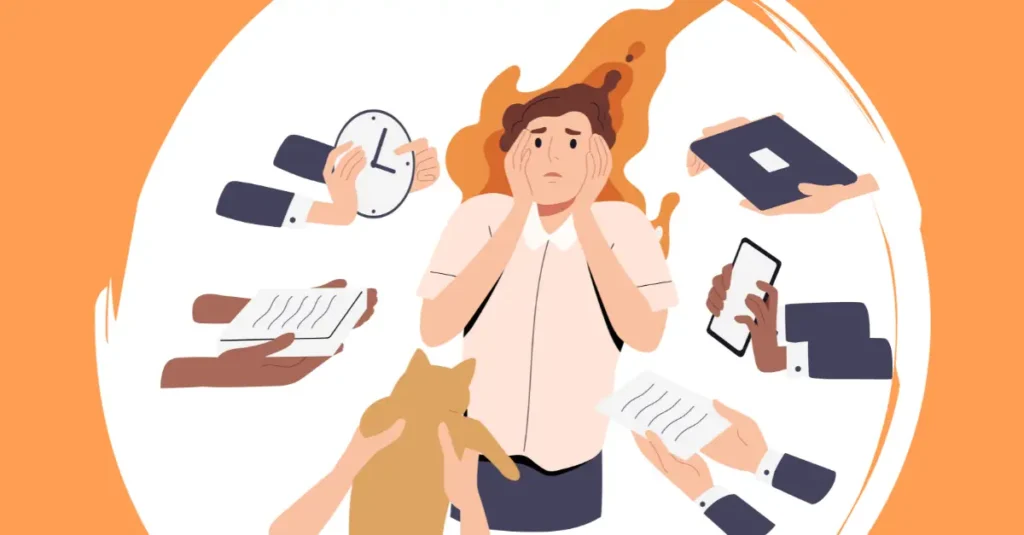
It’s 2:17 a.m.
You’re trying to sleep.
Instead, your brain has decided it’s the perfect time to replay that one conversation from three years ago.
“Why did I say that?”
“I shouldn’t have reacted like that.”
“I should’ve called them back.”
“Maybe I hurt them more than I realized.”
Amazing, isn’t it?
Your brain could’ve used this time to remember where you left your house keys…
Or your Wi-Fi password…
But no.
It chose that one embarrassing mistake from 2019.
Welcome to guilt.
One of the few emotions that can make you feel bad about something that isn’t even happening anymore.
But here’s the interesting part.
As uncomfortable as guilt feels, psychologists don’t actually consider it a “bad” emotion.
In fact, without guilt, human societies probably wouldn’t function very well at all.
It might be one of the reasons people apologize.
Return lost wallets.
Keep promises.
Or think twice before hurting someone they care about.
So before we start blaming guilt for ruining our sleep…
Let’s understand what it actually is.
Because the answer to What Is Guilt is far more fascinating than simply “feeling bad.”

What Is Guilt?
The simplest answer is this:
Guilt is the emotional discomfort we experience when we believe we’ve violated our own moral values or caused harm to someone else.
Notice something important.
Guilt isn’t just about breaking rules.
It’s about believing you did something wrong.
Maybe you lied.
Forgot someone’s birthday.
Lost your temper.
Broke a promise.
Ignored someone who needed help.
Whether the mistake was big or small, guilt acts like your brain’s internal alarm system.
It says,
“Something about this doesn’t sit right with your values.”
That’s why understanding What Is Guilt is about much more than understanding an emotion.
It’s about understanding how humans maintain relationships, trust, and cooperation.
Why Do We Even Feel Guilt?
At first glance, guilt seems like terrible design.
Why would evolution give us an emotion that makes us replay mistakes over and over again?
Wouldn’t life be easier without it?
Probably.
But it also would’ve been much harder for humans to survive together.
Psychologists and evolutionary scientists believe guilt developed because humans are social creatures.
Thousands of years ago, surviving alone was almost impossible.
People depended on families, communities, and tribes.
If someone constantly cheated, lied, or ignored everyone else…
They risked being excluded from the group.
And in those days, exclusion could mean death.
So our brains evolved emotions that encouraged cooperation.
Guilt became one of them.
Instead of waiting for society to punish us…
Our own conscience often does it first.
That’s why What Is Guilt isn’t simply about sadness.
It’s a social emotion.
It encourages empathy.
Repair.
Responsibility.
And healthier relationships.
The Psychology Behind Guilt
Psychologists often describe guilt as a self-conscious emotion.
Unlike fear, which appears when a tiger is chasing you…
Or happiness, which appears when something pleasant happens…
Guilt requires something much more sophisticated.
It requires self-reflection.
You have to think about your own behaviour.
Compare it to your personal values.
Recognize that the two don’t match.
Only then does guilt appear.
This means guilt depends on several psychological abilities:
- Self-awareness.
- Empathy.
- Moral reasoning.
- Perspective-taking.
Children, for example, don’t experience guilt in the same way adults do.
As their brains develop, especially areas involved in emotional regulation and social understanding, they gradually become more capable of experiencing genuine guilt.
That’s one reason guilt is considered one of our more complex emotions.
Guilt Isn’t the Same as Regret
These words are often used interchangeably.
Psychologically, they’re not the same.
Regret usually focuses on an outcome.
“I regret choosing that job.”
“I regret not studying harder.”
The focus is on wishing something had turned out differently.
Guilt, however, focuses on responsibility.
“I hurt someone.”
“I acted unfairly.”
“I violated my own values.”
Regret asks,
“What if things had gone differently?”
Guilt asks,
“Did I do the right thing?”
That distinction is important because guilt often motivates action.
It pushes us to apologise.
Repair relationships.
Take responsibility.
And grow.
That’s one of the reasons psychologists don’t see guilt as the villain.
At least…
Not all the time.
When Guilt Is Actually Helpful
This might sound surprising.
But healthy guilt is one of the reasons society functions as well as it does.
Imagine a world where nobody ever felt guilty.
People might lie without remorse.
Break promises without caring.
Cheat without hesitation.
Ignore the consequences of hurting others.
It wouldn’t be freedom.
It would be chaos.
Healthy guilt acts like an internal compass.
It gently nudges us back toward behaviours that align with our values.
It encourages us to ask:
- Should I apologise?
- Can I make this right?
- What can I learn from this?
- How can I do better next time?
In that sense, guilt isn’t trying to punish you.
It’s trying to teach you.
And that’s perhaps the most misunderstood part of What Is Guilt.
Its purpose isn’t to make you suffer forever.
Its purpose is to help you become a better human being.
But What Happens When Guilt Doesn’t Leave?
Imagine you accidentally step on someone’s foot.
You immediately apologize.
They smile.
“It’s okay.”
The situation is over.
Healthy guilt has done its job.
Now imagine a different scenario.
It’s been six months.
You’re still replaying the incident.
Still calling yourself a terrible person.
Still mentally punishing yourself.
That’s no longer guilt doing its job.
That’s guilt refusing to clock out.
One of the biggest misconceptions people have when learning What Is Guilt is assuming that more guilt equals being a better person.
It doesn’t.
Feeling guilty for six months doesn’t make you six months kinder.
It just makes you six months more exhausted.
Psychologically, guilt is supposed to be a signal, not a permanent address.
It should point you toward change not convince you that you deserve endless punishment.
Why Do Some People Feel Guilty More Than Others?
Have you ever noticed that two people can make the exact same mistake…
…and react completely differently?
One says,
“I messed up. I’ll apologize and do better next time.”
The other thinks,
“I’m a horrible person. They’ll never forgive me.”
The mistake is the same.
The guilt isn’t.
Psychologists know that several factors influence how intensely we experience guilt.
1. Personality
People who are naturally high in conscientiousness tend to experience guilt more easily because they place great importance on responsibility, honesty, and doing the “right” thing.
2. Empathy
People with high empathy often feel guilty more intensely because they can vividly imagine the pain another person might be experiencing.
3. Childhood Experiences
Many people grow up hearing things like:
“Look what you’ve done.”
“You’re so selfish.”
“You’re disappointing everyone.”
Over time, some children begin linking mistakes with their worth as a person.
As adults, even small errors can trigger disproportionately large feelings of guilt.
4. Perfectionism
Perfectionists don’t simply want to do well.
They often feel they must do everything perfectly.
When perfection becomes the standard, guilt becomes almost inevitable.
When Guilt Stops Being Healthy
Healthy guilt says:
“I made a mistake.”
Unhealthy guilt says:
“I am the mistake.”
That one-word difference changes everything.
Psychologists often describe healthy guilt as behaviour-focused.
It encourages accountability.
Reflection.
Growth.
Unhealthy guilt, on the other hand, becomes self-focused.
Instead of helping you repair what happened, it convinces you that you’re fundamentally flawed.
Understanding What Is Guilt also means understanding when it has crossed that line.
Some signs include:
- Feeling responsible for things outside your control.
- Constantly apologizing, even when you’ve done nothing wrong.
- Replaying old mistakes for months or years.
- Struggling to forgive yourself long after others have forgiven you.
- Believing you don’t deserve happiness because of something that happened in the past.
At that point, guilt is no longer helping you grow.
It’s keeping you stuck.
So… Should You Listen to Your Guilt?
Sometimes.
But not blindly.
Think of guilt like the “check engine” light in a car.
When it turns on, you don’t rip the engine out.
You investigate.
Sometimes the issue is real.
Sometimes it’s minor.
Occasionally, the sensor itself isn’t working properly.
Your emotions deserve the same curiosity.
Ask yourself:
- Did I actually do something wrong?
- Can I repair the damage?
- Have I already taken responsibility?
- Am I learning from this—or simply punishing myself?
These questions shift guilt from endless self-criticism toward meaningful self-reflection.
Final Thoughts
So, What Is Guilt?
It’s much more than feeling bad.
It’s one of psychology’s most powerful social emotions.
It reminds us of our values.
It encourages empathy.
It helps us repair relationships.
And, at its best, it nudges us toward becoming better versions of ourselves.
But guilt was never meant to become your permanent roommate.
Its job is to teach.
Not to torture.
To guide.
Not to define you.
If guilt helps you apologize, make amends, and grow, it’s doing exactly what it evolved to do.
If it keeps you trapped in a cycle of self-punishment long after the lesson has been learned, then something else may be happening.
And that’s where our next article begins.
Because not all guilt is healthy.
Sometimes, guilt overstays its welcome.
Sometimes, it becomes toxic guilt.
And learning to tell the difference might be one of the most important things you ever do for your mental health.
Subscribe to PsychUniverse
Get the latest updates and insights.
Join 3,088 other subscribers!
Niwlikar, B. A. (2026, July 24). What Is Guilt? The Surprising Psychology Behind the Emotion That Keeps You Up at Night. PsychUniverse. https://psychuniverse.com/what-is-guilt/