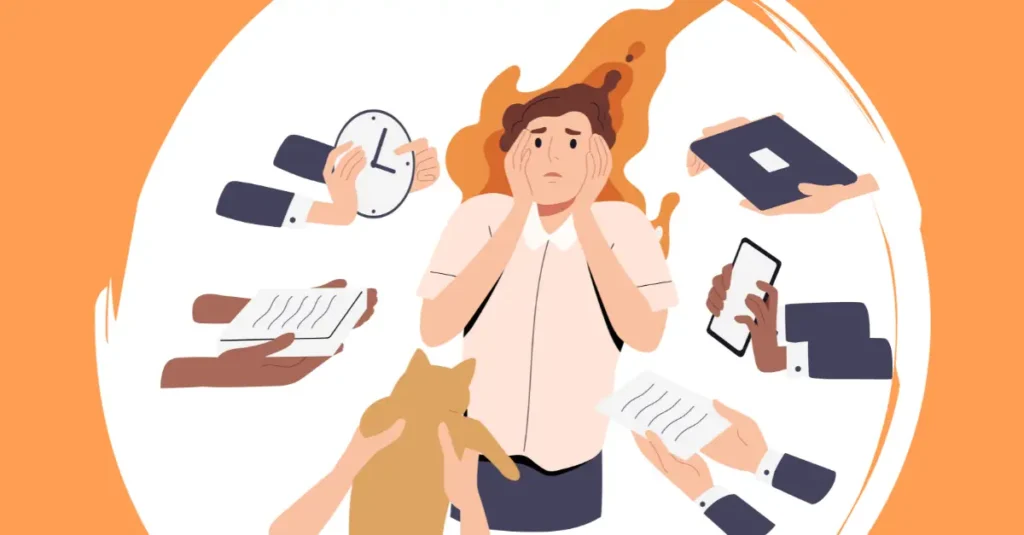
Have you ever received a text message that made you think:
“Why are you telling me this instead of telling them?”
Congratulations.
You may have encountered one of psychology’s most exhausting family traditions.
Family triangulation.
Maybe your mother complains about your father to you.
Maybe your father vents about your mother to you.
Maybe your sibling recruits you into a conflict you were not even aware existed five minutes ago.
Maybe every family disagreement somehow lands in your lap despite you repeatedly demonstrating absolutely no interest in becoming the household United Nations.
And yet here you are.
Again.
Explaining one person’s feelings to another person who could have simply spoken to them directly.
Fun.
Psychologists have been studying this pattern for decades through Family Systems Theory, and understanding the signs of family triangulation can explain why some families feel emotionally exhausting even when nobody is openly fighting.
Because the problem is not always conflict.
Sometimes the problem is how conflict gets managed.
Or more accurately, avoided.

What Is Family Triangulation?
Before exploring the signs of family triangulation, let’s understand the concept.
Family therapist Murray Bowen, the founder of Family Systems Theory, observed that when tension develops between two people, they often pull in a third person to reduce discomfort.
Instead of:
Person A → talks directly to Person B
The pattern becomes:
Person A → talks to Person C about Person B.
That third person becomes the triangle.
The arrangement often reduces anxiety temporarily.
But it rarely solves the actual problem.
In fact, it usually creates new ones.
1. You Become the Family Messenger
One of the most common signs of family triangulation is being assigned the role of messenger.
Your mother says:
“Tell your father dinner is ready.”
Normal.
But then:
“Tell your father I’m upset with him.”
Not normal.
Suddenly you’re delivering emotional mail that should have been sent directly.
Many people grow up believing this is ordinary family communication.
It isn’t.
Healthy communication generally travels directly between the people involved.
2. You’re Constantly Asked to Pick Sides
Another classic sign of family triangulation is pressure to choose loyalties.
Who was right?
Who was wrong?
Whose side are you on?
The problem is that healthy relationships rarely benefit from turning conflicts into team sports.
Triangulation often creates an environment where neutrality feels impossible.
Someone is always recruiting allies.
Someone is always gathering evidence.
Someone is always building a tiny emotional army.
And somehow you become a reluctant soldier.
3. Family Secrets Become Your Responsibility
Many adults who experienced the signs of family triangulation describe carrying secrets that never should have belonged to them.
You know who is angry.
Who is disappointed.
Who is hiding something.
Who said what.
Who doesn’t want someone else to know.
You become an emotional storage unit for information that should have been discussed openly.
The burden can become surprisingly heavy.
4. You’re More Involved Than the People Actually Fighting
This is where triangulation becomes particularly strange.
Sometimes the third person becomes more emotionally invested than the original participants.
You lose sleep.
You worry.
You overthink.
You try to solve things.
Meanwhile the people involved appear relatively fine.
One of the lesser-known signs of family triangulation is carrying stress that doesn’t actually belong to you.
The nervous system starts treating other people’s conflicts like personal emergencies.
5. Direct Communication Rarely Happens
Families showing signs of family triangulation often struggle with direct conversations.
Instead of addressing problems openly, communication travels through intermediaries.
Messages become distorted.
Assumptions multiply.
Misunderstandings grow.
It’s a bit like playing emotional telephone.
Except nobody wins.
And everyone leaves confused.
6. You Feel Responsible for Keeping the Peace
Many people caught in family triangles become unofficial peacekeepers.
You smooth things over.
Calm everyone down.
Prevent arguments.
Manage emotions.
Predict reactions.
This role often develops gradually.
At first it feels helpful.
Eventually it becomes exhausting.
One of the most painful signs of family triangulation is believing that family harmony depends entirely on your efforts.
That’s a lot of responsibility for one person.
7. Conflict Feels Dangerous
People raised in highly triangulated families often develop a complicated relationship with conflict.
Disagreement feels threatening.
Tension feels unbearable.
Confrontation feels catastrophic.
Why?
Because conflict was rarely handled directly.
Instead, it spread.
Expanded.
Involved additional people.
Generated alliances.
Created emotional fallout.
As adults, they may continue avoiding difficult conversations because their brains expect conflict to become much larger than it actually is.
8. You Struggle to Stay Out of Other People’s Problems
Perhaps the most enduring signs of family triangulation appear in adulthood.
You become the friend who mediates.
The coworker who smooths over disputes.
The partner who fixes everyone’s disagreements.
The person who feels responsible whenever tension appears.
The role followed you.
Because it became familiar.
Family Systems Theory suggests that people often recreate relationship patterns they learned early in life.
Not because they’re healthy.
Because they’re familiar.
Why Family Triangulation Happens
Understanding the signs of family triangulation becomes easier when we understand its purpose.
Most people do not triangulate because they are malicious.
They triangulate because direct communication feels uncomfortable.
Conflict creates anxiety.
Vulnerability creates anxiety.
Honest conversations create anxiety.
Recruiting a third person temporarily reduces that anxiety.
The problem is that temporary relief often creates long-term dysfunction.
The original issue remains unresolved.
The triangle grows stronger.
And everyone becomes more emotionally entangled.
How Healthy Families Handle Conflict Differently
Healthy families still experience conflict.
They disagree.
They misunderstand each other.
They get frustrated.
The difference is that communication remains direct.
Person A speaks to Person B.
Boundaries remain clear.
Responsibilities remain clear.
Nobody becomes the family customer service department.
Nobody is expected to manage everyone else’s emotions.
And nobody is forced to carry conflicts that do not belong to them.
Final Thoughts
One of the reasons the signs of family triangulation are so difficult to recognize is that they often feel normal.
If you’ve spent years translating messages, calming conflicts, carrying secrets, and managing relationships, it may simply feel like what families do.
But psychology suggests otherwise.
Healthy relationships are built on direct communication.
Not emotional middlemen.
Not secret alliances.
Not unpaid mediation services.
The next time someone says:
“Can you talk to them for me?”
Pause.
Because sometimes the healthiest response is surprisingly simple:
“Why don’t you tell them yourself?”
Your nervous system may appreciate the retirement from family diplomacy.
And honestly?
You’ve probably earned it.
Subscribe to PsychUniverse
Get the latest updates and insights.
Join 3,084 other subscribers!
Niwlikar, B. A. (2026, June 11). 8 Hidden Signs of Family Triangulation: Why You Always End Up in the Middle. PsychUniverse. https://psychuniverse.com/8-hidden-signs-of-family-triangulation/