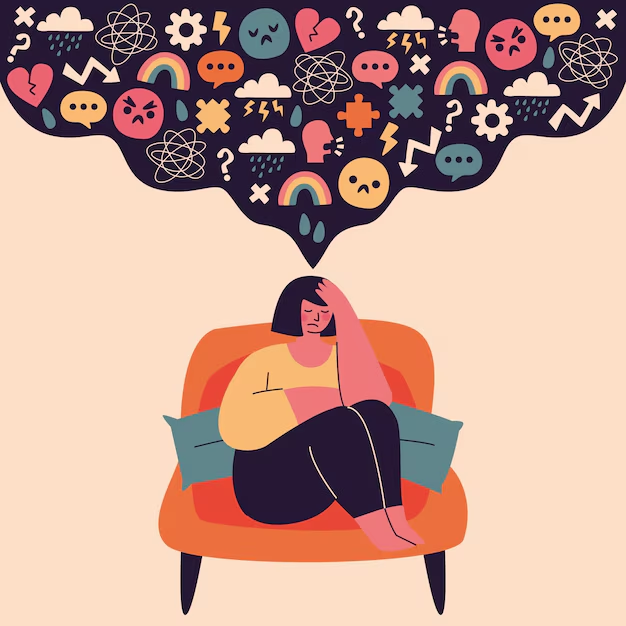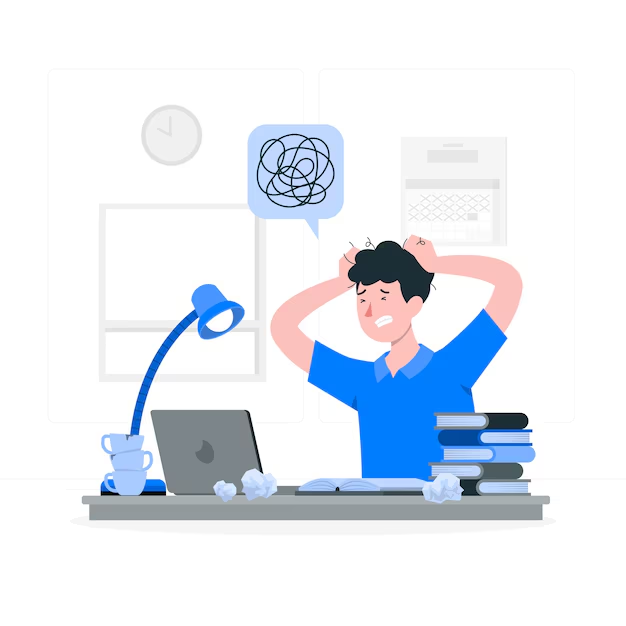
You watched one video about how everyone your age is secretly falling behind in life. By dinner, your feed has presented 19 struggling twenty-somethings, three productivity gurus who wake up at 4 a.m., and a man explaining why your morning routine is the reason you are unsuccessful. Excellent. You wanted entertainment. You have acquired an existential crisis with personalised recommendations.
This is where filter bubbles and cognitive bias become an unexpectedly relevant combination. Your algorithm learns what holds your attention, while your brain has its own preferences for information that feels familiar, convincing, or emotionally satisfying. Together, they can influence the version of reality you encounter online.
Not necessarily by lying to you. Sometimes, the problem is what you never get to see.

What Are Filter Bubbles, and Why Do They Matter?
Filter bubbles develop when personalisation shapes the information people encounter, potentially limiting their exposure to alternative perspectives. Social media algorithms use signals such as clicks, viewing time, follows, and interactions to recommend content likely to interest them.
That can be genuinely useful. You discover an obscure musician, find a community that understands your experience, or finally learn how to make a decent meal without burning the kitchen down.
But filter bubbles and cognitive bias become particularly interesting when personalisation starts reinforcing what you already believe. If you engage with content supporting a particular opinion, similar material may appear more frequently. The result can be an information environment that feels representative of the world while reflecting only a slice of it. Understanding filter bubbles and cognitive bias helps explain why a personalised feed can influence not just what we see, but also which opinions we trust and which possibilities we overlook.
Filter bubbles are related to echo chambers, but they are not identical. Filter bubbles concern how personalised systems shape exposure; echo chambers involve social environments that reinforce shared beliefs and discount opposing views. Both can overlap, but neither automatically traps every user.
Your Brain Has a Favourite Kind of Evidence
Humans like to think they evaluate evidence impartially. We also enjoy finding one article that agrees with us and immediately treating it as the definitive verdict of science, preferably before reading past the headline.
Confirmation bias is our tendency to favour information that supports existing beliefs. Selective exposure adds another layer: we often choose information we expect to find agreeable, interesting, or reassuring. Motivated reasoning can influence how we assess the evidence once we encounter it.
This is one reason filter bubbles and cognitive bias can reinforce each other. Imagine believing that modern relationships are doomed. You watch videos about cheating, manipulation, and emotionally unavailable partners. Your feed responds with more of the same. Ordinary disagreements may gradually seem like warning signs, while healthy relationships receive less attention simply because their content is less compelling to you.
The algorithm did not invent your suspicion. It may, however, keep supplying material that makes the suspicion feel increasingly justified.
The connection between filter bubbles and cognitive bias becomes especially powerful when repeated exposure makes one interpretation feel more reasonable than all the alternatives.
Then comes the illusory truth effect: repeated exposure can make information feel more truthful, even when repetition adds no new evidence. A 2024 review by psychologists Jessica Udry and Sarah Barber discusses research showing that repetition can increase belief in misinformation, including false headlines and conspiracy claims.
When filter bubbles and cognitive bias operate together, familiarity can start impersonating credibility. Seeing the same claim across ten posts feels like encountering ten pieces of evidence. Sometimes, it means ten accounts have repeated the same original claim.
Your feed has supplied an echo. Your brain has supplied the applause.
When Your Feed Starts Looking Like Reality
The consequences can extend beyond opinions about politics or current affairs.
Consider career anxiety. If your feed repeatedly shows people announcing promotions, publishing papers, and launching businesses, you may begin to believe everyone else is racing ahead. You are comparing your unedited Tuesday with a carefully selected collection of other people’s highlights.
Filter bubbles and cognitive bias may also shape how people interpret health information, beauty standards, and lifestyle choices. Repeated exposure to alarming health posts may make particular dangers seem more common. Constant exposure to idealised appearances can distort comparison standards. Content about productivity can make ordinary rest feel like a personal failure.
These are plausible psychological pathways, not proof that personalised feeds cause anxiety or low self-esteem in everyone. Existing concerns may influence what people watch in the first place, and effects depend on the person, content, and context.
Still, filter bubbles and cognitive bias matter because repeated content can influence which examples come to mind when we make judgments. If your feed repeatedly depicts a particular group as dangerous, for instance, those examples may become easier to recall than evidence that complicates the stereotype. Availability is not representativeness, although the brain occasionally behaves as if it has never heard of sampling bias.
What Does the Research Actually Say?
The evidence is more complicated than the claim that algorithms lock everyone inside personalised intellectual prisons.
A 2015 study in Science analysed data from 10.1 million US Facebook users. Researchers Eytan Bakshy, Solomon Messing, and Lada Adamic found that both algorithmic ranking and users’ own choices affected exposure to politically diverse news, with users’ choices playing a stronger role in limiting exposure to opposing perspectives. Read the study: https://doi.org/10.1126/science.aaa1160
A larger 2023 study in Nature examined Facebook exposure patterns and experimentally reduced exposure to like-minded sources for 23,377 users. The intervention changed what people saw but did not measurably change several political attitudes during the study period. Read the study: https://www.nature.com/articles/s41586-023-06297-w
These findings do not prove that filter bubbles never matter. They show that exposure, belief, and behaviour are different things. People interpret information through existing knowledge, relationships, identities, and experiences. Changing a feed does not automatically change a worldview.
The relationship between filter bubbles and cognitive bias deserves scrutiny without assuming that algorithms control our minds or that personalisation is inherently harmful. Sometimes, a recommendation system helps us find exactly what we need. The question is whether it also makes everything outside our preferences harder to encounter.
How to Burst the Bubble Without Deleting Every App
You do not need to abandon the internet. You just need to stop treating your feed as an unbiased tour guide.
A few practical habits can help:
- Seek out credible disagreement. Follow informed people who approach a subject differently, not accounts that exist solely to provoke you.
- Check the original evidence. Ten posts repeating one claim are not ten independent sources.
- Audit your recommendations. Unfollow accounts that repeatedly leave you anxious or resentful, and use feed controls to change what appears.
- Notice emotional reactions. If a post makes you instantly furious or frightened, pause before accepting or sharing it.
- Ask what would change your mind. If the answer is “absolutely nothing,” your position may be protecting an identity rather than evaluating evidence.
Understanding filter bubbles and cognitive bias is not about becoming suspicious of every opinion you encounter. It is about recognising that your information environment is selective, and that your own preferences help shape it.
The World Is Bigger Than Your Recommended Page
The strangest thing about filter bubbles and cognitive bias is that the experience can feel like enlightenment. You encounter the same arguments, the same examples, and the same conclusions until everything seems obvious. Naturally, you assume you have figured something out.
But a personalised feed is not a representative survey of humanity. It is a selection shaped by platform systems, your behaviour, and countless other factors. Its job is not necessarily to give you a balanced picture of reality.
The internet can introduce you to billions of people while repeatedly showing you the same 40 opinions in different fonts.
So the next time your feed makes you feel absolutely certain that everybody thinks the way you do, consider another possibility: perhaps you have not discovered what the world believes.
Perhaps your algorithm has simply become very good at telling you what you like hearing. And your brain, bless its confident little heart, has mistaken excellent customer service for the truth.
Subscribe to PsychUniverse
Get the latest updates and insights.
Join 3,087 other subscribers!
Niwlikar, B. A. (2026, October 21). . Filter Bubbles and Cognitive Bias: The Hidden Ways Algorithms Shape Your Mind. PsychUniverse. https://psychuniverse.com/filter-bubbles-and-cognitive-bias/