Why Doing “Nothing” Feels Emotionally Wrong in a Culture Obsessed With Productivity
Human Beings Somehow Turned Rest Into a Moral Failure
There was once a time when resting simply meant resting.
You were tired.
So you slept.
You were exhausted.
So you paused.
Your body said:
“Please sit down before we collapse.”
And people listened.
Now?
Modern humans lie in bed “relaxing” while simultaneously:
- checking emails,
- feeling guilty,
- mentally planning tomorrow,
- worrying about productivity,
- watching self-improvement videos,
- and wondering whether resting itself is secretly laziness.
Human beings truly invented burnout and then gave motivational speeches about it.
And honestly, one of the strangest psychological symptoms of modern life is this:
why does rest feel guilty instead of relaxing?
Why do people struggle to enjoy free time without feeling:
- lazy,
- behind,
- unproductive,
- irresponsible,
- or weirdly anxious?
Why does sitting still sometimes feel emotionally uncomfortable instead of peaceful?
Turns out this is not just “bad time management” or lack of discipline.
Psychology suggests this feeling is connected to:
- productivity guilt,
- capitalist conditioning,
- burnout culture,
- self-worth attachment,
- chronic stress,
- and a society that increasingly treats human value like a performance metric.
Which is honestly terrifying when you think about it for longer than six seconds.

Why Does Rest Feel Guilty Instead of Relaxing? Because Productivity Became Part of Identity
One of the biggest psychological reasons why does rest feel guilty instead of relaxing is that many people no longer see productivity as something they do.
They see it as who they are.
Modern culture constantly sends the message that your worth is connected to:
- achievement,
- output,
- efficiency,
- hustle,
- success,
- optimization,
- and “making the most” of your time.
So eventually people internalize a dangerous belief:
“If I am not productive, I am wasting my value as a person.”
And once self-worth becomes tied to productivity, rest stops feeling neutral.
It starts feeling threatening.
Because resting no longer feels like:
“I am recovering.”
It feels like:
“I am failing.”
That psychological shift changes everything.
People begin experiencing guilt during activities that are biologically necessary:
- sleeping,
- relaxing,
- hobbies,
- free time,
- slowing down,
- even enjoying themselves without “earning” it first.
Which explains why does rest feel guilty instead of relaxing for so many people today.
Rest collides with identity.
And identity-based guilt is emotionally powerful.
Hustle Culture Turned Exhaustion Into a Personality Trait
Modern hustle culture romanticizes overwork in deeply unhealthy ways.
People brag about:
- sleeping less,
- working constantly,
- skipping breaks,
- being “booked and busy,”
- burnout schedules,
- emotional exhaustion disguised as ambition.
Somehow chronic stress became aesthetically inspirational.
The internet especially rewards performative productivity.
Everywhere you look, someone is:
- waking up at 5 a.m.,
- optimizing routines,
- monetizing hobbies,
- starting side hustles,
- learning six skills,
- journaling in expensive lighting,
- and pretending exhaustion is empowering.
Meanwhile normal human beings are trying not to emotionally disintegrate after replying to three emails.
And over time, constant exposure to productivity culture creates psychological conditioning.
People begin feeling uncomfortable during rest because they associate stillness with falling behind.
That is one major reason why does rest feel guilty instead of relaxing.
Your nervous system stops recognizing rest as safety.
Instead, it interprets rest as:
- danger,
- stagnation,
- laziness,
- wasted potential,
- or loss of control.
Which is honestly a horrifying thing to train the human brain into believing.
Capitalist Conditioning: Your Value Is Not Supposed to Depend on Constant Output
If you’re still wondering why does rest feel guilty instead of relaxing then you must understand the role of capitalism in it.
A huge part of this discussion is connected to capitalist conditioning.
Modern economic systems reward productivity constantly.
The more you produce, achieve, perform, and work, the more socially valuable you are often treated.
People are praised for:
- overworking,
- multitasking,
- “grinding,”
- sacrificing sleep,
- ignoring burnout,
- and functioning beyond healthy limits.
Rest, meanwhile, is often treated like something you must justify.
Notice how people rarely say:
“I rested because I deserved peace.”
Instead they say:
- “I was productive all week.”
- “I earned a break.”
- “I finally allowed myself to relax.”
Allowed.
As if rest is a privilege instead of a biological requirement.
And psychologically, this creates internal conflict.
Because the body naturally needs recovery, but culture constantly glorifies exhaustion.
Which explains why does rest feel guilty instead of relaxing for so many adults, students, and even children.
People are being trained to measure their worth through constant usefulness.
The human nervous system was not designed for endless optimization.
Your brain is not a startup company.
Burnout Changes How the Brain Experiences Rest
One of the cruelest parts of burnout psychology is that deeply burned-out people often struggle to relax properly.
Even during rest, their nervous system stays activated.
They may experience:
- guilt,
- anxiety,
- irritability,
- racing thoughts,
- emotional numbness,
- inability to “switch off.”
Because chronic stress trains the brain to remain alert constantly.
In burnout states, rest itself can start feeling emotionally unfamiliar.
Which is another reason why does rest feel guilty instead of relaxing.
Your body may physically stop working while your mind keeps operating like an emergency alarm system.
And unfortunately, many people do not recognize burnout until their body forces interruption through:
- exhaustion,
- emotional collapse,
- anxiety,
- insomnia,
- loss of motivation,
- or mental shutdown.
Modern culture often treats burnout like a temporary inconvenience instead of a psychological warning sign.
But burnout is not simply “being tired.”
It is prolonged emotional depletion.
And no amount of productivity hacks fixes a nervous system that has forgotten how to feel safe during rest.
Thus burnout plays a major role in understanding why does rest feel guilty instead of relaxing
Why Doing Nothing Feels Emotionally Uncomfortable
Another psychological reason why does rest feel guilty instead of relaxing is because stillness creates space for thoughts and emotions people usually avoid.
Constant productivity can become emotional distraction.
When people stay busy nonstop, they temporarily avoid:
- anxiety,
- loneliness,
- grief,
- uncertainty,
- self-reflection,
- unresolved emotions.
Rest removes distraction.
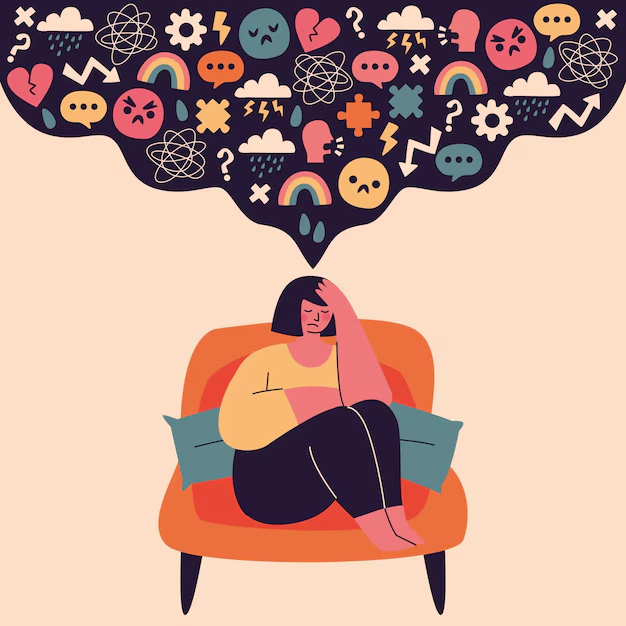
And suddenly the brain becomes louder.
Which explains why some people feel strangely restless during vacations, weekends, or quiet moments.
The problem is not always laziness.
Sometimes the problem is emotional unfamiliarity with stillness.
The human mind gets so used to stimulation and urgency that calmness itself starts feeling psychologically uncomfortable.
Which is honestly sad when you think about it.
People become so conditioned to stress that peace feels unnatural.
Social Media Made Rest Feel Competitive Too
How can one completely explain why does rest feel guilty instead of relaxing without mentioning the impact of social media?
The internet has somehow managed to turn relaxation itself into performance.
Now even rest has productivity standards.
People do not simply rest anymore.
They optimize rest.
Everything becomes content:
- wellness routines,
- “productive Sundays,”
- healing journeys,
- self-care aesthetics,
- mindfulness productivity,
- recovery schedules.
Even burnout recovery starts sounding like a corporate strategy meeting.
And social media creates constant comparison around achievement.
No matter how much you do, someone online appears to be doing more.
So psychologically, people start experiencing guilt whenever they slow down.
Because somewhere internally they fear:
“Everyone else is moving ahead while I rest.”
That fear intensifies why does rest feel guilty instead of relaxing in modern digital culture.
Rest begins feeling like falling behind instead of restoring energy.
The Psychology of “Earned Rest”
Many people unconsciously believe rest must be earned through suffering.
This belief often develops through:
- childhood conditioning,
- academic pressure,
- workplace culture,
- perfectionism,
- family expectations,
- or environments where worth depended on achievement.
As a result, people may only feel “allowed” to relax after exhaustion reaches dangerous levels.
But psychologically healthy rest should not require emotional collapse first.
Rest is preventative care.
Not a reward for self-destruction.
And honestly, humans are not machines designed for nonstop efficiency.
Even machines overheat eventually.
So… How Do You Rest Without Feeling Guilty?
Now that you’ve got the answer to why does rest feel guilty instead of relaxing, it’s time to change it. And this is where psychology becomes important.
Because overcoming productivity guilt is not just about “taking breaks.”
It requires changing deeply internalized beliefs about worth and rest.
People gradually heal this relationship by learning:
- productivity is not identity,
- rest increases functioning,
- slowing down is not failure,
- recovery is psychologically necessary,
- and human value exists beyond output.
That process takes time because modern culture aggressively rewards overworking.
But psychologically, sustainable well-being depends on balance, not constant performance.
Rest is not laziness.
It is regulation.
Your nervous system requires restoration just like muscles require recovery after strain.
Ignoring that reality eventually creates burnout whether people admit it or not.
Final Thoughts: You Are Allowed to Exist Without Constantly Producing Something
The reason why does rest feel guilty instead of relaxing is because modern culture has psychologically attached worth to productivity.
People are taught to constantly optimize themselves, improve themselves, monetize themselves, and perform usefulness at all times.
So eventually rest starts feeling emotionally wrong.
But human beings are not valuable only when they are productive.
You do not need to earn basic humanity through exhaustion.
And honestly?
A society where people feel guilty for resting is probably the real unhealthy thing here.
Because rest was never supposed to feel like failure.
It was supposed to feel like peace.
Subscribe to PsychUniverse
Get the latest updates and insights.
Join 3,088 other subscribers!
Niwlikar, B. A. (2026, May 22). Why Does Rest Feel Guilty Instead of Relaxing: 7 Important Insights into the Psychology of Productivity Guilt and Burnout. PsychUniverse. https://psychuniverse.com/why-does-rest-feel-guilty-instead-of-relaxing/