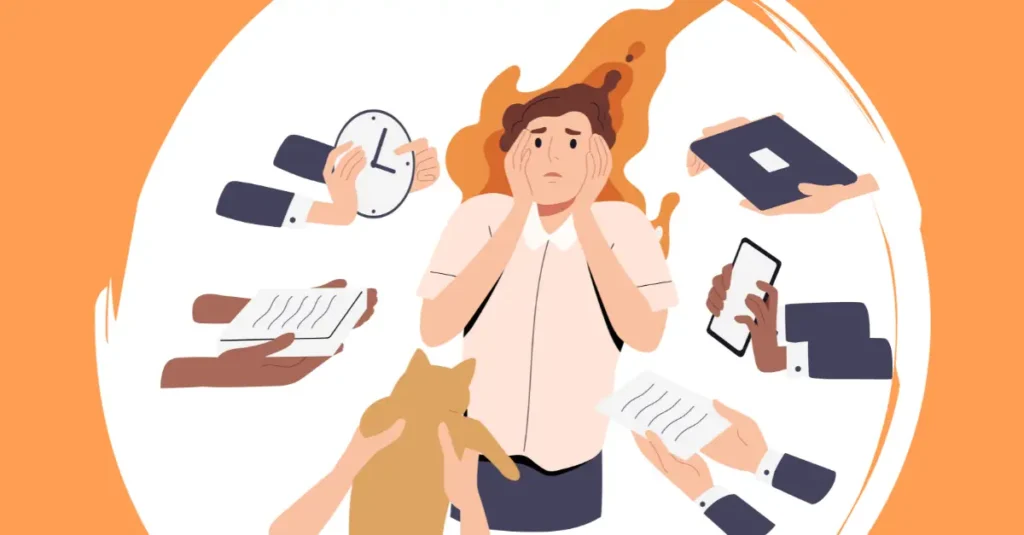
Every relationship has that one person.
The one who remembers birthdays.
Starts difficult conversations.
Checks if everyone’s okay.
Notices emotional shifts.
Plans date nights.
Resolves conflicts.
Manages misunderstandings.
Calms arguments.
Keeps communication alive.
And somehow also remembers to buy toothpaste.
If you’re reading this and thinking:
“Wait… that’s literally me.”
Congratulations.
You may have accidentally accepted the position of Full-Time Relationship Operations Manager.
Unfortunately, the job description was unclear.
The hours are terrible.
The appreciation is inconsistent.
And nobody seems to remember you applied.
Welcome to the world of Emotional Labor in Relationships.
One of the most invisible, misunderstood, and surprisingly exhausting aspects of modern relationships.
Because while people often talk about splitting bills, chores, and responsibilities, they rarely talk about who is carrying the emotional workload.
And that’s where things get interesting.
What Is Emotional Labor in Relationships?
Before exploring the signs, let’s define Emotional Labor in Relationships.
The concept originally emerged from sociologist Arlie Hochschild, who described emotional labor as the management of emotions to fulfill expectations.
In romantic relationships, Emotional Labor in Relationships often refers to the invisible work involved in maintaining emotional connection, communication, harmony, and relationship wellbeing.
This includes:
- Monitoring emotional needs
- Initiating conversations
- Managing conflict
- Remembering important details
- Providing reassurance
- Anticipating emotional problems
- Maintaining connection
The challenge?
Much of this work is invisible.
Which means it often goes unnoticed.
1. You’re Always the One Starting Difficult Conversations
One of the clearest signs of Emotional Labor in Relationships is becoming the designated conversation starter.
Every important discussion begins with you.
Communication problems?
You bring them up.
Relationship concerns?
You initiate the discussion.
Future planning?
You start it.
You schedule the emotional meeting.
Meanwhile your partner’s strategy appears to be:
“Let’s see if the issue magically disappears.”
Spoiler:
It usually doesn’t.
2. You Notice Every Emotional Shift
People carrying significant Emotional Labor in Relationships often become emotional detectives.
You notice tone changes.
Facial expressions.
Energy shifts.
Texting patterns.
Tiny behavioral differences.
You know something is wrong before the other person has admitted it.
While emotional awareness can be valuable, constantly monitoring another person’s emotional state can become exhausting.
Because eventually you’re no longer participating in the relationship.
You’re managing it.
3. You Remember Everything
One of the hidden aspects of Emotional Labor in Relationships is memory.
Not because you have superhuman recall.
Because somebody has to remember.
Important dates.
Family events.
Conversations.
Boundaries.
Preferences.
Needs.
The emotional history of the relationship often exists inside one person’s brain.
And that mental load becomes surprisingly heavy over time.
4. You’re the Relationship Therapist
Many people performing excessive Emotional Labor in Relationships become unofficial therapists.
You help process emotions.
Provide reassurance.
Offer perspective.
Help resolve personal struggles.
Support difficult experiences.
None of these things are inherently unhealthy.
Healthy relationships involve support.
The problem arises when support only flows in one direction.
Because eventually empathy becomes emotional overtime.
5. You Feel Responsible for Everyone’s Feelings
This is where Emotional Labor in Relationships becomes particularly draining.
You begin feeling responsible for moods that aren’t yours.
If your partner is stressed, you feel responsible.
If they’re upset, you feel responsible.
If they’re disappointed, you feel responsible.
You become emotionally accountable for experiences that belong to another person.
Psychologically speaking, this often reflects blurred emotional boundaries.
And blurred boundaries are exhausting.
6. You Do the Emotional Planning
People often talk about physical chores.
Fewer people discuss emotional planning.
Yet Emotional Labor in Relationships frequently involves anticipating emotional needs before they arise.
You think ahead.
Plan celebrations.
Create opportunities for connection.
Suggest activities.
Maintain traditions.
Keep intimacy alive.
In healthy relationships, both partners contribute to this work.
When only one person does it, resentment tends to follow.
7. You Constantly Translate Feelings
Have you ever found yourself explaining one person’s emotions back to them?
Or helping them identify what they’re feeling?
Or interpreting emotional situations?
Many people carrying Emotional Labor in Relationships become translators.
They decode emotions.
Clarify intentions.
Interpret misunderstandings.
Provide emotional road maps.
Again, useful occasionally.
Exhausting permanently.
8. You’re Tired, But Nobody Can See Why
Perhaps the most frustrating part of Emotional Labor in Relationships is its invisibility.
Physical effort is easy to observe.
Emotional effort often isn’t.
Nobody sees the emotional monitoring.
The anticipation.
The planning.
The remembering.
The stress management.
The mental energy.
People simply notice that you’re tired.
Without recognizing what caused it.
9. You Feel Like the Relationship Would Collapse Without You
This is often the biggest warning sign.
Many people carrying excessive Emotional Labor in Relationships secretly believe:
“If I stop doing all this, everything falls apart.”
And sometimes they’re right.
The relationship has become dependent on one person’s emotional work.
The result is imbalance.
One person becomes the emotional engine.
The other becomes the passenger.
And over time that imbalance creates strain.
Why Emotional Labor Matters
Psychologists consistently find that relationship satisfaction depends heavily on perceived fairness.
Not perfect equality.
Fairness.
When one person performs most of the Emotional Labor in Relationships, they often begin feeling unseen.
Unappreciated.
Overwhelmed.
Not because they dislike caring.
Because they are caring alone.
Humans are remarkably generous.
But even generosity has limits.
What Healthy Emotional Labor Looks Like
Healthy Emotional Labor in Relationships doesn’t mean nobody does emotional work.
It means emotional work is shared.
Both people initiate conversations.
Both people notice needs.
Both people support each other.
Both people invest in connection.
Both people take responsibility for the emotional wellbeing of the relationship.
The goal isn’t keeping score.
The goal is preventing one person from carrying the entire scoreboard.
Final Thoughts
One of the strangest things about Emotional Labor in Relationships is that people often don’t realize they’re doing it until they’re exhausted.
They slowly become the planner.
The peacemaker.
The listener.
The organizer.
The emotional manager.
The relationship therapist.
The human reminder app.
And because they’re good at it, everyone assumes they’re fine.
But being capable doesn’t make someone unlimited.
Being caring doesn’t make someone tireless.
Being understanding doesn’t mean someone should carry everything alone.
The healthiest relationships aren’t built by one person doing all the emotional work.
They’re built by two people sharing it.
Because love should feel like a partnership.
Not a full-time customer service position.
Subscribe to PsychUniverse
Get the latest updates and insights.
Join 3,087 other subscribers!
Niwlikar, B. A. (2026, June 16). Emotional Labor in Relationships: 9 Exhausting Signs You’re Carrying More Than Your Share. PsychUniverse. https://psychuniverse.com/emotional-labor-in-relationships/