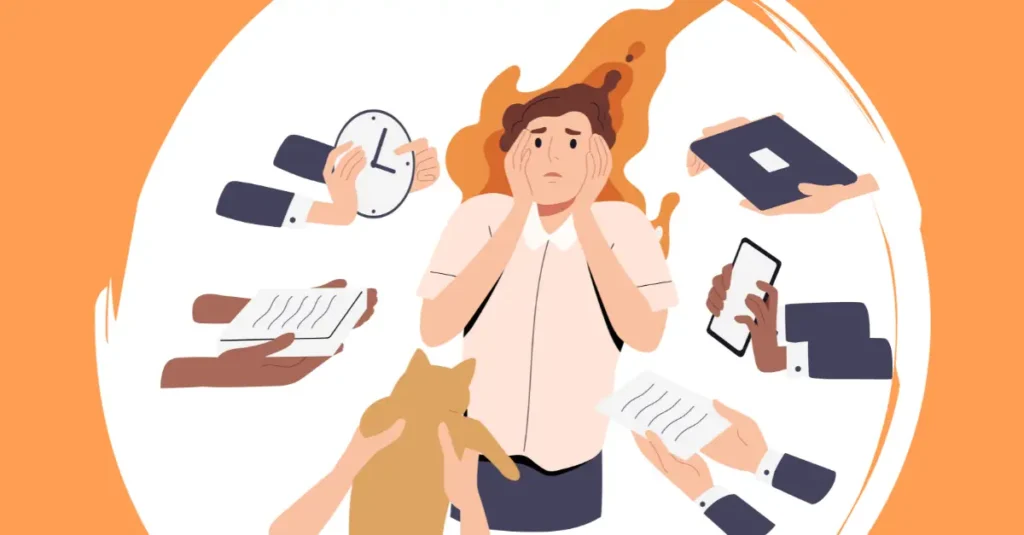
Let’s begin with a lie.
Not a malicious lie.
Not a criminal lie.
A completely ordinary human lie.
The kind you tell yourself every single week.
It sounds something like this:
“This assignment will only take two hours.”
“This presentation will be done by tonight.”
“I’ll clean my room after lunch.”
“I’ll start studying at 6 p.m.”
And perhaps the greatest fantasy of all:
“I’ll just watch one episode.”
Psychologists have a name for this delightful relationship humans have with time.
It’s called the Planning Fallacy.
And if you’ve ever finished an assignment at 2 a.m. that you confidently believed would take thirty minutes, congratulations.
You have personally experienced What Is the Planning Fallacy.
The fascinating part is that intelligent people do this too.
Productive people do it.
Successful people do it.
Psychologists do it.
Even the people who discovered it probably underestimated how long it would take to write about it.
Let’s talk about why.

What Is the Planning Fallacy?
Before exploring the signs, let’s answer the question:
What Is the Planning Fallacy?
The Planning Fallacy is a cognitive bias where people consistently underestimate how much time, effort, and resources a task will require.
The concept was developed by psychologists Daniel Kahneman and Amos Tversky.
According to their research, people tend to make predictions based on ideal scenarios rather than realistic ones.
In simple terms:
Your brain plans for the best-case version of you.
Not the actual version.
The actual version occasionally spends forty minutes deciding what snack to eat before starting work.
Understanding What Is the Planning Fallacy explains why deadlines seem to appear out of nowhere despite existing on the calendar for months.
1. You Plan for Perfect Conditions
One of the biggest reasons behind What Is the Planning Fallacy is that people imagine ideal circumstances.
Future You is incredibly impressive.
Future You wakes up early.
Future You stays focused.
Future You never gets distracted.
Future You definitely does not spend twenty-seven minutes watching videos about penguins.
Unfortunately, Actual You eventually arrives.
And Actual You has notifications.
Fatigue.
Unexpected interruptions.
And a suspicious tendency to suddenly reorganize a drawer when important work appears.
2. You Ignore Past Experience
One of the strangest aspects of What Is the Planning Fallacy is that people ignore evidence.
Suppose every previous assignment took seven hours.
Logically, the next assignment will probably take a similar amount of time.
Yet the brain says:
“This one is different.”
It rarely is.
People consistently trust optimistic predictions more than historical evidence.
Which explains why deadlines continue ambushing the same people repeatedly.
3. You Only See the Main Task
When learning What Is the Planning Fallacy, psychologists often point out that people focus on the core task while ignoring everything surrounding it.
Writing an essay sounds simple.
But then:
Research.
Editing.
Formatting.
References.
Technical issues.
Existential crisis.
Accidental social media break.
Suddenly the task has multiplied.
The problem wasn’t poor planning.
The problem was incomplete planning.
4. Your Brain Is Weirdly Optimistic
Another reason behind What Is the Planning Fallacy is optimism bias.
Humans naturally expect things to go smoothly.
We imagine best-case scenarios.
Fast progress.
No obstacles.
Perfect concentration.
Reality, however, enjoys surprises.
The internet stops working.
Someone calls.
The file disappears.
The laptop updates itself at the worst possible moment.
Yet despite repeated evidence, people continue predicting smooth journeys.
It’s oddly adorable.
And deeply inefficient.
5. You Underestimate Recovery Time
One important lesson from What Is the Planning Fallacy is that humans are not machines.
Tasks require energy.
Mental effort.
Recovery.
People often schedule eight hours of work as if the brain functions like a robot.
It doesn’t.
The brain requires breaks.
Food.
Sleep.
Occasional staring into space while questioning every life choice.
Ignoring these realities creates unrealistic timelines.
6. The Future Always Looks Easier
Psychologists studying What Is the Planning Fallacy have found that people view future tasks differently than present tasks.
Tomorrow feels spacious.
Next week feels spacious.
Next month feels enormous.
Until it arrives.
Then somehow the future becomes the present.
And the present is surprisingly busy.
This illusion tricks people into believing they have far more time than they actually do.
7. You Confuse Intentions With Reality
Perhaps the biggest lesson in What Is the Planning Fallacy is this:
Good intentions are not schedules.
Wanting to finish something quickly does not mean it will happen quickly.
Planning to start early does not guarantee an early start.
Motivation is useful.
But estimates based solely on motivation are often unreliable.
Reality cares about behavior.
Not intentions.
Why the Planning Fallacy Matters
Understanding What Is the Planning Fallacy isn’t just useful for students.
It affects:
Work deadlines.
Projects.
Budgets.
Businesses.
Relationships.
Career goals.
Life planning.
In fact, some of the world’s largest construction projects have suffered from Planning Fallacy effects.
When entire teams underestimate time and resources, the consequences become expensive.
Very expensive.
How to Beat the Planning Fallacy
The good news is that understanding What Is the Planning Fallacy makes it easier to reduce its impact.
Psychologists recommend:
- Looking at past experience
- Adding buffer time
- Breaking tasks into smaller steps
- Assuming interruptions will happen
- Planning realistically rather than optimistically
In other words:
Stop asking how long the task should take.
Start asking how long it usually takes.
That question is often far more accurate.
Final Thoughts
The reason What Is the Planning Fallacy remains one of psychology’s most fascinating cognitive biases is because it reveals something deeply human.
We are optimists.
Even when experience disagrees.
Even when evidence disagrees.
Even when our calendar is practically begging us to be realistic.
We continue believing that this time things will go exactly according to plan.
Sometimes they do.
Most of the time, life adds a few plot twists.
The next time you’re convinced a task will take thirty minutes, pause.
Take a deep breath.
Look at your history.
Look at your habits.
Look at the twenty-seven unfinished tabs currently open in your browser.
Then double your estimate.
Your future self will probably thank you.
And unlike most of your deadlines, they’ll actually have time to do it.
Subscribe to PsychUniverse
Get the latest updates and insights.
Join 3,088 other subscribers!
Niwlikar, B. A. (2026, June 18). What Is the Planning Fallacy? 7 Reasons Everything Takes Longer Than You Think. PsychUniverse. https://psychuniverse.com/what-is-the-planning-fallacy-7-reasons-everything-takes-longer-than-you-think/