Imagine paying someone ₹1,000 an hour.
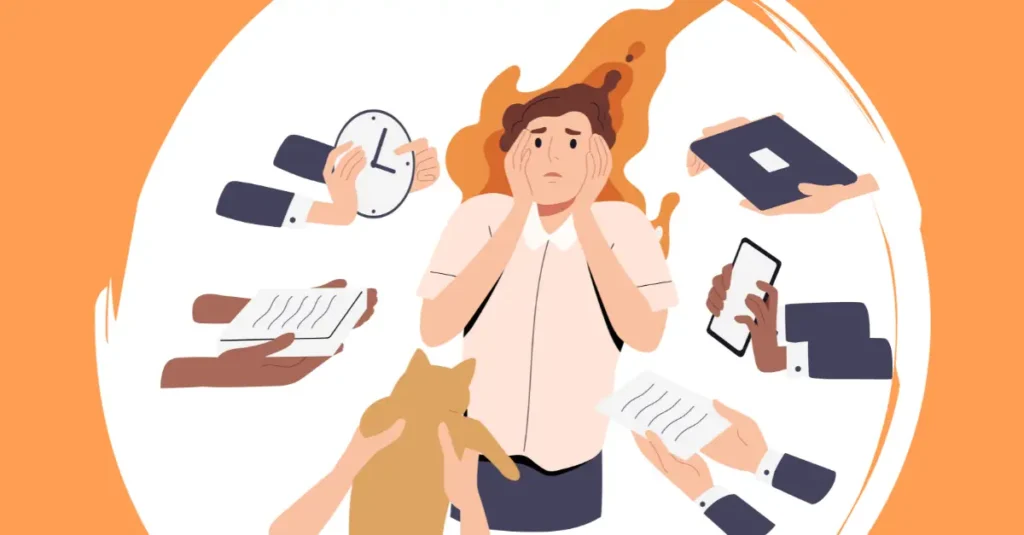
You walk into the room carrying years of anxiety, relationship drama, family issues, an identity crisis, and approximately fourteen unfinished emotional breakdowns.
You finally sit down.
You tell them everything.
You cry a little.
You laugh awkwardly.
You expose your deepest insecurities.
And then, after fifty whole minutes, your therapist smiles warmly and says:
“So… what do you think you should do?”
Excuse me?
Ma’am.
Sir.
Respectfully…
That’s literally what I came here to ask you.
It feels like hiring Gordon Ramsay, handing him a bag of vegetables, and hearing him say,
“So… what recipe speaks to your authentic self?”
Or paying a driving instructor who gets into the passenger seat, folds their arms, and says,
“Where do you feel the brake might be?”
No wonder one of the most common questions people ask after their first therapy session is Why Therapists Don’t Give Advice
It almost feels unfair.
You’re confused.
They’re the professional.
Surely they should just tell you whether to quit your job, leave your partner, forgive your parents, move cities, block your ex, adopt a golden retriever, or finally stop texting someone who replies with “K.”
Wouldn’t that save everyone a lot of time?
Actually…
Psychology says no.
And the reason Why Therapists Don’t Give Advice has less to do with therapists being mysterious and much more to do with how lasting psychological change actually happens.

What People Think Therapy Is
Movies have done therapy absolutely no favors.
According to Hollywood, therapy is either:
- A wise old therapist who gives life-changing advice in exactly forty-five seconds.
- Someone silently writing notes while saying, “Hmm…”
- Or a dramatic breakthrough where everything suddenly makes sense.
Real therapy is much less cinematic.
And much more effective.
Understanding Why Therapists Don’t Give Advice starts with understanding what therapy is actually trying to accomplish.
Therapy is not a decision-making service.
It isn’t emotional outsourcing.
And your therapist isn’t a highly educated Magic 8 Ball.
The goal of therapy is not to make your decisions for you.
The goal is to help you become someone who can make healthier decisions, even after therapy ends.
That’s a very different objective.
1. Advice Solves Today’s Problem. Therapy Builds Tomorrow’s Skills.
One of the biggest reasons Why Therapists Don’t Give Advice is because advice is temporary.
Imagine this conversation.
Client: “Should I quit my job?”
Therapist: “Yes.”
Problem solved?
Not really.
Because next month the questions become:
Should I move?
Should I get married?
Should I forgive them?
Should I take this opportunity?
Should I stay?
Should I leave?
If therapy simply handed out answers, you’d eventually need your therapist to make every major life decision.
Psychologists don’t want clients to become dependent.
They want clients to become confident.
That’s why therapy focuses on teaching skills rather than supplying instructions…that is Why Therapists Don’t Give Advice
2. Carl Rogers Believed You Already Have the Capacity to Grow
One of the most influential psychologists in history, Carl Rogers, completely changed how therapy was understood.
His Person-Centered Therapy proposed something surprisingly optimistic:
People already possess the capacity for growth and psychological healing.
The therapist’s role is not to direct someone’s life.
Instead, it’s to create the conditions where people can better understand themselves.
Empathy.
Genuineness.
Unconditional positive regard.
These weren’t just nice ideas.
Rogers believed these conditions helped people discover answers that genuinely belonged to them.
This is another important reason Why Therapists Don’t Give Advice.
Because advice comes from the therapist.
Growth comes from the client.
And only one of those continues working after therapy ends.
3. You Know Your Life Better Than Anyone Else
Your therapist may know psychology.
But you know your life.
You know your family.
Your values.
Your culture.
Your fears.
Your dreams.
Your financial situation.
Your relationships.
Your priorities.
No therapist, no matter how experienced, can fully experience your life from the inside.
Advice assumes someone else knows what’s best for you.
Therapy begins with a humbler assumption:
Maybe you’re the expert on your own life.
Maybe you’ve simply lost confidence in hearing your own voice.
Helping you reconnect with that voice is one of the biggest reasons Why Therapists Don’t Give Advice.
4. Advice Can Accidentally Create Dependence
Imagine every difficult decision in your life required one phone call.
“Should I accept this job?”
“Should I break up?”
“Should I confront my parents?”
“Should I move abroad?”
At first, that might feel comforting.
Eventually, it becomes a problem.
One of the biggest ethical reasons Why Therapists Don’t Give Advice is because therapy aims to increase independence, not create reliance.
In psychology, one of the ultimate goals is self-efficacy, a concept introduced by Albert Bandura.
Self-efficacy is your belief that you can handle challenges, solve problems, and cope with difficult situations.
Every time a therapist simply makes a decision for you, they unintentionally send a subtle message:
“You can’t figure this out without me.”
That is the exact opposite of what good therapy tries to achieve.
Instead, therapists ask questions that strengthen your own decision-making muscles.
Think of it like going to the gym.
The trainer can teach you proper form.
They can encourage you.
They can stop you from injuring yourself.
But they can’t lift the weights for you.
If they did, you’d leave stronger… only in your imagination.
5. There Is No “Correct” Answer to Most Life Problems
We love certainty.
Our brains absolutely adore it.
Tell us exactly what to do.
Give us the right answer.
Provide a five-step plan.
Humans are strangely comforted by instruction manuals.
Unfortunately, life forgot to include one.
Many of the questions people bring to therapy don’t actually have a universally correct answer.
Should you stay in your relationship?
Should you forgive someone?
Should you change careers?
Should you have children?
Should you move to another city?
Psychology cannot answer these questions because they aren’t psychology questions.
They’re values questions.
Your therapist isn’t trying to avoid responsibility.
They’re respecting something incredibly important:
Your autonomy.
This idea is also reflected in Self-Determination Theory, developed by Edward Deci and Richard Ryan.
The theory suggests that people flourish when three basic psychological needs are met:
- Autonomy – feeling that your choices are genuinely yours.
- Competence – believing you can handle challenges.
- Relatedness – feeling connected to others.
Notice what’s first.
Autonomy.
If your therapist constantly told you exactly what to do, they would be taking away one of the very things psychology says humans need to thrive.
Another reason Why Therapists Don’t Give Advice is because making your own choices, even imperfect ones, is essential for psychological growth.
6. Therapists Are Looking for the Pattern, Not Just the Problem
Let’s say you ask,
“My partner ignored my message. What should I do?”
A friend might immediately answer.
“Ignore them back.”
“Call them.”
“Break up.”
Simple.
Quick.
Done.
A therapist, however, is usually thinking something very different.
“Why does being ignored create so much anxiety?”
“Has this happened before?”
“What meaning are you attaching to silence?”
“What does this remind you of?”
Notice the difference.
Your therapist is less interested in solving Tuesday’s problem than understanding the pattern that has been following you since 2017.
Maybe even since childhood.
That’s another important reason Why Therapists Don’t Give Advice.
Advice solves one situation.
Insight changes dozens.
Therapy isn’t trying to help you survive one argument.
It’s trying to help you understand why similar arguments keep showing up throughout your life.
7. Therapists Do Give Guidance, Just Not the Way You Think
Here’s one of the biggest therapy myths.
People assume therapists sit there refusing to help.
Not true.
Therapists absolutely provide guidance.
They offer psychoeducation.
They teach coping skills.
They explain how anxiety works.
They introduce CBT techniques.
They practice communication skills.
They teach grounding exercises.
They help clients identify cognitive distortions like catastrophizing, black-and-white thinking, or emotional reasoning.
What they usually don’t say is:
“Quit your job.”
“Marry this person.”
“Don’t talk to your mother again.”
Because those decisions belong to you.
The distinction is subtle but incredibly important.
Therapists guide the process.
Clients decide the direction.
But Wait… Don’t Therapists Ever Tell Clients What to Do?
Actually, yes.
Sometimes they do.
This is where conversations about Why Therapists Don’t Give Advice need nuance.
Therapists become much more directive in certain situations.
For example:
- If someone is at immediate risk of harming themselves or others.
- During crisis intervention.
- When teaching specific CBT or DBT skills.
- During exposure therapy.
- While providing psychoeducation.
- When discussing safety planning.
In these situations, therapists aren’t making life decisions for clients.
They’re using evidence-based interventions designed to keep people safe or teach specific psychological skills.
So the idea that therapists “never” give advice isn’t completely accurate.
A better way to think about it is this:
They avoid making your life choices for you.
Final Thoughts
One of the reasons Why Therapists Don’t Give Advice can feel frustrating is because advice seems efficient.
Just tell me what to do.
Problem solved.
Except psychology has discovered something interesting.
People rarely grow because someone gave them the perfect answer.
They grow because they learned how to ask themselves better questions.
Therapy isn’t Google Maps.
It won’t announce,
“In 200 metres, turn left and emotionally process your childhood.”
It won’t hand you a checklist titled How to Fix Your Entire Life Before Friday.
Instead, it helps you develop something far more valuable.
The ability to understand yourself.
To tolerate uncertainty.
To make decisions that align with your own values.
To trust your judgment instead of borrowing someone else’s.
Ironically, many people begin therapy hoping their therapist will have all the answers.
The most successful therapy often ends when clients realize something unexpected:
They were slowly learning how to become their own guide all along.
And that is precisely Why Therapists Don’t Give Advice.
Because the goal was never to give you someone else’s life.
It was to help you build your own.
Subscribe to PsychUniverse
Get the latest updates and insights.
Join 3,088 other subscribers!
Niwlikar, B. A. (2026, June 28). Why Therapists Don’t Give Advice: 7 Powerful Reasons Therapy Isn’t About Telling You What to Do. PsychUniverse. https://psychuniverse.com/why-therapists-dont-give-advice/