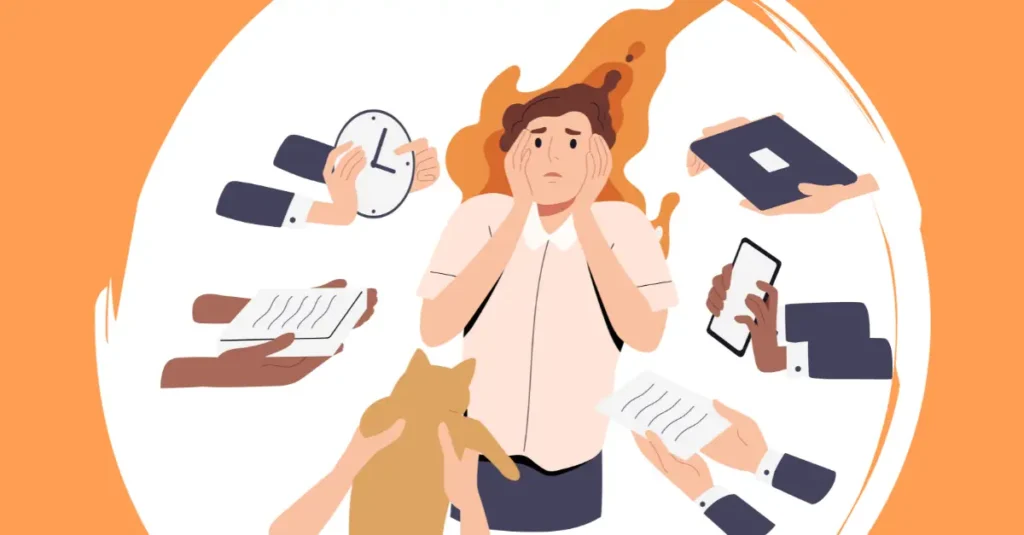
Your Friends Love You. But They Are Also Telling You to “Just Block Him” Mid-Crisis.
Human beings really expect one exhausted friend with attachment issues and an iced coffee to solve problems that took years to psychologically develop.
And honestly?
That is unfair to everybody involved.
Modern culture sometimes treats therapy like it is just “Talking about feelings.”
As if therapy is basically friendship with softer lighting and expensive tissues.
But talking to a friend vs therapist are psychologically very different experiences. They serve different emotional functions, require different boundaries, and operate through completely different frameworks.
Your best friend may absolutely support you through heartbreak, existential spirals, career meltdowns, and situationships that should honestly qualify as psychological warfare.
But support and therapy are not identical things.
Because therapy is not simply “Having someone listen.”
Therapy is structured emotional work guided by psychological training, theory, clinical understanding, emotional boundaries, and intentional intervention.
Meanwhile your friend is trying their best while simultaneously:
- texting three people,
- fighting their own mental breakdown,
- accidentally projecting their ex onto your situation,
- and recommending revenge haircuts as emotional treatment plans.
Different systems entirely.
And this conversation matters because people often misunderstand both friendship and therapy in ways that emotionally exhaust everyone involved.
So let us discuss the psychology behind talking to a friend vs therapist and why they are not competing roles, but completely different forms of human support.

Talking to a Friend vs Therapist: One Supports You, the Other Treats Psychological Patterns
Friendship and therapy overlap emotionally sometimes, but psychologically they do different jobs.
Friends provide:
- companionship,
- belonging,
- empathy,
- shared experiences,
- emotional comfort,
- mutual support.
Therapy provides:
- psychological assessment,
- emotional processing,
- behavioral insight,
- evidence-based intervention,
- mental health treatment,
- structured emotional exploration.
That distinction matters enormously.
A friend listens because they care about you personally.
A therapist listens while also analyzing:
- patterns,
- defense mechanisms,
- attachment styles,
- emotional regulation,
- coping strategies,
- trauma responses,
- cognitive distortions,
- relational dynamics.
One conversation may end with “You deserve better honestly.”
The other may explore “why does emotional inconsistency feel familiar and emotionally attractive to you?”
And that is the difference between talking to a friend vs therapist. Both have completely different psychological depths.
And honestly, one of them is significantly more emotionally terrifying.
Therapy Is Not Just Venting With a Professional Listener
One of the biggest misconceptions about therapy is that it is simply “paying someone to listen.”
Which is psychologically inaccurate in the same way calling surgery “aggressive skincare” would be inaccurate.
Therapy involves:
- clinical frameworks,
- psychological theories,
- intervention techniques,
- emotional observation,
- ethical boundaries,
- and intentional therapeutic goals.
A therapist is trained to notice things most people naturally miss.
For example:
- recurring emotional patterns,
- avoidance behaviors,
- trauma responses,
- attachment dynamics,
- self-sabotage,
- unconscious beliefs,
- emotional defenses.
Your friend may comfort you after your fifth emotionally unavailable relationship.
Your therapist may gently point out “You seem repeatedly drawn toward people who recreate emotional unpredictability you normalized earlier in life.”
Which is honestly the kind of sentence that makes people stare at walls for several business days.
Because therapy is not only about expression. It is also about awareness. And awareness is emotionally uncomfortable sometimes. This is why talking to a friend vs therapist is very different
Friends Usually Join Your Side. Therapists Explore Your Side.
This is another huge difference in talking to a friend vs therapist.
Friends naturally tend to emotionally align with you.
That is part of friendship.
People protect, validate, and emotionally defend the people they love.
So when you explain conflict, friends often respond with:
- “They’re toxic.”
- “You deserve better.”
- “That’s insane.”
- “Block them immediately.”
- “I always hated them anyway.”
Which honestly can feel deeply satisfying in the moment.
Therapists, however, are not there to blindly “take sides.”
They are there to understand:
- the full emotional system,
- relational dynamics,
- behavioral patterns,
- emotional triggers,
- communication styles,
- and psychological meaning beneath behavior.
This does NOT mean therapists invalidate pain.
But therapy often explores complexity rather than only emotional loyalty.
Which can feel uncomfortable because therapy sometimes challenges narratives people feel emotionally attached to.
A therapist may ask:
- “What made this dynamic feel familiar?”
- “Why was setting boundaries difficult?”
- “What emotional need was being fulfilled?”
- “What are you afraid would happen if you stopped overfunctioning?”
Suddenly the conversation stops being “They hurt me.”
And becomes “Why do I repeatedly remain in situations that hurt me?”
Psychologically brutal. Extremely important.
Emotional Boundaries: Your Friends Are Not Meant to Carry Everything
One thing people rarely discuss enough:
friends are not designed to function as full-time emotional crisis centers indefinitely.
That does not mean emotional openness is bad.
It means mutual relationships require emotional balance.
Friendships involve reciprocity.
Therapy does not.
This is a major difference in talking to a friend vs therapist psychologically.
A therapist’s role is professionally structured around emotional support and psychological care.
Friendships are mutual emotional ecosystems.
Which means constantly using friendships only for emotional unloading can sometimes create imbalance, exhaustion, or emotional burnout within relationships.
Especially because friends:
- have their own struggles,
- emotional capacities,
- limitations,
- triggers,
- and mental health needs.
Sometimes people expect friends to provide:
- constant regulation,
- trauma processing,
- emotional stabilization,
- crisis intervention,
- and therapeutic insight.
That is a heavy expectation for relationships that are supposed to also contain:
- joy,
- reciprocity,
- humor,
- connection,
- and emotional breathing room.
Your best friend loves you deeply.
But they are also one minor inconvenience away from their own emotional collapse.
Everybody is fighting invisible battles while pretending to answer messages normally.
Therapy Creates a Different Kind of Emotional Safety
One psychologically important thing about therapy is the environment itself.
Therapy creates a space centered entirely around:
- your emotions,
- your patterns,
- your experiences,
- your healing,
- your psychological growth.
There is no pressure to:
- emotionally caretaking the therapist,
- reciprocate support,
- minimize your pain,
- appear “easy to handle,”
- or protect the other person emotionally.
That changes vulnerability dramatically.
In friendships, many people unconsciously edit themselves.
They worry:
- “Am I being too much?”
- “Am I repeating myself?”
- “Am I emotionally exhausting people?”
- “Should I tone this down?”
Therapy intentionally removes much of that pressure.
And psychologically, that safety allows deeper emotional exploration.
Which is another major difference in talking to a friend vs therapist.
Therapy is structured to hold emotional complexity in ways ordinary relationships often cannot sustain continuously.
Therapists Are Trained to Notice the Things You Cannot See Clearly Yourself
Human beings are not naturally objective about their own emotional lives.
People normalize:
- dysfunction,
- unhealthy attachment,
- emotional avoidance,
- self-sabotage,
- overthinking,
- people-pleasing,
- emotional suppression.
Because familiarity often feels psychologically normal even when it is harmful.
Therapists are trained to recognize patterns beneath surface stories.
For example:
someone may describe:
- burnout,
- relationship struggles,
- emotional exhaustion,
- chronic anxiety.
A therapist may recognize:
- perfectionism,
- anxious attachment,
- emotional dysregulation,
- unresolved trauma,
- fear of abandonment,
- low self-worth,
- or chronic overfunctioning.
That deeper pattern recognition is a major reason therapy works differently from ordinary emotional conversations.
And honestly?
Sometimes therapy feels emotionally intense precisely because somebody is finally noticing the patterns you spent years surviving inside.
Therapy Is Also About Skills, Not Just Feelings
Another huge misconception:
therapy is not only emotional discussion.
Many therapeutic approaches actively teach:
- emotional regulation,
- communication skills,
- coping strategies,
- boundary-setting,
- behavioral restructuring,
- nervous system awareness,
- distress tolerance,
- cognitive reframing.
For example, approaches like Cognitive Behavioral Therapy help people identify distorted thought patterns and replace them with healthier cognitive processes.
Other approaches focus on:
- trauma processing,
- attachment,
- mindfulness,
- emotional regulation,
- or interpersonal functioning.
So therapy is not simply emotional expression. And this is another major difference between talking to a friend vs therapist.
It is emotional skill-building.
Your friend may comfort you after panic spirals.
A therapist may help teach your nervous system how to regulate those spirals differently over time.
That distinction matters psychologically.
None of This Means Friendship Is “Less Important”
This is important.
Talking about talking to a friend vs therapist does NOT mean friendship becomes emotionally unimportant.
In fact, healthy friendships are psychologically protective.
Research consistently shows strong social support improves:
- emotional resilience,
- stress management,
- mental health outcomes,
- belonging,
- and well-being.
Humans fundamentally need connection.
Friends provide:
- laughter,
- emotional warmth,
- shared identity,
- companionship,
- comfort,
- and real-life support systems.
Therapy cannot replace friendship either.
A therapist helps process life.
Friends help live it.
Those are different emotional functions.
And honestly, some healing happens through:
- conversations at midnight,
- laughing until breathing hurts,
- sitting silently beside someone who understands you,
- feeling emotionally accepted without explanation.
That matters deeply too.
Final Thoughts: Friendship Holds You. Therapy Helps You Understand Yourself.
The conversation around talking to a friend vs therapist is not about deciding which one matters more.
They matter differently.
Friends offer:
- love,
- empathy,
- companionship,
- emotional closeness,
- shared humanity.
Therapists offer:
- psychological insight,
- structured healing,
- emotional tools,
- pattern recognition,
- clinical understanding,
- and intentional emotional work.
One is not a replacement for the other.
And honestly?
Human beings probably need both.
Because sometimes you need someone who says “That sounds painful. I’m here.”
And sometimes you need someone who gently asks “Why does this pain keep repeating in the same shape throughout your life?”
One helps you feel less alone. The other helps you understand yourself more clearly. Both are deeply human forms of care.
But acknowledging the difference between talking to a friend vs therapist is very crucial.
Subscribe to PsychUniverse
Get the latest updates and insights.
Join 3,088 other subscribers!
Niwlikar, B. A. (2026, May 19). Talking to a Friend vs Therapist: Why They Are Not the Same Sport. PsychUniverse. https://psychuniverse.com/talking-to-a-friend-vs-therapist/