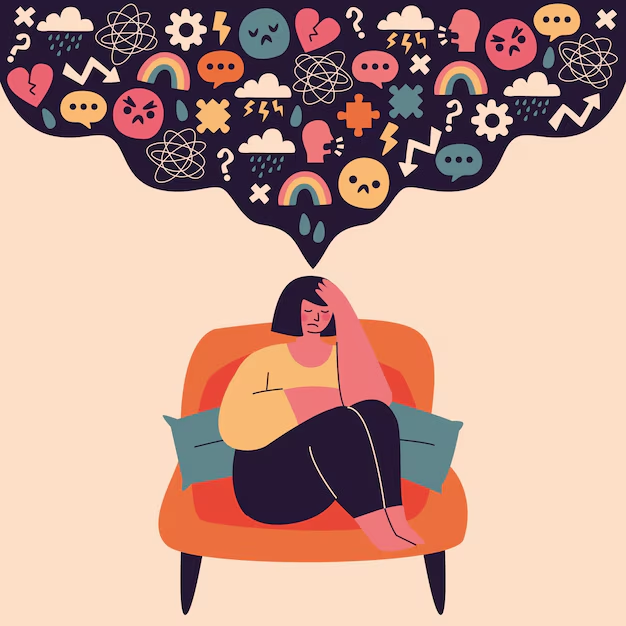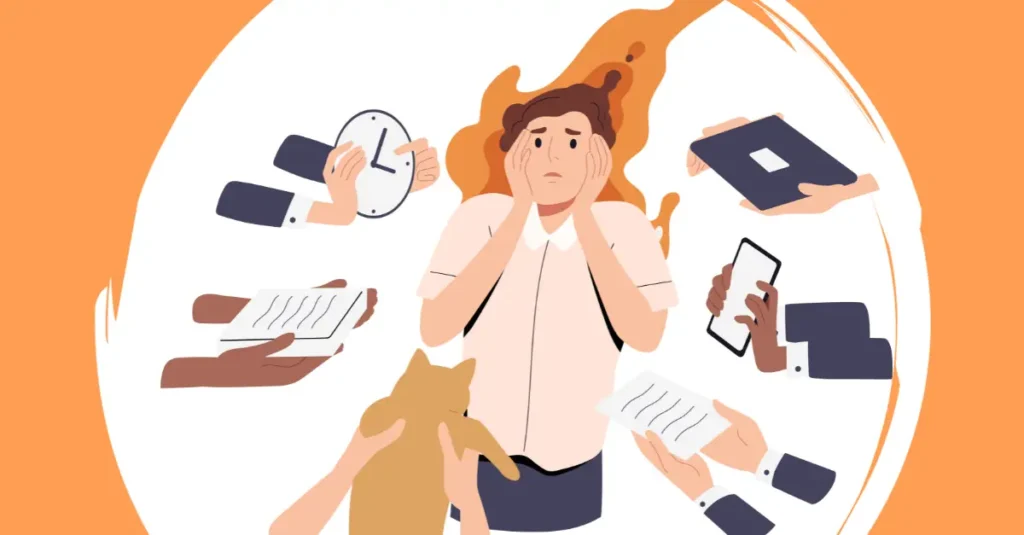
Have you ever opened Instagram to check one notification and emerged 47 minutes later knowing the relationship status of a stranger’s cousin? Or said something unnecessarily rude during an argument and immediately wondered, “Why did I do that?”
Congratulations. You have encountered one of psychology’s most uncomfortable questions: how much control do we actually have over our own behaviour?
We like to believe that we are independent decision-makers, carefully weighing our options before choosing what to do. We choose our careers, relationships, food, opinions, and whether to reply to that message. We even take pride in our ability to resist temptation, as though our brains come equipped with a tiny, well-dressed CEO who approves every decision.
But what if our choices are influenced by processes that begin before we consciously recognise them? What if our childhood, genetics, past experiences, social environment, and unconscious brain activity influence what we eventually decide?
Welcome to free will versus determinism, a debate that challenges our ideas about choice, control, and personal responsibility. And no, the answer is not simply that your brain made you do everything, so you can blame neuroscience for your questionable life decisions.
The reality is considerably more complicated.

What Is Free Will Versus Determinism?
At its core, free will versus determinism asks whether our actions genuinely originate from our own choices or whether they are the outcomes of prior causes that we do not fully control.
The debate has existed in philosophy for centuries, but psychology and neuroscience have made it considerably more personal. Instead of asking only whether free will exists, researchers investigate how decisions emerge, how much unconscious processing contributes to behaviour, and whether we can regulate our actions.
What Is Free Will?
Free will is the idea that people possess some capacity to choose between alternatives and direct their behaviour.
When you decide to study instead of watching another episode, apologise after an argument, or resist buying something you cannot afford, you might experience yourself as exercising free will.
However, free will does not necessarily mean making choices without any influence whatsoever. A person can make a decision while being influenced by memories, emotions, social expectations, and previous experiences.
The more difficult question is whether a choice can genuinely be considered free if the factors shaping it were not freely chosen in the first place.
You did not choose your childhood, temperament, genetic inheritance, or the family environment that influenced your earliest beliefs. Yet these experiences can affect the adult who now makes decisions about everything from relationships to career ambitions.
So, when you say, “I am simply the kind of person who does this,” psychology might reasonably ask: how did you become that kind of person?
What Is Determinism?
Determinism proposes that events arise from prior conditions and causes. Applied to human behaviour, it suggests that our decisions emerge from a combination of factors such as genetics, learning history, brain activity, environmental conditions, and previous experiences.
Imagine snapping at someone who interrupts you. Your reaction might be influenced by poor sleep, accumulated stress, earlier experiences of being ignored, and a learned tendency to respond defensively.
None of these factors necessarily forced you to snap in an obvious, mechanical sense. Yet they may have made that reaction more likely.
This is the uncomfortable part of free will versus determinism: behaviour may have causes that extend far beyond the moment in which we become aware of choosing.
Determinism does not automatically mean that every event is predictable in practice. Human behaviour is enormously complex, and we rarely possess enough information to predict exactly what someone will do.
It also does not mean that effort, learning, or reflection are pointless. Those processes can themselves become causes of future behavioural change.
Fatalism Is Not the Same as Determinism
These concepts are often confused, especially when someone declares, “Everything happens for a reason, so there is no point trying.”
That conclusion does not follow from determinism.
Fatalism suggests that an outcome will occur regardless of what you do. Determinism, by contrast, holds that outcomes arise from preceding conditions, including the actions people take.
Suppose you have an examination next week.
A fatalistic interpretation might suggest that your result is fixed regardless of whether you study. A deterministic account would consider your preparation, previous knowledge, sleep, teaching, and exam conditions among the causes contributing to that result.
Your studying still matters because it can change the conditions influencing the outcome.
And randomness does not automatically rescue free will, either. If a decision were caused by a random neural event, randomness alone would not make that decision more personally controlled.
Being unpredictable and being free are not necessarily the same thing.
What Psychology and Neuroscience Say About Free Will Versus Determinism
One of the most famous scientific contributions to the free will versus determinism debate came from neuroscientist Benjamin Libet and his colleagues.
The Libet Experiment: Does the Brain Decide Before You Do?
In a 1983 experiment, Libet and colleagues asked participants to make a simple, spontaneous wrist movement while monitoring their brain activity. Participants also reported when they first became aware of their intention to move.
The researchers observed a pattern of brain activity known as the readiness potential before participants reported consciously intending to move (Libet et al., 1983).
This raised a provocative question: if brain activity associated with an action begins before conscious awareness of intending it, does consciousness actually initiate our decisions?
It sounds like a scientific mic drop. Unfortunately for anyone hoping to settle a centuries-old philosophical debate with one experiment, the evidence is more complicated.
The task involved simple movements, not complex decisions such as choosing a career, ending a relationship, or deciding whether to forgive someone. The timing of conscious intention was also based on participants’ reports, which introduces measurement limitations.
The experiment demonstrated that brain activity can precede reported conscious intention under certain conditions. It did not establish that every meaningful decision is unconsciously determined or that free will has been disproved.
Can Neuroscience Predict Our Decisions?
A 2008 study by Soon and colleagues investigated whether brain activity could predict participants’ choices before they reported consciously making them.
Using brain imaging, researchers found that patterns of activity in certain brain regions predicted some simple decisions several seconds before participants reported becoming aware of their choices (Soon et al., 2008).
However, prediction was above chance rather than perfect. The researchers were not reading minds with supernatural accuracy, and their findings concerned simple experimental choices.
This distinction matters. A brain signal that provides information about a likely decision is not necessarily evidence that the decision is inevitable.
Later work by Schurger and colleagues (2012) proposed an accumulator model to explain readiness-potential findings. Their account suggested that some observed brain activity could arise from spontaneous neural fluctuations accumulating towards a movement threshold, rather than reflecting a fully formed unconscious decision made long beforehand.
Research on human volition continues to explore how intentions, brain activity, and conscious awareness interact (Haggard, 2008). The relationship is complex, and neuroscience alone cannot settle every philosophical question about free will.
The lesson from these studies is not that consciousness is useless. It is that the process of deciding may begin before we experience ourselves as consciously deciding.
Your Brain Has a History You Did Not Choose
Consider two people who receive the same criticism at work.
One listens, reflects, and asks for clarification. The other becomes defensive and spends the evening replaying the conversation.
Why do they respond differently?
Personality, emotional regulation, previous experiences, stress levels, cultural expectations, and learned coping strategies can all contribute. Their immediate reactions may reflect patterns developed over many years.
This is where free will versus determinism becomes especially relevant to everyday psychology.
Conditioning and Learned Behaviour
Through classical and operant conditioning, people learn associations between situations, emotional responses, and consequences.
A person who was repeatedly criticised for making mistakes during childhood might become unusually sensitive to negative feedback. Another person who received encouragement to experiment and learn may interpret the same criticism as useful information.
These responses are not necessarily conscious decisions. They can develop through repeated experiences until they begin to feel automatic.
The same process helps explain everyday habits. You might reach for your phone whenever you feel bored, avoid difficult conversations because avoidance temporarily reduces anxiety, or become defensive because that response has protected you from uncomfortable feelings in the past.
Over time, these behaviours can become familiar and automatic.
But learned behaviour is not permanently fixed. New experiences, different environments, deliberate practice, and psychological interventions can help people develop alternative responses.
Your past influences you. It does not automatically dictate every future action.
Genetics, Development, and Environment
Human behaviour also reflects interactions between biological and environmental influences.
Genetic differences can contribute to traits such as temperament, while early relationships, education, social conditions, and life experiences shape how those tendencies develop.
For example, someone who is naturally more sensitive to stress may respond differently to a demanding environment than someone who is less reactive. But sensitivity alone does not determine the outcome. Support, coping skills, available resources, and accumulated experiences matter too.
The free will versus determinism debate becomes misleading when it turns into a choice between blaming everything on biology and blaming everything on personal decisions.
People are influenced by conditions they did not choose, but those conditions interact in complicated ways. There is no single explanation for every behaviour.
If Our Choices Have Causes, Can We Change?
This is arguably the most useful question to emerge from free will versus determinism.
If our behaviour is influenced by previous experiences and present circumstances, does that mean we are trapped in our existing patterns?
Not necessarily.
Psychology distinguishes between acting automatically and regulating behaviour. Human beings can learn to notice emotional reactions, reconsider assumptions, delay impulses, and practise alternative responses.
These abilities involve executive functions, including working memory, inhibitory control, and cognitive flexibility. They are not unlimited resources, however. Stress, fatigue, emotional overload, and other conditions can make self-regulation more difficult.
Think about the familiar experience of wanting to respond calmly during an argument but feeling an immediate urge to retaliate.
The initial anger might arise automatically. What happens next can depend on whether you recognise the emotion, have learned effective coping strategies, and possess enough psychological capacity in that moment to use them.
Sometimes you pause and respond thoughtfully. Sometimes you say something spectacularly unhelpful and spend the next three business days regretting it.
Both outcomes have causes. The important point is that the capacity to learn and respond differently is also part of the causal picture.
From a psychological perspective, change does not require proving that we possess absolute, unlimited freedom. It requires recognising which influences can be understood, modified, or managed.
Compatibilism: Can Free Will and Determinism Coexist?
Not everyone believes free will and determinism must be mutually exclusive.
Compatibilism argues that meaningful free will can coexist with determinism. On this view, a person can exercise freedom when they act according to their own reasons, values, and intentions without being coerced, even if those intentions have causes.
Imagine deciding to pursue psychology because you enjoy understanding human behaviour and helping people. Your interests may have been shaped by your upbringing, education, personality, and experiences.
Does that make your decision meaningless?
A compatibilist would argue that the presence of influences does not automatically eliminate agency. Your decision can still express your considered preferences and reasoning.
By contrast, incompatibilism holds that free will and determinism cannot both be true in the relevant sense. Hard determinists generally conclude that determinism rules out free will, while libertarian accounts of free will maintain that genuine freedom requires something beyond deterministic causation.
These positions involve substantial philosophical disagreements, and none can be resolved simply by pointing to a brain scan.
For psychology, compatibilism offers one useful way of thinking about agency: our choices need not be completely independent of their causes to be meaningful.
Free Will Versus Determinism and Personal Responsibility
If behaviour has causes, should people be held responsible for what they do?
This question matters far beyond philosophy. It affects parenting, education, criminal justice, mental health treatment, and how we judge other people.
Understanding the causes of harmful behaviour can encourage more effective interventions. Someone who struggles with aggression may benefit from learning emotional regulation, addressing trauma-related difficulties, or changing the circumstances that repeatedly trigger conflict.
However, explaining behaviour does not automatically excuse it.
A person can be accountable for the harm they cause while others recognise the factors that contributed to their actions. Accountability can involve consequences, repair, boundaries, and efforts to prevent future harm.
This is different from assuming that everyone who behaves badly is simply choosing to be bad, regardless of their circumstances.
It is also different from concluding that nobody is responsible for anything because behaviour has causes.
A more psychologically informed approach asks two questions: What contributed to this behaviour, and what can be done to reduce the likelihood of it happening again?
That approach leaves room for compassion without abandoning accountability.
It also challenges the comforting habit of treating our own mistakes as complicated products of circumstance while interpreting everyone else’s mistakes as evidence of poor character.
Funny how our personal context always seems to deserve a footnote.
A Thought Is Not the Same as an Intention
The free will versus determinism debate can become especially confusing when people begin to question whether every thought reveals something about their character.
It does not.
An unwanted or intrusive thought is not the same as an intention, and an intention is not the same as an action. Thoughts can arise spontaneously, sometimes contradicting a person’s values or wishes.
For example, experiencing an unwanted aggressive thought does not automatically mean someone wants to act aggressively. The presence of a thought alone is not reliable evidence of intention, character, or future behaviour.
People also experience impulses they choose not to act on. The ability to recognise an impulse and decide how to respond is an important part of behavioural regulation.
This distinction matters because believing that every mental event represents a deliberate choice can create unnecessary shame and anxiety.
We do not necessarily choose every thought that enters our awareness. What we do with our thoughts, and how we respond to them, is a different question.
So, Do We Actually Have Free Will?
The honest answer is that the debate remains unresolved.
Research suggests that decisions involve unconscious processing, biological mechanisms, previous learning, and environmental influences. It also shows that people can deliberate, regulate behaviour, learn from consequences, and change their responses.
Whether these capacities amount to free will in the deepest philosophical sense depends partly on how free will is defined.
The free will versus determinism debate is not simply a contest between personal responsibility and scientific explanation. It is an attempt to understand how agency operates in a world where behaviour has causes.
Perhaps the most useful response is to become less interested in whether we are completely free and more curious about the conditions that help us make better choices.
What makes you more likely to react defensively? Which habits operate without much conscious attention? What helps you pause before responding? Which environments support the person you are trying to become?
These questions do not solve the philosophical problem, but they can make a difference to everyday life.
The next time you snap at someone, procrastinate for three hours, or open Instagram for the seventh time in ten minutes, you can acknowledge the influences behind your behaviour without pretending you had no role in what happened.
You are neither an entirely independent decision-making machine nor a helpless passenger watching your brain operate.
You are a person whose choices emerge from a complicated history, a changing environment, and a brain capable of learning.
And if you have made it to the end of this article instead of scrolling away, congratulations. Whether that was free will, determinism, or a particularly strong need to finish what you started remains open for debate.
References
- Haggard, P. (2008). Human volition: Towards a neuroscience of will. Nature Reviews Neuroscience, 9, 934–946. https://doi.org/10.1038/nrn2497
- Libet, B., Gleason, C. A., Wright, E. W., & Pearl, D. K. (1983). Time of conscious intention to act in relation to onset of cerebral activity (readiness-potential). Brain, 106(3), 623–642. https://doi.org/10.1093/brain/106.3.623
- Schurger, A., Sitt, J. D., & Dehaene, S. (2012). An accumulator model for spontaneous neural activity prior to self-initiated movement. Proceedings of the National Academy of Sciences, 109(42), E2904–E2913. https://doi.org/10.1073/pnas.1210467109
- Soon, C. S., Brass, M., Heinze, H. J., & Haynes, J. D. (2008). Unconscious determinants of free decisions in the human brain. Nature Neuroscience, 11, 543–545. https://doi.org/10.1038/nn.2112
- Welniarz, Q., et al. (2023). Can neuroscience enlighten the philosophical debate about free will? Neuropsychologia, 188, 108632. https://doi.org/10.1016/j.neuropsychologia.2023.108632
Subscribe to PsychUniverse
Get the latest updates and insights.
Join 3,087 other subscribers!
Niwlikar, B. A. (2026, October 22). Free Will Versus Determinism: The Uncomfortable Psychology of Your Choices. PsychUniverse. https://psychuniverse.com/free-will-versus-determinism/