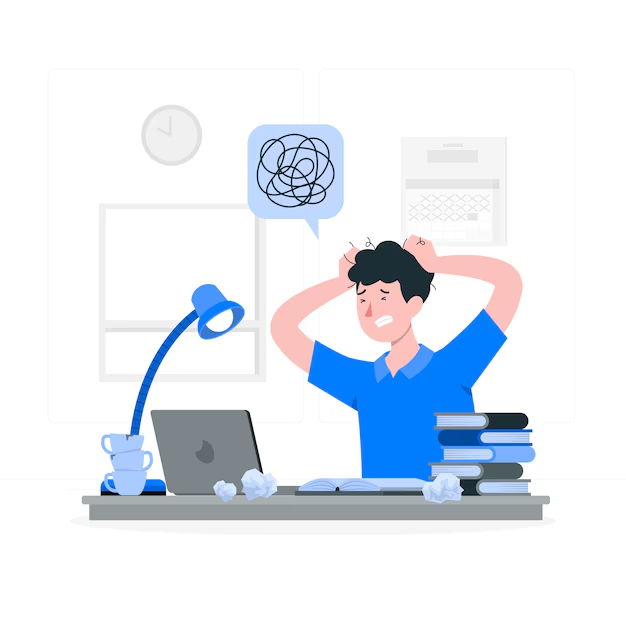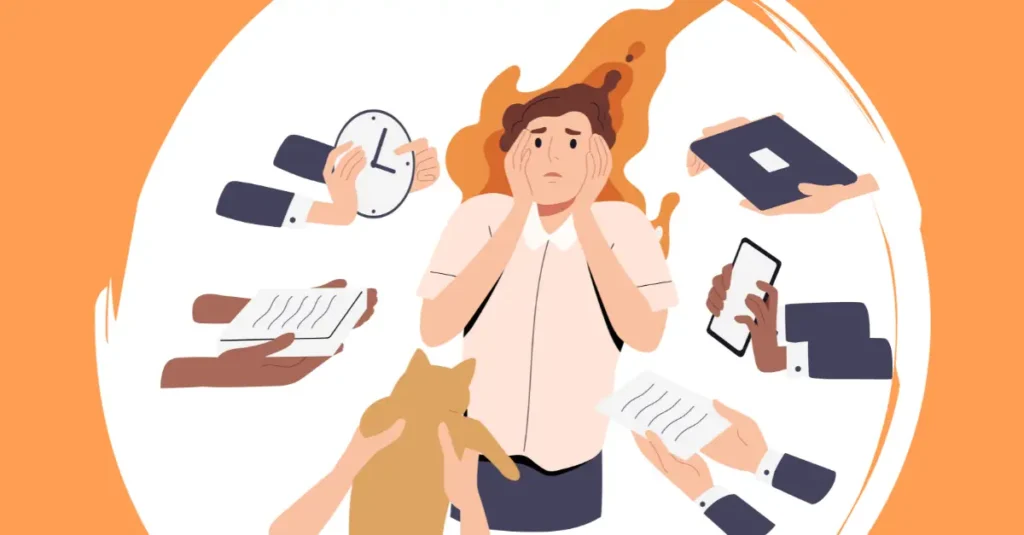
Always found yourself wondering “why do i push people away?”, imagine this first:
You spend weeks hoping someone texts you.
Then they finally do.
You smile.
You blush.
You kick your feet a little.
Things are going great.
They’re consistent.
They’re kind.
They actually remember that tiny story you told them three weeks ago.
They’re emotionally available.
Green flags everywhere.
And suddenly…
You become a part-time FBI agent.
“They’re probably pretending.”
“This feels… suspicious.”
“Maybe I should take eight hours to reply.”
“Actually… maybe I don’t like them anymore.”
Or my personal favourite…
“They’re getting too attached.”
My dear friend.
Five business days ago, you were the attached one.
Now you’re planning your emotional escape like you’re starring in a prison break.
If you’ve ever found yourself doing this, you’ve probably asked:
Why Do I Push People Away?
The strange thing is…
Most people who push others away don’t actually want distance.
They want safety.
Psychology has spent decades trying to understand why people sometimes sabotage the very closeness they crave.
The answer has surprisingly little to do with being “bad at relationships.”
And a lot to do with how our brains learn to protect us.
Let’s unpack the psychology behind Why Do I Push People Away.

1. Your Brain Thinks Distance Is Safer Than Disappointment
One of the biggest reasons Why Do I Push People Away is surprisingly simple.
Your brain isn’t trying to ruin your relationships.
It’s trying to prevent heartbreak.
Imagine touching a hot pan once.
The next time you see that pan, you’re careful.
Relationships work similarly.
If closeness has repeatedly led to rejection, criticism, abandonment, betrayal, or inconsistency, your brain quietly starts making a dangerous prediction:
“Getting close isn’t safe.”
So instead of waiting to get hurt…
It decides to leave first.
Psychologists often describe this as a protective strategy rather than a conscious choice.
Unfortunately…
The same strategy that protects you from rejection also protects you from love, trust, and genuine connection.
2. Attachment Styles Quietly Shape Adult Relationships
One of the most influential explanations comes from Attachment Theory, developed by and later expanded through the research of .
The basic idea is beautifully simple.
Our earliest relationships teach us what to expect from future relationships.
If caregivers were generally responsive and emotionally available, children often develop secure attachment.
They grow up believing,
“People can usually be trusted.”
But when love feels inconsistent, rejecting, unpredictable, or emotionally unavailable, different attachment patterns may develop.
One of these is avoidant attachment.
People with avoidant tendencies often value independence so strongly that emotional closeness starts feeling uncomfortable.
Not because they don’t care.
But because vulnerability feels unfamiliar.
This is one of the most researched answers to Why Do I Push People Away.
It’s often less about the other person…
And more about the emotional blueprint your brain learned years ago.
3. Vulnerability Feels Like Standing on a Stage Without a Script
Let’s be honest.
Being emotionally vulnerable is terrifying.
You’re basically handing someone the instruction manual to your insecurities and hoping they don’t use it against you.
No wonder people hesitate.
When someone starts seeing the real you…
Not the funny you.
Not the successful you.
Not the “I’ve got everything together” version.
The actual you.
Your brain suddenly whispers,
“Abort mission.”
This isn’t irrational.
Psychologist has spent years studying vulnerability and describes it as the birthplace of connection—but also of uncertainty, emotional exposure, and risk.
The irony?
The very thing we’re trying to avoid is often the exact thing required to build intimacy.
Which explains another reason Why Do I Push People Away.
Sometimes we’re not rejecting the other person.
We’re protecting the parts of ourselves we’re afraid they’ll reject.
4. You Reject Yourself Before Someone Else Can
Imagine two possibilities.
Option A:
Someone leaves you.
Painful.
Option B:
You leave first.
Still painful.
But at least it feels like you had some control.
Many people unconsciously choose Option B.
Psychologists sometimes call this self-handicapping or self-sabotaging behaviour.
The logic sounds something like this:
“If I create distance now, they can’t hurt me later.”
It’s a psychological illusion of control.
Unfortunately…
It usually creates the very loneliness it was trying to prevent.
Which makes Why Do I Push People Away one of those frustrating questions where the solution and the problem are often the same.
The walls that keep pain out also keep love out.
5. Rejection Starts Existing Before It Actually Happens
Here’s something fascinating.
Some people don’t wait for rejection.
Their brain predicts it.
A delayed reply?
“They’re losing interest.”
Someone seems quieter than usual?
“I’ve done something wrong.”
Your partner says they’re tired?
“They’re probably tired of me.”
This is often linked to rejection sensitivity—the tendency to anxiously expect, quickly perceive, and intensely react to possible rejection.
The important word here is possible.
Nothing has actually happened.
But your brain has already started writing the ending.
If you assume rejection is inevitable, pushing people away can begin to feel strangely logical.
Because in your mind…
You’re simply speeding up something that was “going to happen anyway.”
Except…
Very often, it wasn’t.
6. Healthy Relationships Can Feel… Weird
Here’s one of psychology’s biggest plot twists.
Sometimes people don’t push away unhealthy relationships.
They push away healthy ones.
Sounds backward, doesn’t it?
Imagine you’ve spent years riding emotional roller coasters.
Hot.
Cold.
Mixed signals.
Late-night apologies.
Three-day disappearances followed by “Hey, stranger.”
Your brain starts confusing unpredictability with chemistry.
Then one day you meet someone emotionally available.
They communicate.
They show up.
They don’t play games.
And your first thought is…
“They’re nice… but I don’t feel the spark.”
That “spark” might actually be anxiety.
Our brains often mistake familiarity for safety, even when that familiarity wasn’t healthy.
Psychologists sometimes refer to this as repetition of familiar relational patterns. We don’t always choose what’s good for us—we often choose what feels familiar.
It’s another important answer to Why Do I Push People Away.
Sometimes peace feels unfamiliar.
And unfamiliar can feel unsafe.
7. Your Defence Mechanisms Are Trying to Protect You
Psychology has long recognised something called defence mechanisms.
These are unconscious ways our minds protect us from emotional pain.
Some people become sarcastic whenever conversations get serious.
Some change the topic.
Some suddenly become “too busy.”
Others convince themselves,
“I never really liked them anyway.”
Notice something?
These behaviours reduce vulnerability.
For a little while, they also reduce anxiety.
That’s why they’re so tempting.
The problem is that defence mechanisms are designed for short-term protection, not long-term connection.
Imagine wearing a raincoat every single day because it rained once last month.
Eventually, the raincoat becomes heavier than the rain itself.
The same thing happens emotionally.
Which is another reason Why Do I Push People Away isn’t about weakness.
It’s often about protection that has outlived its purpose.
8. You Can’t Build Closeness Without Taking Emotional Risks
This might be the hardest truth in the article.
There is no version of love that comes with a guarantee.
No relationship is completely risk-free.
No friendship includes a certificate promising you’ll never be disappointed.
That uncertainty isn’t a flaw.
It’s part of being human.
Real intimacy requires saying,
“This matters to me.”
And that will always involve some degree of vulnerability.
The goal isn’t to eliminate fear.
The goal is to stop letting fear make every decision.
Because if fear chooses every relationship…
It usually chooses distance.
And distance often answers Why Do I Push People Away better than anything else.
So… How Do You Stop Pushing People Away?
The good news?
These patterns aren’t permanent.
Our brains are capable of learning new ways of relating throughout life.
Here are a few psychology-backed starting points:
Notice your pattern before you judge it.
Instead of saying,
“Why am I like this?”
Try asking,
“What is my brain trying to protect me from?”
That small shift replaces shame with curiosity.
Learn your attachment style.
Understanding your attachment patterns isn’t about putting yourself into a personality box.
It’s about recognising the emotional habits you’ve learned so you can choose different ones.
Let people earn your trust slowly.
Vulnerability doesn’t mean telling your entire life story on the second date.
Healthy trust grows gradually.
One honest conversation.
One kept promise.
One repaired misunderstanding at a time.
Challenge your assumptions.
When your brain says,
“They’re definitely going to leave.”
Pause.
Ask yourself,
“What evidence do I actually have?”
Feelings are real.
They aren’t always facts.
Consider therapy if the pattern feels deeply rooted.
Sometimes pushing people away is connected to earlier experiences of loss, neglect, trauma, or inconsistent relationships.
Working through those experiences with a therapist can help your brain realise that not every relationship belongs in the same chapter.
Final Thoughts
One of the saddest things about asking Why Do I Push People Away is that the answer is rarely,
“Because I don’t care.”
More often, it’s the opposite.
You care so much that losing the relationship feels unbearable.
So your brain comes up with a clever little plan.
Leave first.
Stay distant.
Don’t need anyone.
Problem solved.
Except…
It isn’t.
Because humans are wired for connection.
We need people.
Not perfect people.
Not people who never disappoint us.
Just safe enough people with whom we can be ourselves.
If you’ve recognised yourself throughout this article, don’t read it as a diagnosis.
Read it as an explanation.
Your brain didn’t create these patterns overnight.
It learned them.
And the beautiful thing about learned patterns is that they can be unlearned.
The next time you feel the urge to disappear, stop replying, build another emotional wall, or convince yourself that closeness is dangerous, pause for a moment.
Ask yourself one simple question:
“Am I protecting myself from what’s happening right now… or from what happened a long time ago?”
The answer might explain Why Do I Push People Away more honestly than self-criticism ever could.
Because sometimes the strongest thing you can do isn’t pushing people away.
It’s staying long enough to discover that not everyone leaves.
Subscribe to PsychUniverse
Get the latest updates and insights.
Join 3,088 other subscribers!
Niwlikar, B. A. (2026, July 10). Why Do I Push People Away When They Get Close? 8 Hidden Psychological Reasons You Keep Creating Distance. PsychUniverse. https://psychuniverse.com/why-do-i-push-people-away/