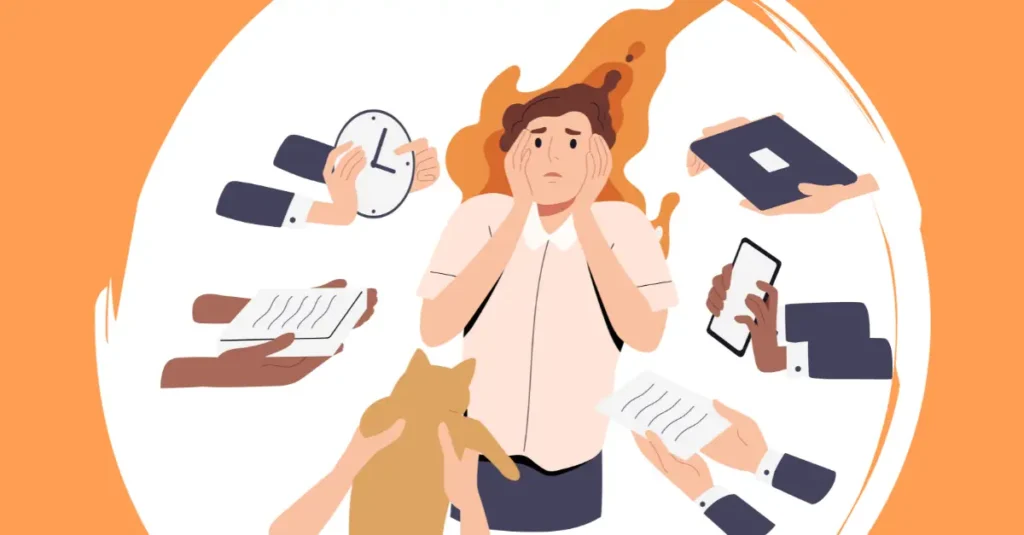
Can Gratitude Become Toxic? 7 Reasons “Just Be Grateful” Can Be the Worst Thing You Hear
Picture this.
You tell someone you’re exhausted.
They smile.
“Just be grateful.”
You say you’re heartbroken.
“At least you had someone.”
You lose your job.
“Everything happens for a reason.”
You tell someone you’re anxious.
“Other people have it much worse.”
Fantastic.
Your emotional pain has just been treated with the psychological equivalent of putting a glitter sticker on a broken bone.
Somewhere along the way, gratitude got terrible PR.
What started as one of the most well-researched positive psychology practices somehow transformed into a universal response for every human emotion.
Sad?
Be grateful.
Burned out?
Be grateful.
Grieving?
Be grateful.
Existential crisis on a Tuesday afternoon?
Obviously…
Be grateful.
At this point, “just be grateful” has become the emotional version of turning your phone off and on again.
Sometimes it helps.
Most of the time, it completely ignores the actual problem.
Which brings us to an important question:
Can Gratitude Become Toxic?
Surprisingly…
Psychology says yes.
Not because gratitude itself is harmful.
But because forcing gratitude at the wrong time can invalidate emotions, prevent healthy processing, and even make people feel worse.
Let’s unpack why Can Gratitude Become Toxic is becoming an increasingly important conversation in psychology.

First, Gratitude Is Actually Good for You
Before we accidentally start a war with gratitude journals…
Let’s be clear.
Healthy gratitude is genuinely beneficial.
For over two decades, positive psychologists like Robert Emmons have studied gratitude and consistently found that intentionally noticing and appreciating positive aspects of life is associated with greater well-being, stronger relationships, better sleep, and higher life satisfaction.
Gratitude can shift attention away from constant problem-scanning and remind our brains that life is rarely made up of only difficulties.
In other words…
Psychology isn’t anti-gratitude.
Quite the opposite.
The problem isn’t gratitude.
The problem is how people use it.
Understanding that distinction is essential when asking Can Gratitude Become Toxic.
Because genuine gratitude and forced gratitude are two very different psychological experiences.
1. “Just Be Grateful” Can Invalidate Real Emotions
Imagine your friend says,
“I’ve been feeling really overwhelmed lately.”
You immediately respond,
“But look at everything you have!”
It sounds supportive.
But what message does your friend actually receive?
“Your feelings are wrong.”
This is called emotional invalidation.
Instead of acknowledging someone’s emotional experience, we unintentionally dismiss it by immediately redirecting attention elsewhere.
One of the biggest reasons Can Gratitude Become Toxic is because gratitude can become a shortcut around emotions instead of a way through them.
Here’s the truth psychology repeatedly teaches us:
You cannot heal emotions you refuse to acknowledge.
People don’t stop feeling sad simply because someone reminds them that other people have it worse.
If that worked, therapists would have incredibly short appointments.
2. Gratitude Is Not the Same as Toxic Positivity
This is where many people get confused.
Gratitude says:
“Life is difficult… and there are still things I appreciate.”
Toxic positivity says:
“Life is difficult… but don’t talk about it.”
Notice the difference?
Healthy gratitude makes room for pain.
Toxic positivity tries to erase it.
You can miss someone deeply…
and still feel grateful they were part of your life.
You can be anxious about the future…
and still appreciate the people supporting you today.
You can be grieving…
and still experience moments of joy.
Human emotions are capable of existing together.
Psychologists call this emotional complexity.
Understanding emotional complexity helps answer Can Gratitude Become Toxic.
It becomes toxic when gratitude replaces emotions instead of accompanying them.
3. Suppressing Emotions Usually Backfires
Many people think they’re practicing gratitude.
What they’re actually practicing…
is emotional suppression.
There’s a difference.
Suppression sounds like:
“I shouldn’t feel upset.”
“I should just be thankful.”
“I have no right to complain.”
Psychological research has consistently shown that chronically suppressing emotions is associated with greater stress, poorer psychological well-being, and even relationship difficulties.
Emotions don’t disappear because you ignore them.
They’re more like toddlers.
The more you ignore them…
the louder they become.
That’s another important reason Can Gratitude Become Toxic.
When gratitude becomes permission to avoid difficult emotions, it stops functioning as emotional resilience and starts functioning as emotional avoidance.
4. Gratitude Should Be a Choice, Not a Command
Here’s something fascinating.
Researchers have found that gratitude interventions are most effective when people choose them willingly.
Not when they’re forced.
Think about it.
Imagine someone hands you a notebook and says,
“Every night, write down three things you’re grateful for.”
Sounds reasonable.
Now imagine they add,
“And if you still feel sad after that, you’re clearly not trying hard enough.”
Suddenly the exercise doesn’t feel hopeful.
It feels like homework.
Or worse…
a moral test.
This is one reason Can Gratitude Become Toxic deserves careful discussion.
Gratitude loses much of its psychological power when it becomes an obligation rather than an authentic experience.
Positive emotions cannot be bullied into existence.
Ironically, genuine gratitude often arrives naturally—after people have been given permission to fully experience their sadness, anger, fear, or grief first.
5. Gratitude Doesn’t Look the Same in Every Culture
Here’s something that rarely gets mentioned in self-help books.
Most early gratitude research came from Western, individualistic cultures.
But psychologists later began asking an important question:
Does gratitude feel the same everywhere?
The answer is… not always.
Research has shown that in many collectivistic cultures, gratitude can sometimes come bundled with feelings of obligation, indebtedness, or pressure to repay others rather than simply appreciation.
Instead of thinking,
“I’m grateful someone helped me.”
A person might think,
“Now I owe them.”
Or,
“I have to sacrifice my own needs because they did so much for me.”
Researchers such as Alex Wood have also written about distinguishing healthy gratitude from its “harmful impostors”—states that look like gratitude on the surface but are actually driven by guilt, obligation, or fear rather than genuine appreciation.
This is another important answer to Can Gratitude Become Toxic.
Sometimes what we call gratitude isn’t gratitude at all.
It’s people-pleasing wearing gratitude’s clothes.
And those are very different psychological experiences.
6. Comparing Pain Is Never a Healthy Gratitude Practice
We’ve all heard it.
“You think you have problems?”
“Children are starving.”
“Someone always has it worse.”
Technically…
That’s true.
Someone almost always has it worse.
But psychology has never suggested that suffering is a competition.
Imagine going to a doctor with a broken arm.
And the doctor says,
“Well, someone else has two broken arms, so yours isn’t that bad.”
Ridiculous, right?
Yet we do exactly this with emotions.
Pain doesn’t become invalid because someone else’s pain is bigger.
Likewise, happiness doesn’t become invalid because someone else is happier.
One of the healthiest gratitude practices is learning to hold two truths at once:
“I am struggling.”
“I also have things I genuinely appreciate.”
Those two statements can peacefully coexist.
That’s the kind of gratitude psychology supports.
And it’s another reason Can Gratitude Become Toxic only when it’s used to dismiss rather than understand emotions.
7. Real Gratitude Begins After Honesty
Perhaps the biggest misconception about gratitude is that it’s supposed to make negative emotions disappear.
It isn’t.
Real gratitude doesn’t ask you to pretend your life is perfect.
It asks you to notice that your life is rarely made up of only pain.
The healthiest gratitude practice isn’t saying,
“Everything is amazing.”
It’s saying,
“Today was difficult… but my friend checking in meant something.”
Or,
“I’m grieving… but I’m grateful I had someone worth grieving.”
That’s psychologically very different.
In fact, some psychologists describe gratitude as expanding attention, not replacing reality.
Instead of forcing your brain to ignore what’s wrong, gratitude gently reminds it that what’s right also deserves attention.
That’s why Can Gratitude Become Toxic depends entirely on how gratitude is practiced.
So… What Does Healthy Gratitude Actually Look Like?
If gratitude isn’t pretending everything is fine, then what is it?
Psychology suggests a few simple principles:
- Feel your emotions first. Gratitude is not a replacement for sadness, anger, fear, or grief.
- Avoid comparing suffering. Your pain doesn’t need to win a competition to deserve compassion.
- Notice, don’t force. Gratitude works best when it’s genuine, not when it’s demanded.
- Be specific. Instead of saying, “I’m grateful for everything,” notice one meaningful moment—a conversation, a meal, a laugh, a quiet evening.
- Let gratitude and difficult emotions coexist. You can appreciate your life while still acknowledging that parts of it are incredibly hard.
Ironically, the more permission you give yourself to experience difficult emotions, the easier genuine gratitude often becomes.
Final Thoughts
Somewhere along the way, “just be grateful” became emotional duct tape.
Gratitude.
Heartbreak?
Gratitude.
Burnout?
Gratitude.
Existential crisis because your Wi-Fi disconnected during an important meeting?
Apparently…
Gratitude.
But psychology paints a much more compassionate picture.
The answer to Can Gratitude Become Toxic isn’t that gratitude is bad.
It’s that gratitude was never meant to silence pain.
It was meant to exist alongside it.
Healthy gratitude doesn’t ask you to smile through suffering.
It doesn’t shame you for having difficult emotions.
It doesn’t tell you someone else has it worse.
Instead, it quietly says:
“Your pain is real.”
“And so are the good things that still exist.”
Those ideas don’t cancel each other out.
They complete each other.
So the next time someone tells you to “just be grateful,” remember this:
You don’t have to choose between honesty and hope.
You can cry and still be grateful.
You can heal and still have hard days.
You can appreciate your life without pretending it’s perfect.
Because perhaps the healthiest form of gratitude isn’t forcing yourself to ignore the darkness.
It’s learning to notice the light without denying that the darkness exists.
And that’s ultimately the answer to Can Gratitude Become Toxic.
It can—but only when gratitude stops being an invitation to notice the good and starts becoming a command to ignore the bad.
Subscribe to PsychUniverse
Get the latest updates and insights.
Join 3,088 other subscribers!
Niwlikar, B. A. (2026, July 9). Can Gratitude Become Toxic? 7 Reasons “Just Be Grateful” Can Be the Worst Thing You Hear. PsychUniverse. https://psychuniverse.com/can-gratitude-become-toxic/