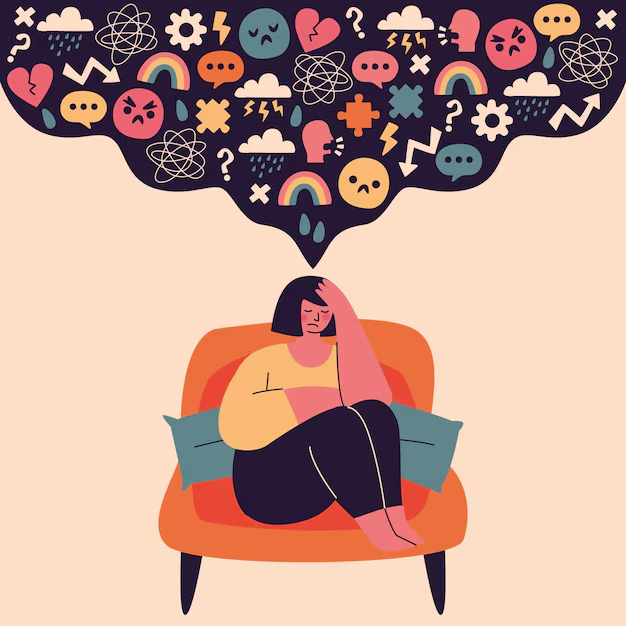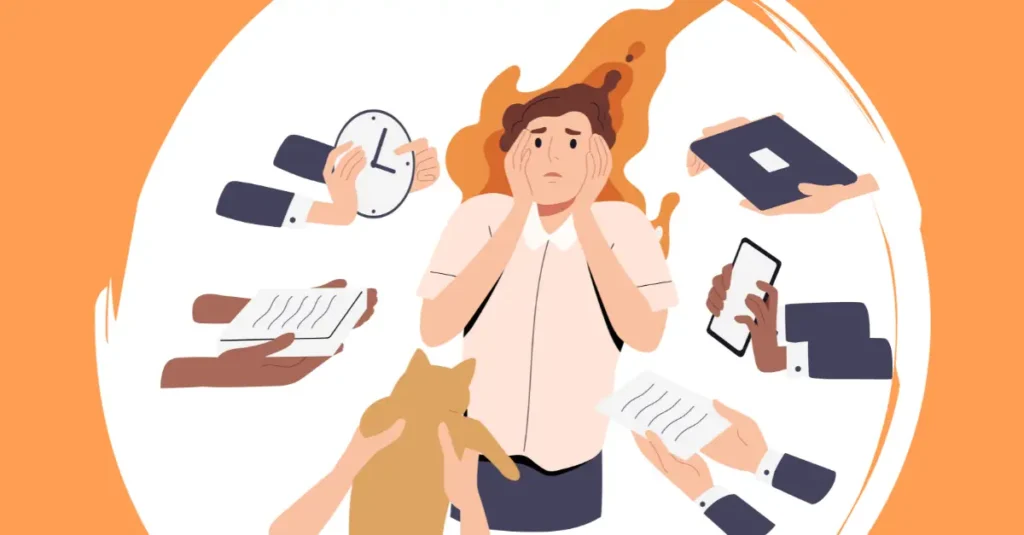
Let’s start with a bold claim: you are not underperforming because you haven’t insulted yourself enough.
I know. Controversial.
Somewhere between hustle culture and childhood report cards, we collectively decided that the voice in our head saying, “You’re behind. You’re lazy. You’re not good enough,” is actually the responsible adult in the room.
As if psychological growth is unlocked by aggressive internal commentary.
As if your nervous system wakes up every morning thinking, “You know what would really optimize today? Mild self-contempt.”
But here’s the problem, and this is where psychology ruins the fantasy, the effects of self-criticism are not motivational in the way people assume. They are neurological stress responses dressed up as discipline.
When you repeatedly attack your own competence, worth, or adequacy, your brain does not interpret that as ambition. It interprets it as threat. The amygdala activates. Cortisol rises. Your body shifts into a defensive posture. You are not “pushing yourself.” You are physiologically bracing.
And organisms that are bracing are not learning efficiently. They are surviving.
What makes the effects of self-criticism particularly deceptive is that they sometimes correlate with achievement. High performers often report being intensely self-critical. So, we conclude the criticism caused the success.
But correlation is not causation. Anxiety can fuel output in the short term. So can fear. So can insecurity. That does not mean they are optimal strategies. It means they are expensive ones.
The research on the effects of self-criticism consistently links chronic self-attack with higher rates of depression, anxiety disorders, perfectionism, procrastination, and shame-based identity formation. Not exactly the résumé of a healthy motivational coach.
And yet, many people defend their inner critic like it’s a misunderstood genius.
“It’s the reason I’m successful.”
Or — more revealing —
“It’s the only thing keeping me from falling apart.”
That’s not discipline.
That’s fear wearing a productivity badge.
And if you’re brave enough to actually examine the effects of self-criticism instead of romanticizing them, you’ll notice something unsettling: the voice you think is strengthening you may be quietly narrowing you, reducing your willingness to risk, to experiment, to fail publicly, to be imperfect in visible ways.
Which means the thing you call “high standards” might actually be controlled self-protection.
So before we talk about self-compassion, which, relax, is not code for mediocrity, we need to dismantle a myth:
You do not become exceptional by becoming your own bully.
We have enough people for that.

The Nervous System Doesn’t Thrive on Humiliation
Let’s get clinical for a moment.
Your brain has two broad motivational systems: a threat system and a drive system. Self-criticism lights up the threat system. It tells your body, “Something is wrong. You are unsafe. Fix it or else.”
The short-term result? Hyper-focus. Adrenaline. Urgency.
The long-term result? Exhaustion.
One of the most overlooked effects of self-criticism is chronic nervous system dysregulation. When your internal dialogue is consistently harsh, your baseline stress level rises. Over time, that stress becomes your personality. You start calling it “being intense” or “having high standards.”
But biologically, you are just overstimulated.
And overstimulation does not produce sustainable excellence. It produces burnout with good lighting.
Self-Discrepancy Theory: The Gap That Eats You
Psychologist E. Tory Higgins proposed that we carry multiple self-representations: who we are, who we wish we were, and who we think we should be.
Self-criticism thrives in the gap between those versions.
The larger the gap between your actual self and your idealized self, the harsher the internal commentary becomes. And here’s where the effects of self-criticism deepen, they transform performance gaps into identity wounds.
Instead of thinking, “I need to improve this skill,” you start thinking, “I am fundamentally inadequate.”
That shift from behavior to identity is where shame is born.
Guilt motivates repair. Shame motivates hiding.
And when shame becomes your primary fuel, growth becomes terrifying.
Cognitive Distortions: When Your Brain Becomes a Biased Editor
Self-criticism rarely operates on objective data. It runs on cognitive distortions, systematic errors in thinking.
All-or-nothing thinking.
Catastrophizing.
Discounting the positive.
Mind reading.
The effects of self-criticism intensify because repetition strengthens neural pathways. This is neuroplasticity doing its job, unfortunately, it is not picky about content. Whatever you rehearse, you reinforce.
If your daily mental script includes, “I always mess things up,” your brain starts scanning for confirmation. It highlights mistakes. It minimizes wins. It builds a narrative of incompetence that feels factual.
It isn’t factual.
It’s curated.
And once you understand the cognitive mechanics behind the effects of self-criticism, it becomes much harder to romanticize them.
The Performance Paradox
Here’s the part nobody likes hearing: harsh self-criticism often reduces performance in the long run.
Why?
Because when mistakes threaten your identity, you become risk-averse. You procrastinate. You over-prepare. You avoid visibility. You fear feedback.
In other words, the effects of self-criticism create the very stagnation you are trying to prevent.
You don’t try boldly because failure feels catastrophic.
You don’t experiment because imperfection feels exposing.
And so you stay in the narrow band of “safe competence,” wondering why growth feels limited.
Self-Compassion: Not Soft. Strategic.
Now, about self-compassion.
Not the Instagram version. The psychological one.
Research shows that self-compassion increases resilience after failure. It allows individuals to take responsibility without collapsing into shame. It supports adaptive coping and sustained motivation.
Why?
Because it regulates the threat response.
When you replace self-attack with measured accountability, the nervous system stabilizes. Learning improves. Creativity returns. Risk tolerance expands.
In contrast, the effects of self-criticism constrict cognitive flexibility. Stress narrows attention. Safety broadens it.
If you care about performance, real, long-term, meaningful performance, self-compassion is not indulgence.
It is efficiency.
Identity Is Built Through Repetition
The most dangerous effects of self-criticism are not emotional they are structural.
Your identity is shaped by repeated self-statements.
“I am behind.”
“I am bad at this.”
“I am not disciplined enough.”
Repeated often enough, these stop feeling like thoughts and start feeling like truth.
And once a belief integrates into identity, it becomes self-fulfilling. You behave in alignment with it. You interpret experiences through it. You defend it.
That is how self-criticism quietly becomes self-concept.
Discipline Without Self-Destruction
Let’s be clear: abandoning self-criticism does not mean abandoning standards.
It means separating behavior from worth.
You can say:
“That strategy didn’t work.”
Without saying:
“I am the kind of person who never gets it right.”
You can pursue excellence without rehearsing inadequacy.
The irony is that when you reduce the effects of self-criticism, you often increase sustainable discipline. Because you are no longer wasting cognitive resources managing shame.
You are using them to improve.
So, Here’s the Real Question
If the effects of self-criticism include anxiety, avoidance, burnout, shame-based identity, distorted thinking, and reduced resilience, why are you still defending it?
Is it actually helping you? Or does it just feel familiar?
There is a difference between being accountable and being cruel.
One builds competence. The other builds insecurity with achievements attached.
So maybe the upgrade isn’t harsher self-talk. Maybe it’s psychological maturity.
Stop mistaking internal hostility for strength. Stop assuming fear is the engine of greatness.
And stop hating on yourself….we genuinely have enough people for that.
If you’re going to build something extraordinary, start by refusing to be your own demolition crew.
Subscribe to PsychUniverse
Get the latest updates and insights.
Join 3,087 other subscribers!
Niwlikar, B. A. (2026, March 2). Stop Hating on Yourself. You have enough people for that: The Brutal Effects of Self-Criticism (And the Powerful Science of Self-Compassion). PsychUniverse. https://psychuniverse.com/stop-hating-yourself-effects-of-self-criticism/