November is a month that sits right at the intersection of reflection and anticipation. The air cools, holidays approach, and the year begins its slow descent into memory. But November also brings something else—something quieter but deeply important: International Men’s Day, celebrated each year on November 19th. Too often, the day passes unnoticed. It doesn’t come with fireworks, gift cards, or commercial fanfare, yet its message could not be more relevant. International Men’s Day is about men’s mental health, suicide prevention, healthy masculinity, and building a culture where men are allowed—finally allowed—to be whole.
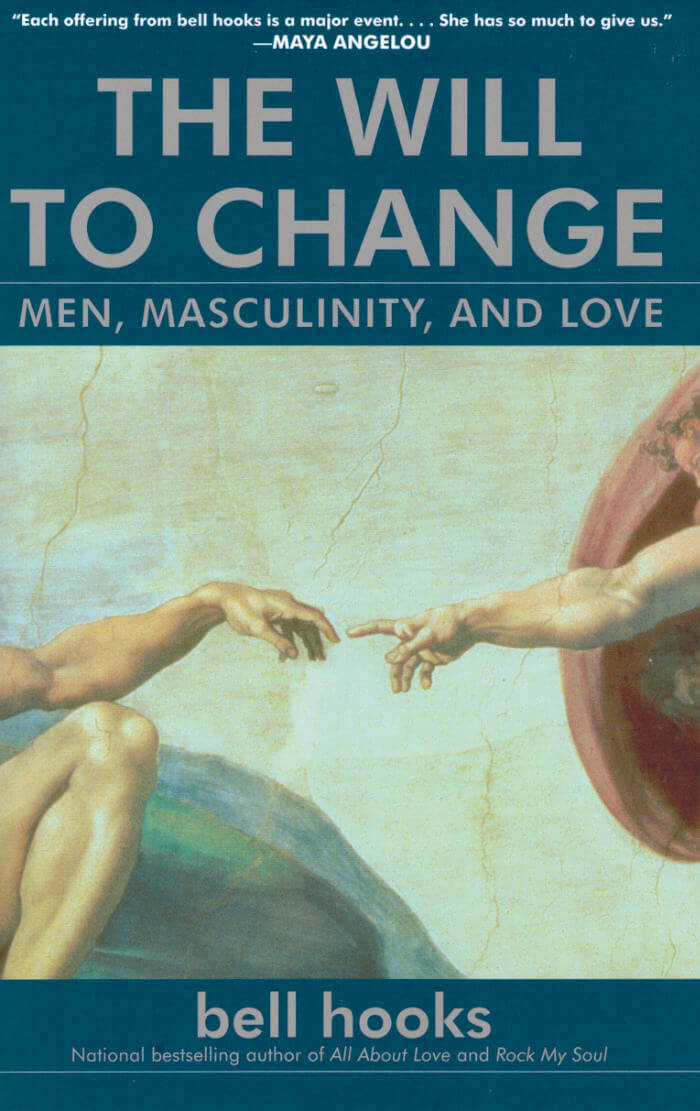
That’s why for this month’s Psyched for Books, we chose a book bold enough to meet the moment: Bell Hooks’ The Will to Change: Men, Masculinity, and Love.
A feminist writing about men? Yes. And it is precisely this perspective—empathetic, critical, yet deeply hopeful—that makes the book one of the most transformative explorations of masculinity and emotional well-being in modern literature. Pull up a chair. November’s read is a warm, challenging, and eye-opening conversation that every one of us needs to be part of.
And hey — if you’ve ever thought, “Wow, I’d totally join a PsychUniverse book club,” we might just make it happen! Imagine a cozy corner of the internet where we geek out over psychology reads together. If that sounds like your vibe, drop a comment below or shoot us an email at psychuniverseofficial@gmail.com, your vote could turn Psyched for Books into a full-blown book club adventure!
Read More: Men’s Mental Health
Why This Book?
Bell Hooks was a writer who understood systems — but even more importantly, she understood people. Across her career, she examined love, family, identity, power, community, and healing with a level of clarity that felt intimate rather than academic. In The Will to Change, she turns that clarity toward masculinity, arguing something both revolutionary and obvious: men are hurting, too.

But not in the way cultural stereotypes suggest. Hooks isn’t interested in shallow complaints about “men not being appreciated.” She digs deeper, exploring how boys are trained into emotional suppression, how men are punished for vulnerability, and how patriarchy harms men by cutting them off from their own emotional capacity.
This makes her book especially fitting for November — a month dedicated in part to recognizing the emotional burdens men carry quietly, and often alone. Posting this reflection on December 1st adds another layer: the new month becomes an invitation to carry forward the lessons we learned last month.
If November helped us acknowledge men’s mental health, December can be the month we act on it.
The Emotional Training Boys Never Asked For
One of Hooks’ most powerful arguments is that boys are not born emotionally distant — they are trained to become that way. And the training begins early. Very early.
The moment boys begin to cry “too much,” they are told to stop. The moment they reach for affection “too often,” they are told to toughen up. The moment they show fear, sadness, or tenderness, they are told that these feelings are “girly,” “weak,” or inappropriate for someone who is supposed to “be a man.”
This emotional pruning doesn’t result in stronger boys.
It results in boys who learn that to be loved, they must hide parts of themselves.
Psychologists call this normative male alexithymia — a socially conditioned inability to articulate or identify emotions (Levant, 1996). Hooks simply calls it what it is: a tragedy. She writes:
“Patriarchy demands of all males that they engage in acts of psychic self-mutilation, that they kill off the emotional parts of themselves.”
(Hooks, 2004, p. 66)
Imagine being told that the most human parts of you — the parts that feel, connect, empathize, express — must be silenced in order to belong. That is the emotional training boys undergo. And many enter adulthood thinking they have no emotional life at all, when in reality, they’ve just been taught not to listen to it.
Men Want Love But Fear What It Might Cost
Hooks argues that men desire love just as deeply as anyone else — but often lack the tools, modeling, or emotional language to participate in healthy, intimate relationships. Men are not unfeeling. They are unpracticed.
In one of the book’s most memorable insights, Hooks writes:
“To know love, men must be able to let go the will to dominate. They must be able to choose to feel.”
(Hooks, 2004, p. 27)
But choosing to feel is terrifying when your entire upbringing has taught you that emotions make you vulnerable, and vulnerability makes you weak.
So men often love intensely but silently.
They care deeply but indirectly.
They attach strongly but cautiously.
They long for intimacy but guard themselves from exposure.
Psychological research supports this paradox. Men report equal or higher emotional distress during relational conflict but externalize it through withdrawal, anger, or silence because they lack emotional fluency (Bartholomew & Horowitz, 1991).
Hooks emphasizes that the issue is not men’s capacity to love — but the emotional armor they were told they must wear to be seen as real men.
Patriarchy Hurts Men
One of Hooks’ sharpest contributions is her distinction between men and patriarchy. She doesn’t pretend that patriarchy is benign — it harms women in devastating ways. But she also emphasizes that men are not its beneficiaries as much as its prisoners.
Patriarchy demands that men:
- suppress emotion
- prioritize dominance
- value power over authenticity
- reject vulnerability
- avoid introspection
- fear softness
- seek worth through achievement
It strips men of emotional permission, replacing it with performance. And when men fail to meet these impossible expectations, the system blames them for not being “man enough.”
Psychologists Mahalik, Good, and Englar-Carlson (2003) confirm this, showing that rigid masculine norms correlate with depression, anxiety, substance abuse, and difficulty seeking help.
Hooks pushes us to see that patriarchy is not synonymous with men. It is a system that uses men as tools for its continuation. And the cost is profound.
The Father Wound and Emotional Inheritance
One of the most emotionally moving chapters in The Will to Change examines the complex relationships men have with their fathers — relationships often marked by silence rather than connection. Many fathers love their children fiercely, yet express this love through provision, discipline, or duty rather than emotional warmth. This is not because they do not feel affection, but because they were never allowed to develop an expressive emotional language.
Hooks writes about fathers not with criticism, but with compassion. She reminds us that many fathers were themselves raised inside the same emotional cages they later handed down. Attachment research shows that children learn emotional expression primarily through parental modeling (Cowan & Cowan, 2019). A father who wasn’t taught emotional fluency cannot magically teach it to his son.
The result is a generational echo — sons who grow up yearning for affection and fathers who were never taught how to give it.
Hooks breaks this cycle open gently but powerfully, showing how healing is possible when we understand the roots of emotional distance rather than simply resenting it.
Love as Liberation
The central promise in Hooks’ book is this: Emotional freedom is possible for men. Not by abandoning masculinity, but by expanding it. Hooks proposes a vision of masculinity that includes:
- vulnerability
- tenderness
- accountability
- self-reflection
- empathy
- emotional literacy
- community care
This vision isn’t theoretical. Therapist Sue Johnson (2008) emphasizes that emotional responsiveness — not stoicism — is the foundation of secure, lasting relationships. Hooks believes that when men embrace emotional depth, they not only heal themselves but transform their relationships, families, and communities.
This is masculinity not as dominance, but as connection.
International Men’s Day – And Why We Still Need It
Reflecting on International Men’s Day from the vantage point of December feels meaningful. November may be behind us, but the issues it raises remain as urgent as ever.
Men face:
- higher rates of suicide
- social pressure to remain stoic
- stigma around therapy
- fear of emotional vulnerability
- isolation in friendships
- lack of emotional support networks
International Men’s Day encourages us to address these realities, not dismiss them. Hooks urges the same.
If November helped us see men’s emotional pain, December can help us respond to it.
Hooks’ Writing Is Not Heavy – It’s Surprisingly Engaging
Although the themes are serious, Hooks writes with warmth, humor, and a conversational intimacy that makes even the heaviest insights feel human. She uses anecdotes, cultural examples, and personal reflection, weaving theory with narrative in a way that never feels academic or distant.
Reading The Will to Change feels like talking to someone who understands you better than you understand yourself — someone who tells the truth with tenderness, not judgment.
It’s the kind of book that stays with you long after you close the cover.
Why This Book Matters Right Now
As the year winds down and we enter a season of reflection, Hooks’ message is more relevant than ever.
Her book matters because it recognizes that:
- Men are struggling.
- Men want to love and be loved.
- Men are capable of profound emotional depth.
- Patriarchy limits men’s humanity.
- Healing requires vulnerability.
- Relationships thrive on emotional authenticity.
Most importantly, Hooks offers a roadmap for transformation — not in spite of male identity, but in honor of it.
Masculinity does not need to be discarded.
It needs to be expanded, softened, and redefined in ways that allow men to live full emotional lives.
References
Bartholomew, K., & Horowitz, L. M. (1991). Attachment styles among young adults: A test of a four-category model. Journal of Personality and Social Psychology, 61(2), 226–244.
Cowan, C. P., & Cowan, P. A. (2019). Interventions to promote fathers’ involvement with their children. Journal of Family Theory & Review, 11(4), 496–517.
Hooks, B. (2004). The will to change: Men, masculinity, and love. Washington Square Press.
Johnson, S. M. (2008). Hold me tight: Seven conversations for a lifetime of love. Little, Brown Spark.
Levant, R. F. (1996). The new psychology of men. Professional Psychology: Research and Practice, 27(3), 259–265.
Mahalik, J. R., Good, G. E., & Englar-Carlson, M. (2003). Masculinity scripts, presenting concerns, and help seeking. Psychology of Men & Masculinity, 4(2), 128–136.
Subscribe to PsychUniverse
Get the latest updates and insights.
Join 3,049 other subscribers!
Niwlikar, B. A. (2025, November 29). Psyched for Books: The Will to Change and Rethinking Masculinity. PsychUniverse. https://psychuniverse.com/will-to-change/