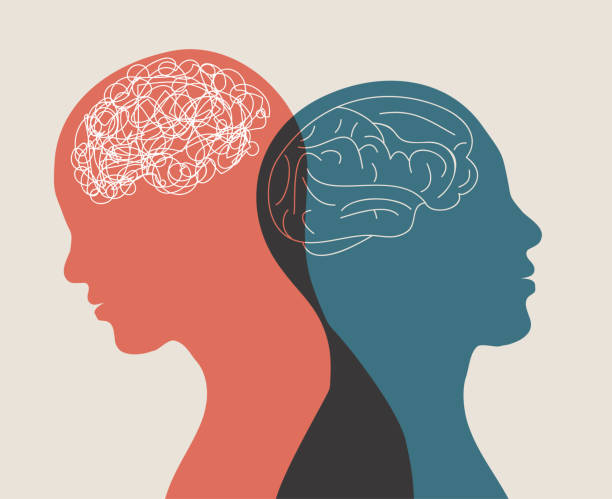
Most people are polite to strangers. We say “please,” soften our tone, and give the benefit of the doubt. Yet with the people we love most—partners, family members, close friends—we’re often more impatient, blunt, or emotionally reactive.
This contrast can feel confusing or even shameful. Why would we treat the most important people in our lives with less care than someone we’ve just met?
Psychology suggests that this pattern isn’t hypocrisy or lack of love. It’s the result of familiarity, emotional safety, cognitive shortcuts, and how the brain manages close relationships.
Read More: Sleep and Mental Health
The Politeness We Perform for Strangers
Interactions with strangers are governed by social norms. When we don’t know someone well, we rely on learned rules of politeness to guide behavior. These rules reduce uncertainty and help manage impressions.
From a psychological perspective, politeness toward strangers is a form of impression management—the process of controlling how others perceive us (Goffman, 1959). Because strangers lack context about who we are, we are motivated to present a socially acceptable version of ourselves.
This leads to:
- Careful word choice
- Emotional restraint
- Greater patience
- Reduced emotional expression
In short, we self-regulate more.
Emotional Safety Changes Behavior
Close relationships operate under different rules. When we feel emotionally safe with someone, the brain relaxes its guard.

Psychologists refer to this as secure base behavior—the idea that trusted relationships allow people to lower defenses and express themselves more freely (Bowlby, 1988). This is healthy and necessary for intimacy.
However, emotional safety also reduces inhibition. With loved ones, we are more likely to:
- Speak impulsively
- Express irritation directly
- Skip social niceties
- Assume understanding without explanation
The same safety that enables closeness also makes emotional spillover more likely.
Familiarity Reduces Self-Monitoring
Self-monitoring refers to how closely we observe and regulate our own behavior in social situations. Research shows that people engage in less self-monitoring with familiar individuals than with strangers (Leary & Kowalski, 1990).
With strangers:
- We monitor tone, posture, and wording
- We correct ourselves quickly
- We suppress irritation
With loved ones:
- We assume forgiveness
- We expect understanding
- We let emotions surface without filtering
This isn’t intentional cruelty—it’s cognitive economy. The brain conserves effort where it believes the relationship is stable.
The “They Know Me” Assumption
One of the most common cognitive shortcuts in close relationships is the belief that loved ones “should know” what we mean, feel, or intend.
Psychologists call this the illusion of transparency—the tendency to overestimate how clearly our internal states are visible to others (Gilovich et al., 1998). This illusion is stronger in close relationships, where shared history creates a false sense of mutual understanding.
As a result:
- We explain less
- We clarify less
- We correct misunderstandings later—if at all
When miscommunication happens, frustration increases quickly because expectations are higher.
Emotional Contagion and Spillover
Close relationships are emotionally porous. We absorb and transmit emotions more easily with people we care about.
Research on emotional contagion shows that emotions spread more rapidly between close partners than between strangers (Hatfield et al., 1994). This means stress, irritability, and exhaustion are more likely to spill over onto loved ones.
Strangers get our regulated selves. Loved ones get our unfiltered emotional residue.
This is why people often snap at family members after a stressful day—even if the family had nothing to do with the stress.
Attachment Styles and Emotional Reactivity
Attachment theory provides another key explanation. Our early attachment experiences shape how we express emotion and manage conflict in close relationships (Ainsworth et al., 1978).
For example:
-
Secure attachment tends to allow open expression with repair
-
Anxious attachment may increase emotional reactivity and sensitivity
-
Avoidant attachment may lead to withdrawal or bluntness
Attachment systems are activated primarily in close relationships—not with strangers. This means old emotional patterns are more likely to surface with loved ones.
Why Expectations Are Higher With Loved Ones
We expect more from people we love:
- More understanding
- More patience
- More emotional attunement
When these expectations aren’t met, disappointment arises quickly. With strangers, expectations are minimal, so small kindnesses feel like bonuses rather than obligations.
Psychologically, disappointment is often more painful than inconvenience. This helps explain why small behaviors—forgotten texts, distracted listening, tone of voice—can feel disproportionately upsetting in close relationships.
Deindividuation Through Familiarity
Over time, familiarity can lead to deindividuation—seeing someone more as a role (“my partner,” “my sibling”) than as a full, moment-to-moment individual.

This doesn’t mean we care less. It means the brain relies on stored representations rather than fresh perception. Strangers, by contrast, demand attention because they are new and unpredictable.
As a result:
- We notice strangers’ reactions more carefully
- We overlook loved ones’ subtle emotional cues
- We respond automatically rather than intentionally
Conflict Feels Safer With Loved Ones
Ironically, we argue more with loved ones because the relationship can tolerate it. The brain assumes the bond is resilient.
From an evolutionary standpoint, this makes sense. Close relationships were essential for survival, so conflict within them needed to be repairable. Strangers were less predictable and potentially dangerous, so caution was adaptive.
This doesn’t excuse hurtful behavior—but it explains why emotional intensity is concentrated in close bonds.
Why This Pattern Can Become Harmful
While being less filtered with loved ones is natural, chronic imbalance can erode relationships. When kindness is reserved for outsiders and emotional reactivity for insiders, resentment builds.
Research shows that perceived emotional neglect—feeling taken for granted—predicts relationship dissatisfaction more strongly than overt conflict (Gottman, 1994).
The issue isn’t occasional irritability. It’s when loved ones consistently receive the least regulated version of us.
Reversing the Pattern
Psychological research suggests that intentionally applying “stranger-level” courtesy to close relationships can improve relationship quality.
This includes:
- Pausing before responding
- Clarifying intent instead of assuming understanding
- Expressing appreciation explicitly
- Repairing quickly after emotional slip-ups
These behaviors don’t reduce intimacy—they protect it.
Self-Regulation Is a Form of Care
Being kind to loved ones requires emotional regulation, not emotional suppression. The goal isn’t to perform politeness constantly, but to recognize that emotional safety shouldn’t mean emotional dumping.
Healthy closeness balances authenticity with responsibility.
Love Lowers Guards—Not Standards
We’re often nicer to strangers because we’re regulated, cautious, and attentive. We’re less filtered with loved ones because we feel safe.
Understanding this doesn’t mean accepting it uncritically. It means recognizing that love lowers our guard—but it shouldn’t lower our standards for care.
The people who feel safest with us deserve not our leftovers, but our intention.
References
Ainsworth, M. D. S., Blehar, M. C., Waters, E., & Wall, S. (1978). Patterns of attachment. Erlbaum.
Bowlby, J. (1988). A secure base. Basic Books.
Gilovich, T., Savitsky, K., & Medvec, V. H. (1998). The illusion of transparency. Journal of Personality and Social Psychology, 75(2), 332–346. https://doi.org/10.1037/0022-3514.75.2.332
Goffman, E. (1959). The presentation of self in everyday life. Anchor Books.
Gottman, J. M. (1994). What predicts divorce? Lawrence Erlbaum.
Hatfield, E., Cacioppo, J. T., & Rapson, R. L. (1994). Emotional contagion. Cambridge University Press.
Leary, M. R., & Kowalski, R. M. (1990). Impression management. Psychological Bulletin, 107(1), 34–47. https://doi.org/10.1037/0033-2909.107.1.34
Subscribe to PsychUniverse
Get the latest updates and insights.
Join 3,050 other subscribers!
Niwlikar, B. A. (2026, February 4). Why We’re Nicer to Strangers Than to People We Love. PsychUniverse. https://psychuniverse.com/why-were-nicer-to-strangers/