Why It Is Important to Sit With Your Feelings
Let’s be a little uncomfortably honest.
When you feel something heavy, sadness, anger, rejection, that weird sinking feeling you can’t explain, what do you actually do?
Do you sit there and feel it?
Or do you immediately start doing things just so you don’t have to feel it?
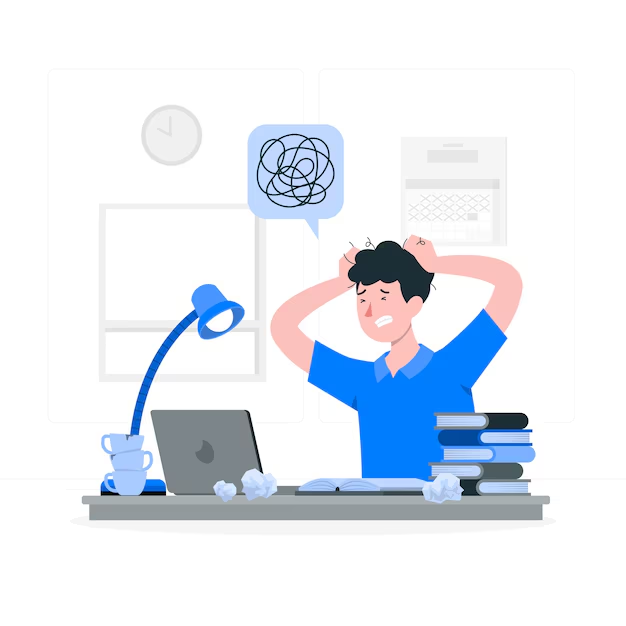
You suddenly decide it’s a great time to text people, go out, plan something, clean your room, watch something, scroll endlessly, laugh louder than usual, keep yourself busy, keep your mind occupied, keep the mood “light,” do anything that makes you feel even slightly better… just so you don’t have to sit in that discomfort.
You’re not trying to process the feeling.
You’re trying to replace it.
You’re trying to outrun it by filling your time, your head, and your attention with literally anything else.
And the funniest part is, you’ll do all of this and then say, “I’m fine now,” or “I’ve moved on.”
Of course you feel fine. You distracted yourself into temporary peace.
That’s not healing. That’s avoidance that worked… for a while.
And that’s exactly why understanding why it is important to sit with your feelings matters, because most people are not actually dealing with their emotions. They’re just getting really good at not noticing them.
You’re Not Moving On. You’re Just Keeping Yourself Busy Enough Not to Notice
Let’s call it what it is.
You’re not “moving on.”
You’re staying occupied.
There’s a difference.
Because if you were actually moving on, you wouldn’t need constant distraction to feel okay. You wouldn’t need noise, activity, or other people just to avoid being alone with your own thoughts.
What you’re doing has a name. It’s emotional avoidance.
Your brain is wired to avoid discomfort. So when something feels bad, it looks for something else to focus on. And you help it. A lot.
You give it stimulation, entertainment, conversation, productivity, anything that shifts your attention away from what you’re actually feeling.
Which is exactly why people don’t fully understand why it is important to sit with your feelings, because avoidance feels like progress. It feels like you’re “handling it.”
But you’re not handling it.
You’re just staying busy enough not to feel it.
The Quiet Damage You Don’t Notice Until It’s Too Loud
Here’s where this starts costing you.
Feelings you avoid don’t disappear. They don’t get solved just because you didn’t look at them.
They stay.
They just show up in ways that are harder to trace back.
That irritation you feel over small things, that overthinking you can’t shut off, that emotional heaviness that shows up randomly, that constant mental tiredness, that is not random.
That is unprocessed emotion.
This is exactly why it is important to sit with your feelings, because when you don’t process them, they don’t resolve. They accumulate.
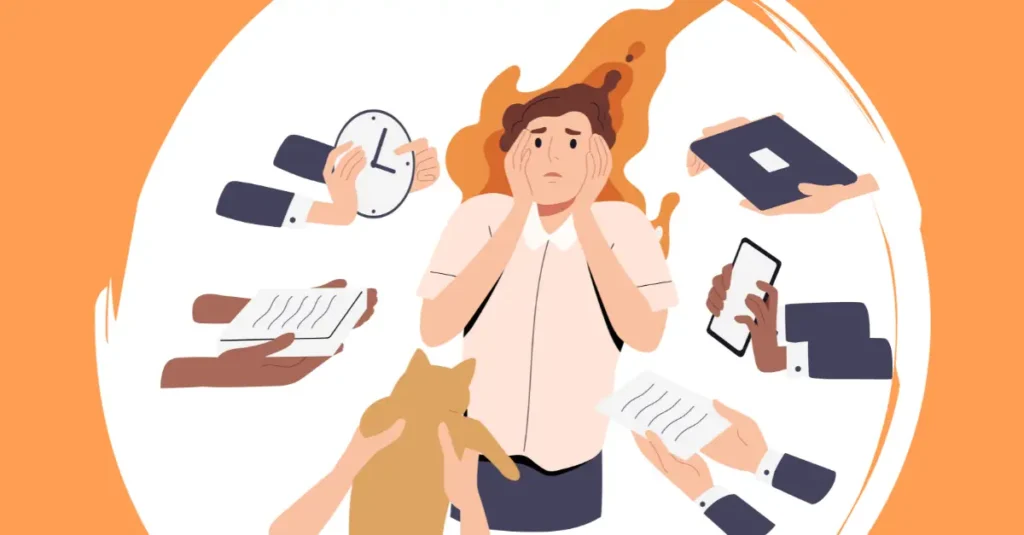
Psychologically, when emotions are suppressed, they remain active in the background. They influence your reactions, your thoughts, and even your physical state. You think you’re reacting to what’s happening right now, but often you’re reacting to things you never actually dealt with.
So no, you’re not “too much.”
You’re just full.
Why It Is Important to Sit With Your Feelings (Even Though You Don’t Want To)
Let’s be honest again.
Sitting with your feelings sounds like the least appealing option when you’re already uncomfortable.
Why would you choose to stay in something that feels bad when you can escape it instantly?
Because that discomfort is not the problem. Avoidance is.
Understanding why it is important to sit with your feelings comes down to how emotions actually work.
An emotion is designed to move through you. It rises, it peaks, and then it fades. But that only happens if you allow the full experience.
When you interrupt that process with distraction, the emotion doesn’t go away. It pauses. And then it comes back later, often stronger, because now it’s been ignored.
When you actually sit with a feeling, your brain starts processing it. Your body begins to regulate itself. The intensity shifts naturally.
But you don’t see that happen, because you leave halfway through.
And then you say, “Why do I still feel this?”
Because you never finished feeling it.
That is exactly why it is important to sit with your feelings. Not because it sounds wise, but because it’s literally how emotions resolve.
You Think You’re in Control. You’re Just Avoiding Better
There’s also a subtle illusion here.
A lot of people think they’re emotionally in control because they don’t sit in feelings for too long, don’t react too much, don’t let things “get to them.”
That’s not control.
That’s avoidance that looks calm on the surface.
Real control is being able to stay with a feeling without needing to escape it immediately.
If you constantly need to distract yourself to feel okay, then you’re not regulating your emotions. You’re depending on avoidance.
And this is where understanding why it is important to sit with your feelings becomes uncomfortable, because it forces you to question whether your coping mechanisms are actually helping you or just helping you avoid yourself.
What Actually Happens When You Sit With Your Feelings
Now here’s what people don’t expect.
When you stop distracting yourself and actually sit with a feeling, it doesn’t take over your life.
It feels intense at first, yes. It feels uncomfortable, yes. But it is not permanent.
If you stay with it, without trying to fix it or escape it, you start to notice that it has a pattern.
It builds. It peaks. It fades.
And over time, your tolerance for that discomfort increases. This is how emotional resilience develops.
Not by avoiding feelings, but by experiencing them and realizing they don’t destroy you.
This is another reason why it is important to sit with your feelings. It teaches your brain that discomfort is not something you need to run from.
It’s something you can move through.
“Okay, But How Do I Actually Do This?”
Fair.
Because “just sit with your feelings” sounds like something people say when they’ve already figured it out, not when you’re in the middle of feeling like your brain is about to spiral.
So let’s make this real.
Sitting with your feelings does not mean overthinking them, drowning in them, or making them your entire personality for the day. It simply means you stop trying to escape them long enough to actually understand what’s going on inside you.
Think of it less like “dealing with a problem” and more like getting to know what’s happening within you without immediately trying to change it.
If you saw the image above, it gives you a direction. But let’s break it down in a way you can actually follow when you’re in it.
1. First, Call It What It Is
Most people don’t even know what they’re feeling. Everything becomes “I feel weird” or “I feel off.”
That doesn’t help.
Be specific.
Are you hurt? Angry? Rejected? Overwhelmed? Embarrassed?
Naming the emotion is not a small step. Psychologically, it reduces the intensity of the feeling because your brain moves from confusion to clarity.
And that’s one of the first reasons why it is important to sit with your feelings, because if you don’t even know what you’re feeling, you can’t process it.
2. Get Curious Instead of Reactive
Instead of immediately trying to fix the feeling, ask yourself:
Why did this come up?
What exactly triggered this?
What is this emotion trying to point towards?
Not in an aggressive way. In a curious, observational way.
Because emotions are not random. They are responses.
If you’re angry, something mattered to you.
If you’re hurt, something affected you.
If you’re anxious, something feels uncertain.
There is always information there.
3. Let Yourself Feel It Without Judging It
You feel something, and immediately you go:
“This is stupid.”
“I shouldn’t feel this way.”
Now you’re not just feeling the emotion. You’re criticizing yourself for it.
Instead, notice the feeling without labeling it as good or bad.
You’re human. You’re supposed to feel things.
Understanding why it is important to sit with your feelings also means understanding that emotions are not enemies.
4. Pay Attention to Your Body, Not Just Your Thoughts
Emotions show up physically.
Tight chest. Heavy stomach. Restlessness.
Notice your breathing. Slow it down. Stay present.
This is what allows the emotion to move instead of staying stuck.
5. Practice Self-Compassion (Not Self-Attack)
Talk to yourself like you would to someone you care about.
“I get why this hurts.”
“This makes sense.”
And remember, even uncomfortable emotions have meaning.
Anger means something mattered.
Hurt means you cared.
Disappointment means you hoped.
There is always something human behind it.
6. Stay Long Enough to Let It Shift
This is where most people leave.
They feel something, get uncomfortable, and distract themselves.
But if you stay, you’ll notice something important.
The feeling changes.
It rises, peaks, and fades.
And that is exactly why it is important to sit with your feelings, because if you leave halfway, you never experience the part where it actually gets better.
Final Thoughts
Let’s not pretend anymore.
You don’t avoid your feelings because you don’t know better.
You avoid them because it works, temporarily.
It helps you feel okay in the moment. It helps you function. It helps you move on quickly.
But that “moving on” isn’t real.
It leaves things unfinished. It leaves emotions unresolved. And those don’t disappear, they wait.
Which is why they keep showing up, again and again, in ways that confuse you.
This is exactly why it is important to sit with your feelings.
Because if you don’t sit with them now, you will sit with them later.
Just not when it’s convenient.
Subscribe to PsychUniverse
Get the latest updates and insights.
Join 3,050 other subscribers!
Niwlikar, B. A. (2026, March 28). Why It Is Important to Sit With Your Feelings: The Quiet Damage of Always “Moving On”. PsychUniverse. https://psychuniverse.com/why-it-is-important-to-sit-with-your-feelings/