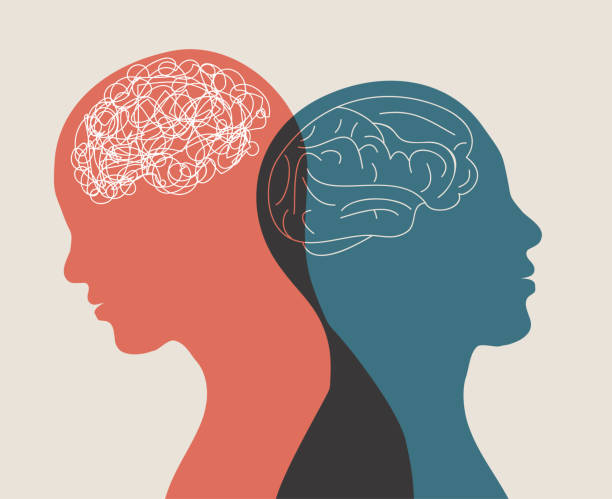
You’re finally in bed. The lights are off, the day is done—and suddenly your brain presses play on a conversation from hours, days, or even years ago. Something you said. Something you should have said. A tone you’re now questioning. A reaction you’re replaying from every angle.
This nighttime mental loop is so common that it feels almost universal. But it’s also deeply frustrating. Why does the brain choose the quietest moment of the day to relive social interactions? And why do these replayed conversations often carry embarrassment, regret, or self-criticism?
Psychology and neuroscience offer a clear answer: replaying conversations at night is not a flaw in your mind—it’s the result of how memory, emotion, and social survival are wired together.
Read More: Sleep and Mental Health
The Brain Doesn’t Power Down at Night
Sleep is not a single off-switch. As the body relaxes, the brain shifts into different modes of processing. During quiet, low-stimulation moments—especially before sleep—the brain naturally turns inward.
When external distractions fade, the default mode network (DMN) becomes more active. This network is involved in self-reflection, autobiographical memory, and imagining social scenarios (Raichle et al., 2001). It’s the same system responsible for daydreaming and mind-wandering.
At night, with fewer demands pulling attention outward, the DMN has space to roam—and it often gravitates toward unresolved social experiences.
Humans Are Wired for Social Evaluation
Humans evolved as deeply social creatures. For most of our evolutionary history, social belonging was essential for survival. Being rejected by the group could mean loss of protection, resources, or mating opportunities.

As a result, the brain developed heightened sensitivity to social cues—facial expressions, tone of voice, pauses, and reactions. Even today, the brain treats social interactions as high-stakes events.
Replaying conversations is part of this system. The brain is essentially asking:
- Did I say the right thing?
- How was I perceived?
- Did I damage a relationship?
- Could I have done better?
This kind of mental replay is known as post-event processing, and it is especially common after socially ambiguous or emotionally charged interactions (Rachman et al., 2000).
Why Negative Moments Get Replayed More
Not all conversations are replayed equally. Neutral or positive interactions tend to fade quickly. Awkward, tense, or embarrassing moments stick.
This is due to the brain’s negativity bias—the tendency to prioritize negative information because it carries more potential threat (Baumeister et al., 2001). From an evolutionary standpoint, remembering mistakes was more useful than remembering successes.
The amygdala, a brain region involved in emotional salience, strengthens memory consolidation for emotionally charged events—especially those involving fear, shame, or rejection (McGaugh, 2004). At night, when emotional regulation is lower and distractions are gone, these memories resurface more easily.
Memory Is Reconstructed, Not Replayed
When you replay a conversation, you’re not accessing a perfect recording. Memory is reconstructive, meaning each recall reshapes the memory itself (Bartlett, 1932).
This matters because:
- You may exaggerate your mistakes
- You may misinterpret others’ reactions
- You may fill in gaps with assumptions rather than facts
Each replay can subtly distort the memory, often in a more self-critical direction—especially for people prone to anxiety or perfectionism. Over time, the memory becomes less about what actually happened and more about what you fear it meant.
The Role of Rumination
Replaying conversations at night is a form of rumination—repetitive, passive focus on distressing thoughts. Rumination is strongly associated with anxiety, depression, and insomnia (Nolen-Hoeksema et al., 2008).
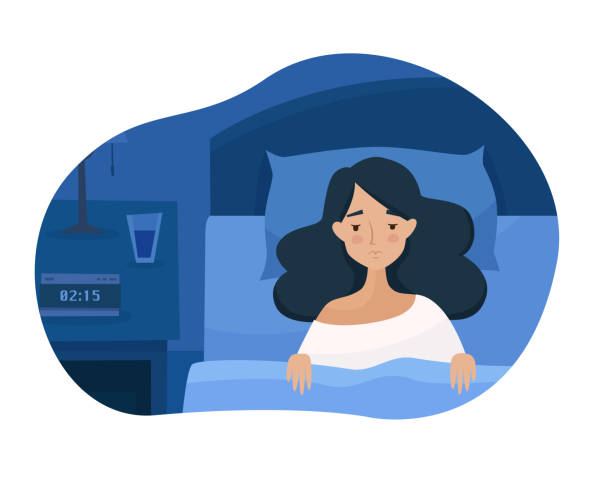
Unlike problem-solving, rumination doesn’t lead to resolution. It circles the same material without generating new insight. At night, when fatigue reduces cognitive flexibility, the brain is more likely to get stuck in these loops.
Importantly, rumination feels involuntary. People often describe it as something that “happens to them,” not something they choose. This sense of loss of control can make nighttime overthinking even more distressing.
Why Nighttime Makes It Worse
Several factors make nighttime especially fertile ground for mental replay:
1. Reduced Distraction
During the day, attention is constantly redirected. At night, there’s nothing competing with internal thoughts.
2. Lower Cognitive Control
Fatigue reduces the brain’s ability to regulate emotions and interrupt negative thought patterns (Pilcher & Huffcutt, 1996).
3. Heightened Emotional Sensitivity
Sleep deprivation and circadian rhythms affect emotional reactivity, making negative thoughts feel more intense at night.
4. Lack of Closure
Unresolved interactions feel louder when there’s no opportunity to act, fix, or clarify them immediately.
Social Anxiety and Conversation Replay
People with social anxiety are particularly prone to replaying conversations. Research shows they engage in more frequent and more negatively biased post-event processing than non-anxious individuals (Clark & Wells, 1995).
Instead of neutrally reviewing an interaction, socially anxious individuals tend to:
-
Focus on perceived flaws
-
Assume negative evaluation by others
-
Ignore positive or neutral feedback
This reinforces anxiety and increases avoidance of future social situations, creating a self-sustaining cycle.
The Illusion of Control
Part of why the brain replays conversations is the illusion that replaying will lead to mastery. The mind rehearses alternate responses, imagining better outcomes.
In moderation, this can be adaptive. Mental simulation helps people learn and prepare for future interactions. But at night, without boundaries, rehearsal turns into self-punishment.
The key difference is intention. Reflection aims to learn; rumination aims to relieve distress but fails to do so.
Shame, Identity, and Self-Concept
Conversations tied to shame are especially sticky. Shame threatens the core sense of self—how we believe we are seen by others.
Psychological research suggests that shame activates global self-evaluation (“I am bad”), rather than behavior-specific evaluation (“I did something awkward”) (Tangney & Dearing, 2002). This makes shame-related memories more emotionally charged and harder to let go.
At night, when defenses are lower, these identity-level concerns surface more easily.
Why “Just Stop Thinking About It” Doesn’t Work
Trying to suppress thoughts often backfires. Studies on thought suppression show that actively trying not to think about something increases its frequency—a phenomenon known as the rebound effect (Wegner, 1994).
This explains why telling yourself to “drop it” often makes the replay louder and more persistent.
What Actually Helps Break the Loop
Psychological research suggests several strategies that reduce nighttime rumination:
1. Externalizing the Thoughts
Writing the conversation down can reduce cognitive load and signal to the brain that the issue has been “stored.”
2. Shifting From Evaluation to Observation
Replacing “Why did I say that?” with “What exactly happened?” reduces emotional intensity.
3. Self-Compassion
Responding to replayed moments with kindness rather than criticism reduces rumination and improves sleep (Sirois et al., 2015).
4. Grounding Attention
Gentle attention to physical sensations (breathing, body contact with the bed) helps disengage the DMN.
When Replaying Signals a Deeper Issue
Occasional replay is normal. Persistent, distressing rumination that interferes with sleep may indicate underlying anxiety, depression, or unresolved interpersonal stress.
In these cases, addressing the broader emotional context—not just sleep habits—leads to more lasting relief.
Your Brain Is Trying to Protect You
Replaying conversations at night isn’t your brain being cruel—it’s your brain trying to protect social bonds, learn from experience, and reduce future risk. The problem isn’t the impulse itself, but the lack of resolution and compassion around it.
Understanding this shifts the experience from “What’s wrong with me?” to “What is my brain trying to do?” That shift alone often reduces the intensity of the replay.
The goal isn’t to silence the mind completely—but to relate to it differently.
References
Bartlett, F. C. (1932). Remembering: A study in experimental and social psychology. Cambridge University Press.
Baumeister, R. F., Bratslavsky, E., Finkenauer, C., & Vohs, K. D. (2001). Bad is stronger than good. Review of General Psychology, 5(4), 323–370. https://doi.org/10.1037/1089-2680.5.4.323
Clark, D. M., & Wells, A. (1995). A cognitive model of social phobia. In R. G. Heimberg et al. (Eds.), Social phobia: Diagnosis, assessment, and treatment (pp. 69–93). Guilford Press.
McGaugh, J. L. (2004). The amygdala modulates the consolidation of memories of emotionally arousing experiences. Annual Review of Neuroscience, 27, 1–28. https://doi.org/10.1146/annurev.neuro.27.070203.144157
Nolen-Hoeksema, S., Wisco, B. E., & Lyubomirsky, S. (2008). Rethinking rumination. Perspectives on Psychological Science, 3(5), 400–424. https://doi.org/10.1111/j.1745-6924.2008.00088.x
Pilcher, J. J., & Huffcutt, A. I. (1996). Effects of sleep deprivation on performance. Sleep, 19(4), 318–326.
Raichle, M. E., et al. (2001). A default mode of brain function. Proceedings of the National Academy of Sciences, 98(2), 676–682. https://doi.org/10.1073/pnas.98.2.676
Sirois, F. M., Molnar, D. S., & Hirsch, J. K. (2015). Self-compassion, stress, and coping. Journal of Clinical Psychology, 71(9), 1–15.
Tangney, J. P., & Dearing, R. L. (2002). Shame and guilt. Guilford Press.
Wegner, D. M. (1994). Ironic processes of mental control. Psychological Review, 101(1), 34–52. https://doi.org/10.1037/0033-295X.101.1.34
Subscribe to PsychUniverse
Get the latest updates and insights.
Join 3,050 other subscribers!
Niwlikar, B. A. (2026, February 2). 4 Important Reasons Why We Replay Conversations in Our Head at Night. PsychUniverse. https://psychuniverse.com/replay-conversations-in-our-head/