Understanding the Mind You’ll Be Living With
The end of a year has a strange psychological effect on people.
Suddenly, time feels visible. We start measuring ourselves against arbitrary milestones—what we achieved, what we didn’t, who we became, and who we thought we would be by now. New Year resolutions appear not because January is special, but because humans crave the feeling of a clean slate.
Psychology, however, offers a quieter truth:
you don’t enter a new year as a blank page.
You carry your habits, beliefs, emotional patterns, and mental shortcuts with you—whether you’re aware of them or not.
And that awareness makes all the difference.
The goal of psychology is not to turn life into a controlled experiment or to eliminate struggle. It is to help us understand why we think, feel, and behave the way we do—especially when those patterns work against us. As we move toward 2026, psychology gives us something more valuable than motivation: clarity.
Read More: Teenagers and Risks
The Invisible Forces Running Our Lives
Most of what shapes our daily behavior happens below conscious awareness. We like to believe we are rational decision-makers, but research consistently shows otherwise. Our choices are influenced by emotions we haven’t named, beliefs we’ve never questioned, and habits we didn’t intentionally build.
Carl Jung captured this dynamic with unsettling precision when he observed that what remains unconscious tends to control us. When we don’t understand our inner patterns, we experience life as something that simply happens to us. Missed opportunities feel like bad luck. Repeated mistakes feel like fate.
Psychology interrupts that illusion. It reveals that patterns are not destiny—they are learned responses. And what is learned can be unlearned, reshaped, or at least understood well enough to loosen its grip.
1. Growth Is Not About Positivity
One of the most misunderstood ideas in psychology is the concept of a growth mindset. Popular culture often reduces it to “believe in yourself,” but Carol Dweck’s research was never about blind optimism. It was about how people interpret difficulty.

In her studies, individuals who improved the most were not those who succeeded easily. They were those who viewed mistakes as part of the learning process rather than evidence of personal inadequacy. Failure, for them, carried information instead of shame.
Read More: Growth Mindset
This distinction matters because humans are remarkably good at turning temporary setbacks into permanent identities. We don’t simply fail—we become failures in our own minds. That cognitive leap is rarely accurate, yet it shapes confidence, persistence, and risk-taking.
Growth mindset does not deny struggle. It reframes it. It allows the possibility that competence is something built over time, not revealed all at once. Carrying this perspective into 2026 does not mean expecting constant progress. It means refusing to let one moment define an entire future.
2. Why Motivation Alone Keeps Letting Us Down
Few concepts are more overvalued than motivation. We treat it as the engine of success, yet we rarely question why it disappears so easily. Psychology explains this unreliability clearly.
Research by Edward Deci and Richard Ryan shows that motivation is deeply tied to three basic psychological needs: autonomy, competence, and relatedness. When people feel controlled, inadequate, or disconnected, motivation declines—even if external rewards are present.
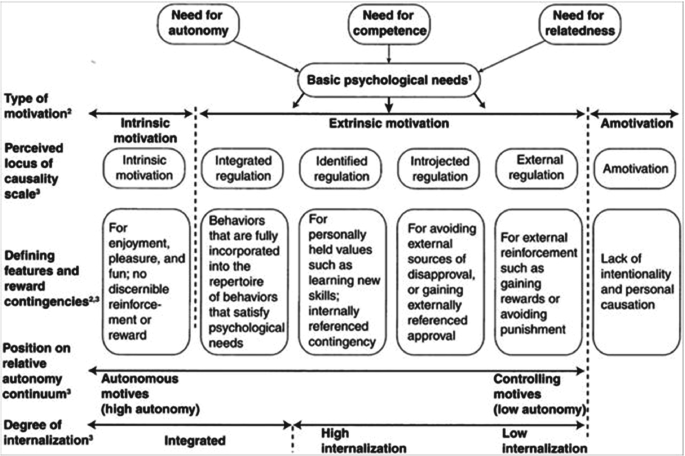
This explains why pressure, comparison, and fear-based discipline often backfire. They may produce short-term compliance, but they undermine the very conditions that sustain long-term engagement.
Viktor Frankl’s reflections on meaning add another layer. His work suggests that humans endure difficulty not because they are disciplined, but because their efforts feel meaningful. Purpose anchors persistence far more effectively than force.
As 2026 approaches, the more useful question is not “How do I motivate myself?” but “What feels worth my energy?” Motivation follows meaning more reliably than it follows willpower.
3. Emotions Are Not Problems to Eliminate
Another widespread misunderstanding is the belief that emotional maturity means feeling less. In reality, emotional maturity means understanding more.
Lisa Feldman Barrett’s research challenges the idea that emotions are automatic reactions. Instead, emotions are constructed experiences—interpretations shaped by past learning, bodily sensations, and context. They are signals, not instructions.
This distinction is critical. Feeling anxious does not necessarily mean danger is present. Feeling angry does not require immediate action. Often, emotions reflect internal states such as exhaustion, uncertainty, or unmet needs.
The skill psychology emphasizes is not suppression but regulation—the ability to notice emotions without being overtaken by them. Viktor Frankl described this as the space between stimulus and response, a moment of choice that separates impulse from intention.
Carrying this awareness into 2026 does not mean becoming emotionally detached. It means learning to pause long enough to respond rather than react, preserving both relationships and self-respect.
4. The Cost of Being Your Own Harshest Critic
Many people assume that self-criticism is necessary for improvement. If you’re not hard on yourself, how will you grow? Psychology offers a surprising answer: harsh self-judgment often impedes growth rather than accelerates it.
Kristin Neff’s research on self-compassion shows that individuals who treat themselves with understanding after failure are more resilient, more motivated, and more likely to try again. Self-compassion does not remove responsibility; it removes unnecessary cruelty.
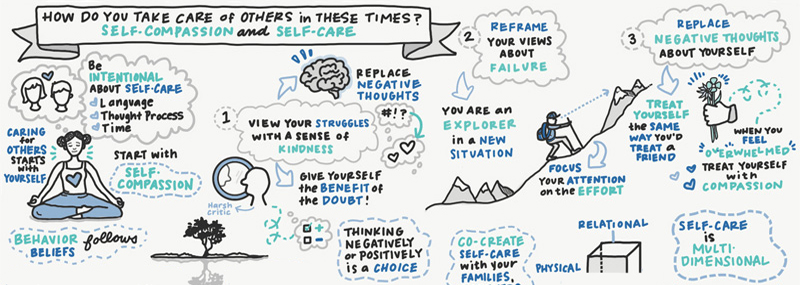
Shame narrows attention and encourages avoidance. Kindness, on the other hand, creates psychological safety—the condition under which learning and change become possible.
Most people would never speak to a friend the way they speak to themselves. Carrying self-compassion into 2026 means correcting that imbalance. It means recognizing that improvement does not require self-punishment, only honesty and care.
5. Why Goals Alone Are Not Enough
Goals dominate modern self-improvement culture. They are measurable, concrete, and satisfying when achieved. But psychology reminds us that goals are fragile. They depend on circumstances, timing, and control—factors that life routinely disrupts.
Acceptance and Commitment Therapy, developed by Steven Hayes, shifts attention from goals to values. While goals define outcomes, values define directions. They describe how a person wants to live, regardless of immediate results.
A goal can be missed. A value can be expressed even on a difficult day.
When life becomes uncertain, values offer stability. They answer a question goals cannot: Who do I want to be, even now? Carrying values into 2026 provides continuity when plans change, and meaning when outcomes are delayed.
Better Decisions Begin with Awareness, Not Perfection
Human decision-making is less rational than we like to believe. Daniel Kahneman’s work illustrates how much of our thinking is fast, emotional, and automatic. While this system is efficient, it is also prone to bias and error.
Awareness does not eliminate these tendencies, but it reduces their power. When people pause to reflect—especially in emotionally charged moments—they engage a slower, more deliberate mode of thinking.
Better decisions are rarely about intelligence. They are about timing. The willingness to pause, reflect, and consider long-term consequences often matters more than raw insight.
Asking whether a reaction serves one’s future self is a small question with large consequences. Carrying that habit into 2026 quietly reshapes choices.
Change Is Messy Because the Brain Prefers Familiarity
Change is uncomfortable not because it is wrong, but because it is unfamiliar. The brain values predictability—even when the predictable pattern is unhealthy. This is why people return to habits they intellectually want to abandon.
Relapse, from a psychological perspective, is not failure. It is feedback. Learning rarely progresses in a straight line, and expecting it to do so creates unnecessary discouragement.
Albert Ellis emphasized personal responsibility not as blame, but as empowerment. When individuals recognize that their patterns belong to them, they gain the ability to work with those patterns rather than feel controlled by them.
What Psychology Ultimately Teaches Us
Psychology does not promise transformation without effort. It does not guarantee happiness, confidence, or certainty. What it offers instead is understanding.
Understanding why growth takes time.
Understanding why motivation fluctuates.
Understanding why emotions intensify under stress.
Understanding why self-kindness supports resilience.
As 2026 approaches, the most valuable thing to carry forward is not a resolution, but a relationship with your own mind—one built on curiosity rather than judgment.
Because life does not improve when we become different people.
It improves when we understand ourselves better.
References
Barrett, L. F. (2017). How Emotions Are Made. Houghton Mifflin Harcourt.
Deci, E. L., & Ryan, R. M. (2000). Intrinsic and Extrinsic Motivation. Contemporary Educational Psychology.
Dweck, C. S. (2006). Mindset: The New Psychology of Success. Random House.
Ellis, A. (1994). Reason and Emotion in Psychotherapy. Carol Publishing Group.
Frankl, V. E. (1959). Man’s Search for Meaning. Beacon Press.
Hayes, S. C., Strosahl, K. D., & Wilson, K. G. (1999). Acceptance and Commitment Therapy. Guilford Press.
Jung, C. G. (1964). Man and His Symbols. Doubleday.
Kahneman, D. (2011). Thinking, Fast and Slow. Farrar, Straus and Giroux.
Neff, K. D. (2011). Self-Compassion. William Morrow.
Subscribe to PsychUniverse
Get the latest updates and insights.
Join 3,036 other subscribers!
Niwlikar, B. A. (2025, December 27). 5 Important Psychology Concepts to Carry With You into 2026. PsychUniverse. https://psychuniverse.com/psychology-concepts-2026/