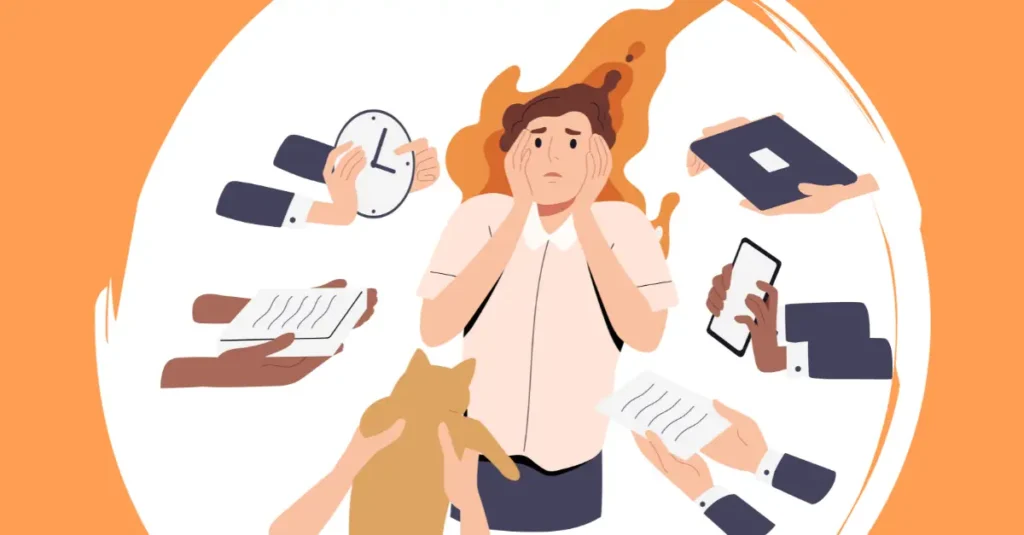
The uncomfortable truth about difficulty setting boundaries in adults who were praised for being “easy”
If you were the “good kid,” this might sting a little.
You didn’t talk back. You adjusted. You were mature for your age. You understood. You didn’t create problems.
And now?
You have difficulty setting boundaries.
You say yes when you mean no. You over-explain simple decisions. You feel guilty for needing space. You call basic self-respect “being rude.”
And somewhere inside, you still believe that being loved depends on being manageable.
This isn’t personality. This is conditioning.

1. You Were Rewarded for Self-Abandonment
Here’s the first psychological layer behind difficulty setting boundaries:
As a child, approval was survival. When you were praised for being calm, adjusting, not demanding, not emotional, your nervous system learned something dangerous:
“If I inconvenience people, I risk connection.”
So you became easy.
You swallowed anger. You minimized needs. You anticipated others’ moods.
That pattern doesn’t disappear in adulthood. It becomes difficulty setting boundaries disguised as kindness.
But kindness that costs you your voice is not kindness. It’s adaptation.
2. Approval Dependency Feels Like Morality
For many “good kids,” difficulty setting boundaries isn’t about weakness.
It’s about morality.
You genuinely feel like:
-
Saying no is selfish.
-
Asking for space is dramatic.
-
Disappointing someone is cruel.
-
Protecting your time is arrogant.
Why?
Because love was linked to performance.
You weren’t just loved. You were approved of. And approval is conditional.
So now, every boundary feels like a threat to your identity. If I stop being agreeable, who am I?
This is how difficulty setting boundaries becomes an identity crisis.
3. Fear of Rejection Is Running the Show
Let’s get clinical for a moment.
Difficulty setting boundaries is strongly linked to:
-
Fear of rejection
-
Anxious attachment patterns
-
Hypervigilance toward emotional withdrawal
-
Early emotional unpredictability
Your brain learned that disconnection is dangerous.
So instead of risking:
-
Someone being upset,
-
Someone thinking you’re difficult,
-
Someone leaving,
You over-function. You accommodate. You tolerate. And you call it maturity.
But psychologically, this is a survival strategy that simply never got updated.
4. Boundaries Feel Wrong Because They Were Never Modeled
If you grew up in a family where:
-
Emotions were dismissed
-
Conflict meant chaos
-
Obedience meant peace
-
Needs were “too much”
Then you never saw healthy boundaries. So when you try now, it feels unnatural.
That discomfort you feel? That guilt? That shaky voice?
That’s not proof you’re wrong.
That’s proof you have difficulty setting boundaries because your nervous system associates boundaries with danger.
Your body reacts as if you’re doing something unsafe — even when you’re just saying, “I can’t do that.”
5. You Confuse Being Needed with Being Loved
Many adults with difficulty setting boundaries unconsciously equate usefulness with worth.
If I am needed, I matter. If I solve problems, I belong. If I sacrifice, I am good.
Boundaries threaten that identity. Because once you stop over-giving, you have to sit with a terrifying question:
If I don’t overextend myself… will I still be loved?
This is where people-pleasing conditioning shows up strongest. Not because you’re weak. But because you were trained to survive through approval.
6. Difficulty Setting Boundaries Is Not a Character Flaw, It’s a Nervous System Pattern
Let’s remove shame from this.
Difficulty setting boundaries is not:
-
Being spineless
-
Being naïve
-
Being too soft
It is a learned relational pattern.
Repeated enough in childhood, it wires into adulthood as:
-
Over-explaining
-
Apologizing for existing
-
Avoiding confrontation
-
Feeling responsible for others’ emotions
-
Emotional exhaustion
Your brain chose connection over authenticity. And at the time, that was intelligent. Now, it’s just outdated.
7. The Existential Shift: You Are Allowed to Disappoint People
This is where growth becomes uncomfortable.
Overcoming difficulty setting boundaries means accepting something most “good kids” were never prepared for:
You will disappoint people.
Some will call you different. Some will say you’ve changed. Some will prefer the version of you that never said no.
That doesn’t mean your boundaries are wrong. It means your role is changing.
And yes, it will feel wrong before it feels healthy. Because you are rewiring years of relational conditioning.
Final Truth: Being “Good” Was a Strategy. Being Boundaried Is a Choice.
You were a good kid because it kept you safe. But adulthood requires something different.
It requires:
-
Tolerating discomfort.
-
Letting people misunderstand you.
-
Allowing others to manage their own emotions.
-
Separating love from approval.
Difficulty setting boundaries is not about learning to say no. It’s about learning that your worth does not collapse when someone hears it. And that is a psychological shift most people avoid their entire lives.
If you struggle with difficulty setting boundaries, you are not broken. You are unlearning.
And unlearning always feels like betrayal, until it starts feeling like freedom.
Subscribe to PsychUniverse
Get the latest updates and insights.
Join 3,061 other subscribers!
Niwlikar, B. A. (2026, February 24). Why “Good Kids” Have Difficulty Setting Boundaries: 7 Powerful Insights Into People-Pleasing. PsychUniverse. https://psychuniverse.com/psychology-behind-difficulty-setting-boundaries/