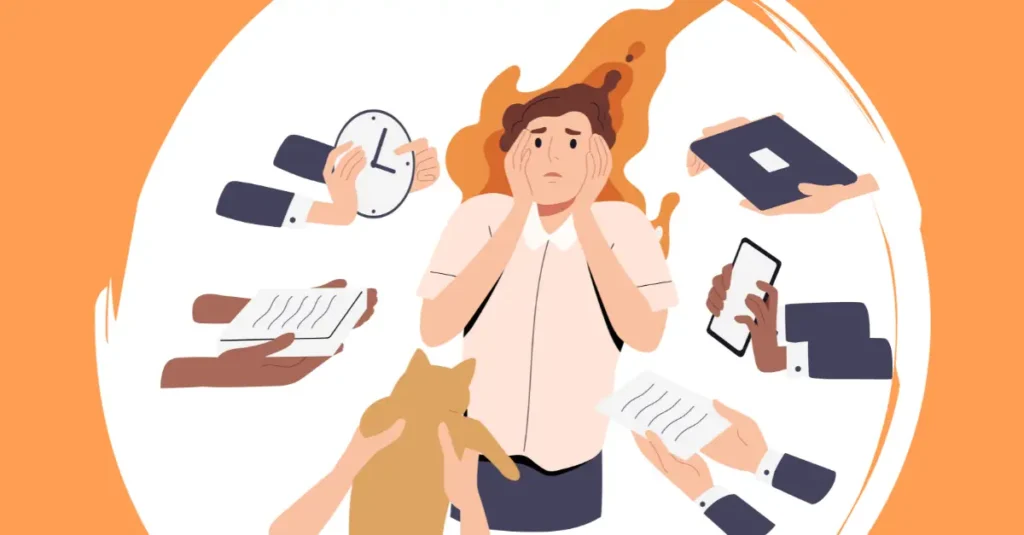
Picture this: you pack your life into boxes, wave goodbye to your old neighborhood café, and land in a new city where you don’t know a soul. Suddenly, you’re the “new person” — the one squinting at bus routes, Googling “best tacos near me,” and pretending to know what “hip” means in this new ZIP code.
It feels like an adventure, but underneath, something else is happening — your personality is quietly rewiring itself.
Psychologists used to believe that personality was mostly set by early adulthood, but research over the last two decades has blown that idea apart like a poorly packed suitcase. Moving — especially to a completely new city or culture — doesn’t just change your address. It can actually change you.
Read More: Sleep and Mental Health
The Great Personality U-Haul
In psychology, the “Big Five” model of personality — Openness, Conscientiousness, Extraversion, Agreeableness, and Neuroticism — has become the GPS for understanding who we are (Costa & McCrae, 1992). But recent studies show that these traits aren’t fixed in stone. They bend, stretch, and sometimes do cartwheels in response to major life transitions.
One of the most powerful of these transitions? Relocation.
A 2018 longitudinal study found that people who moved to a new city — especially internationally — showed measurable shifts in Openness to Experience and Extraversion (Zimmermann & Neyer, 2013). In other words, the act of moving itself can nudge you toward curiosity and sociability.
Think about it: when you’re thrust into a new environment, your comfort zone gets bulldozed. You have to explore, ask questions, and build connections from scratch. That’s psychological resistance training.
The “Personality Calibration” Effect
Moving is basically a natural experiment in identity. You shed old habits, routines, and reputations. No one knows that you used to be the “quiet one” in your old friend group or the “workaholic” at your last job. You get to recalibrate.

Psychologists call this identity plasticity — the ability to adjust your self-concept based on new environments and roles (Roberts & Mroczek, 2008). It’s why someone who was reserved in their hometown might suddenly become outgoing after a move, or why an overachiever might mellow out once they relocate somewhere slower-paced.
The new social ecosystem acts like a personality mirror, reflecting back which traits are rewarded and which fade into the background.
For example:
- Move to New York City → Your Conscientiousness spikes as you adapt to deadlines, schedules, and subways.
- Move to Bali → Your Neuroticism might take a vacation as you slow down and meditate more.
- Move to Berlin → Your Openness expands with exposure to new art, politics, and midnight currywurst.
In short, your environment subtly rewrites your behavioral code.
The Brain on Relocation
Underneath the moving boxes and IKEA instructions, your brain is working overtime.
Novel experiences activate the dopaminergic reward system, increasing motivation and learning (Schultz, 2015). Each new café, coworker, and street corner gives your brain a little dopamine nudge, keeping you alert and adaptable.

At the same time, relocation disrupts old memory cues — those environmental anchors that remind you who you are. Without them, your sense of self becomes more fluid. You may find yourself saying “yes” to things you’d never try before, from salsa dancing to stand-up comedy. That’s not random; it’s the exploration mode of the brain kicking in.
The psychological term for this is self-expansion — the drive to broaden one’s identity by acquiring new experiences and perspectives (Aron & Aron, 1997). Moving to a new city is self-expansion on steroids.
The Emotional Side
Of course, it’s not all dopamine and fresh starts. Moving can also trigger intense uncertainty. You might question who you are without your familiar routines, friends, or local identity badges (“the gym guy,” “the funny coworker,” “the one who knows every barista”).
This temporary identity void can cause what psychologists call liminality — the feeling of being “in between selves.” It’s disorienting, but it’s also fertile ground for growth.
Interestingly, research shows that even though people experience short-term dips in well-being after moving, they often report long-term gains in self-esteem and emotional stability once they adapt (Specht, Egloff, & Schmukle, 2011). Basically, moving is like emotional boot camp: it hurts at first, but it builds psychological muscle.
Personality and Place
Ever notice how certain cities seem to have personalities of their own? There’s science behind that.
A large-scale study mapping the Big Five traits across the United States found that people with similar personalities tend to cluster geographically — for instance, high Openness scores dominate the West Coast, while Agreeableness and Conscientiousness thrive in the Midwest (Rentfrow, Gosling, & Potter, 2008).
So when you move, you’re not just adapting to a new address — you’re plugging into a regional personality ecosystem. If your traits fit the local vibe, you may flourish; if they clash, you might find yourself subtly changing to blend in.
This mutual influence between person and place is sometimes called selective migration — people choose locations that reflect their personalities, and those locations, in turn, reinforce certain traits. It’s like a psychological feedback loop in urban form.
Reinvention or Revelation?
So does moving change who you are — or just reveal parts of you that were hidden?
Maybe both. Relocation removes the social scaffolding that holds your identity in place. You no longer have to be “who you’ve always been.” Instead, you experiment. And in the process, you might discover aspects of yourself that were dormant all along.
It’s a bit like pruning a plant. You trim back what’s overgrown so new growth can emerge. That’s not personality replacement — it’s personality evolution.
Pack Your Curiosity
When you move to a new city, you’re not just transporting your stuff; you’re transporting your psychological ecosystem. Everything from how you think to how you socialize gets gently rewritten by your surroundings.
So if you’ve recently moved — or are about to — pay attention to your small shifts. Notice if you’re becoming more outgoing, curious, patient, or bold. That’s your environment speaking through you.
And who knows? Maybe the real souvenir from your move won’t be a fridge magnet, but a slightly upgraded version of yourself.
References
Aron, A., & Aron, E. N. (1997). Self-expansion motivation and including other in the self. In S. Duck (Ed.), Handbook of Personal Relationships (pp. 251–270). Wiley.
Costa, P. T., & McCrae, R. R. (1992). Revised NEO Personality Inventory (NEO PI-R) and NEO Five-Factor Inventory (NEO-FFI) Professional Manual. Psychological Assessment Resources.
Rentfrow, P. J., Gosling, S. D., & Potter, J. (2008). A theory of the emergence, persistence, and expression of geographic variation in psychological characteristics. Perspectives on Psychological Science, 3(5), 339–369.
Roberts, B. W., & Mroczek, D. (2008). Personality trait change in adulthood. Current Directions in Psychological Science, 17(1), 31–35.
Schultz, W. (2015). Neuronal reward and decision signals: From theories to data. Physiological Reviews, 95(3), 853–951.
Specht, J., Egloff, B., & Schmukle, S. C. (2011). Stability and change of personality across the life course: The impact of age and major life events on mean-level and rank-order stability of the Big Five. Journal of Personality and Social Psychology, 101(4), 862–882.
Zimmermann, J., & Neyer, F. J. (2013). Do we become a different person when hitting the road? Personality development of sojourners. Journal of Personality and Social Psychology, 105(3), 515–530.
Subscribe to PsychUniverse
Get the latest updates and insights.
Join 3,049 other subscribers!
Niwlikar, B. A. (2025, October 19). How Personality Changes When We Move to a New City and 3 Important Examples of It. PsychUniverse. https://psychuniverse.com/personality-changes-when-we-move-to-a-new-city/