Imagine your brain as that friend who’s always in a hurry — brilliant, intuitive, and often wrong but confident. You ask for directions, and before you finish your sentence, they’re already halfway down the street shouting, “This way!”
That’s basically how heuristics work.
Heuristics are the brain’s mental shortcuts — little algorithms that help us make fast decisions without burning through mental fuel. They’re the reason you can decide which cereal to buy, when to cross a street, or whether to swipe right on a dating app, all in a fraction of a second.
But while they save time, they also quietly shape how we see the world — and sometimes, they steer us hilariously (or disastrously) off course.
Read More: Sleep and Mental Health
The Fast-and-Frugal Mind
Back in the 1970s, psychologists Amos Tversky and Daniel Kahneman started poking at human judgment like curious kids taking apart a clock. What they found wasn’t pretty: our reasoning, they discovered, is riddled with predictable errors (Tversky & Kahneman, 1974).
Instead of weighing every fact like a tiny computer, the human brain uses what they called heuristics — simple rules-of-thumb. These shortcuts are the reason you can make complex choices in seconds. For example:
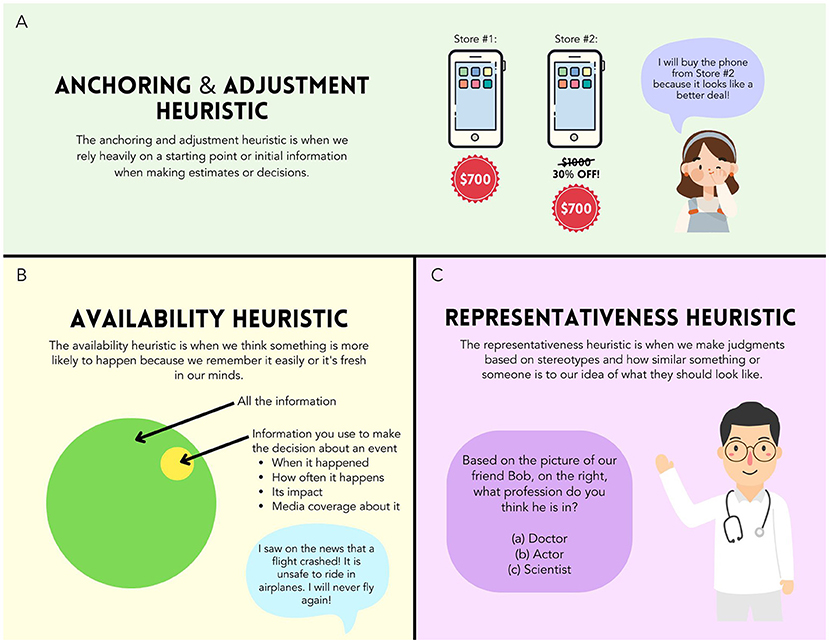
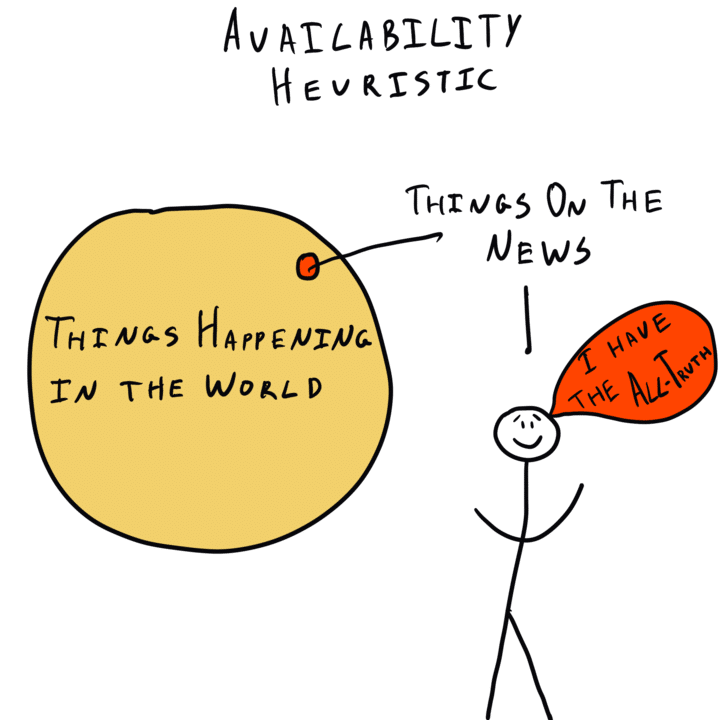
- The Availability Heuristic: If you can easily recall an example of something, you think it’s more common than it really is. (Shark attacks! Plane crashes! Reality TV stars!)
- The Representativeness Heuristic: If something seems to “fit” a stereotype, we assume it’s true — like thinking a quiet guy with glasses must be a librarian.
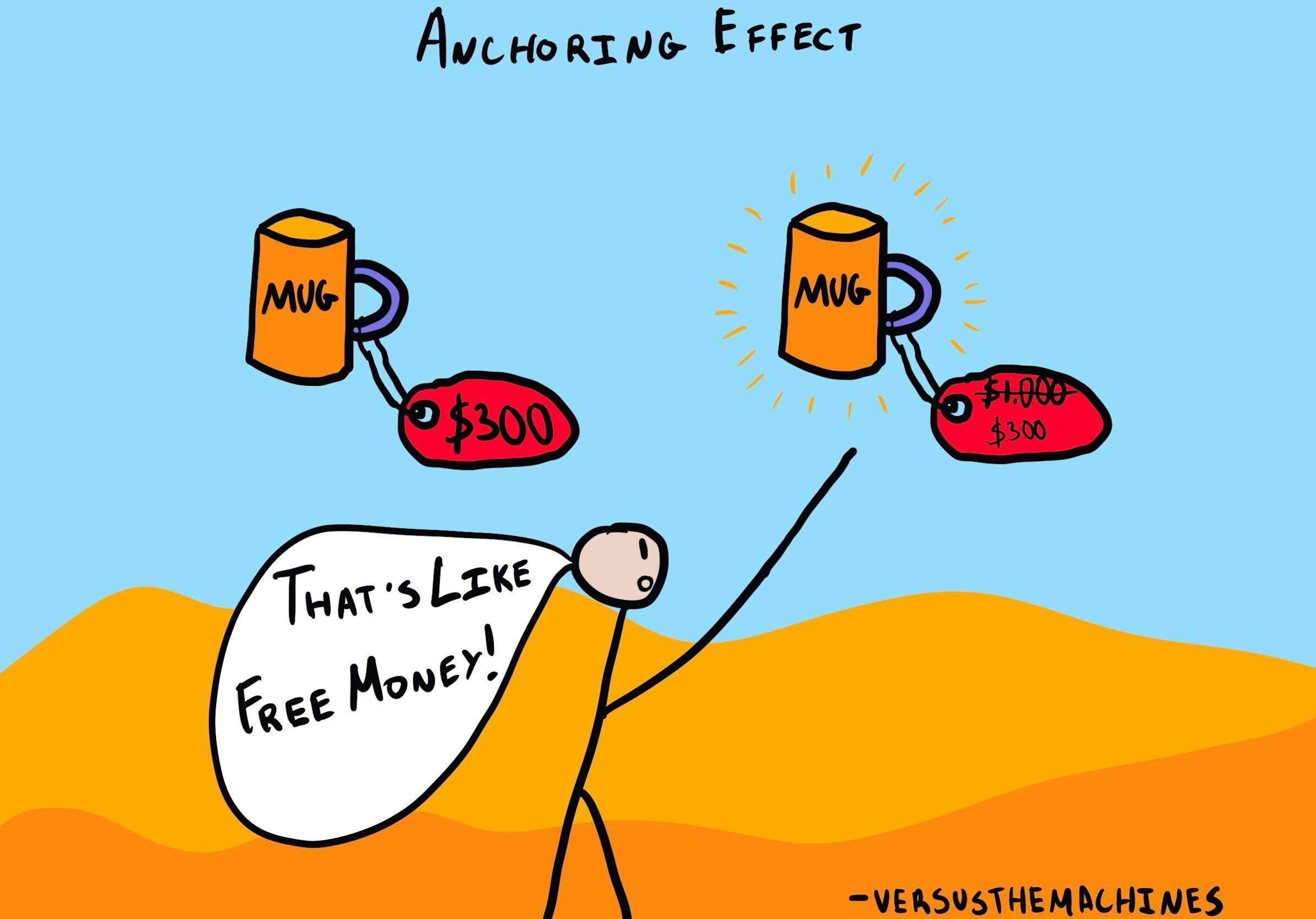
- The Anchoring Heuristic: Our decisions get stuck to the first number or idea we hear. If a car dealer starts at $30,000, even a “discount” to $27,000 feels like a steal.
These aren’t bugs — they’re features. They let us survive in a chaotic world without analysis paralysis.
Why the Brain Loves Shortcuts
Your brain runs on about 20% of your body’s energy (Raichle & Gusnard, 2002), yet it’s constantly juggling decisions, emotions, and memories. Heuristics are its way of conserving fuel.
Think of it as cognitive efficiency: instead of examining every possible outcome, your brain goes, “Eh, close enough,” and moves on. In most cases, this works beautifully. If every trip to the grocery store required deep probabilistic reasoning, we’d all still be standing in Aisle 3 arguing with ourselves about which brand of peanut butter maximizes long-term happiness.
Heuristics evolved because they work well enough, most of the time. But “well enough” can backfire in a modern world that’s more complex than the savanna our brains evolved to navigate.
When Shortcuts Take the Wheel
Consider how heuristics play out behind the wheel. You might assume an empty road is safe because you don’t see danger — that’s availability bias. Or maybe you judge your driving skills as “above average,” which is… statistically impossible for everyone (the Dunning–Kruger effect says hi).
Heuristics also fuel everything from stock market bubbles to political polarization. The availability heuristic makes vivid stories — like a dramatic crime on the news — feel more representative than cold data. Suddenly, everyone’s convinced crime is skyrocketing, even when stats say otherwise.
In short, heuristics can turn personal experience into a funhouse mirror, distorting reality just enough to make bad decisions feel totally reasonable.
The Shortcut Economy
Fast-forward to the digital age, and heuristics have gone wild.
Every swipe, click, and scroll taps into ancient mental habits. For instance:
- The “like” button triggers the availability heuristic: we judge something’s worth by visible approval.
- Confirmation bias, a cousin of heuristic thinking, fuels our echo chambers. We trust information that feels familiar or fits our tribe.
- Even FOMO (fear of missing out) rides on a shortcut — your brain assumes that if everyone’s talking about it, it must be important.
Social media algorithms know this. They’re like brain hackers, exploiting our shortcuts for attention. The irony? Our mental efficiency has been turned into a marketing strategy.
The Everyday Absurdity of Heuristics
Here’s where it gets fun. Ever find yourself assuming your friend’s text message tone means they’re mad at you — just because they used a period instead of an emoji? That’s a heuristic. Your brain built a rule (“No emoji = angry”) and applied it instantly.
Or picture this: you buy an expensive bottle of wine, and it tastes better than the cheap one — even if they’re identical. That’s the anchoring effect again. The price becomes a mental anchor that shapes your experience.
Heuristics also explain why people fall for conspiracy theories or urban legends. If a story feels emotionally powerful, it becomes more available in memory — and more believable. We don’t just think with logic; we think with feeling.
Can We Outsmart Our Shortcuts?
You can’t really turn heuristics off — they’re part of the operating system. But you can learn to debug them. Here are a few tricks:
- Pause on the “first thought.” If a conclusion feels too obvious, check if a shortcut is driving it.
- Seek counterexamples. Ask yourself: What would make this untrue?
- Use “System 2” thinking (Kahneman, 2011) — the slower, more deliberate mode of thought. It’s not fun, but it saves you from impulse disasters.
- Expose yourself to diverse information sources. Variety breaks the echo chamber effect.
Remember, heuristics aren’t the enemy. They’re the reason you can cross the street, cook dinner, and survive office meetings without collapsing from cognitive exhaustion. The trick is knowing when to trust them — and when to double-check the autopilot.
Reality, Filtered Through a Shortcut
At the end of the day, our brains don’t give us reality straight up — they serve it filtered, simplified, and sometimes, hilariously distorted. The world we experience isn’t just out there; it’s the product of a thousand tiny shortcuts taken by the world’s fastest decision-making machine.
So next time you confidently insist you’re right about something trivial (“I know the capital of Australia is Sydney!”), remember: it’s probably your brain’s heuristic talking. And like that overconfident friend who always gets lost — it means well, even if it’s a little off course.
References
Kahneman, D. (2011). Thinking, Fast and Slow. Farrar, Straus and Giroux.
Raichle, M. E., & Gusnard, D. A. (2002). Appraising the brain’s energy budget. Proceedings of the National Academy of Sciences, 99(16), 10237–10239.
Tversky, A., & Kahneman, D. (1974). Judgment under uncertainty: Heuristics and biases. Science, 185(4157), 1124–1131.
Gigerenzer, G. (2007). Gut Feelings: The Intelligence of the Unconscious. Penguin Books.
Dunning, D. (2011). The Dunning–Kruger effect: On being ignorant of one’s own ignorance. Advances in Experimental Social Psychology, 44, 247–296.
Subscribe to PsychUniverse
Get the latest updates and insights.
Join 3,049 other subscribers!
Niwlikar, B. A. (2025, October 18). How Heuristics Shape Everyday Reality and 4 Important Ways to Outsmart Them. PsychUniverse. https://psychuniverse.com/heuristics-shape-everyday-reality/


Pingback: Uncertainity Explained: 4 Powerful Ways to Manage It - PsychUniverse