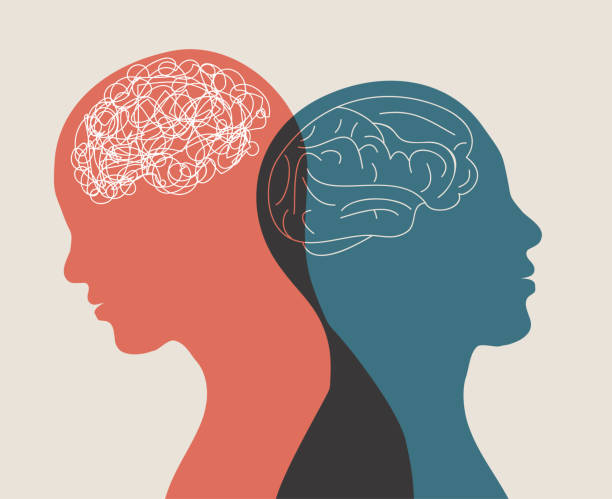
The Breakup No One Talks About
Friendship breakups rarely come with dramatic finales.
There’s no official conversation.
No shared closure.
No social permission to grieve openly.
Instead, friendships fade. Texts stop. Invitations slow. And one day, someone who knew your inner world becomes a stranger. Despite being common, friendship breakups are often dismissed as “part of life.” But psychologically, they can be just as painful—sometimes more so—than romantic breakups.
Read More: Sleep and Mental Health
Why Friendship Loss Is Psychologically Devastating
Humans are social creatures. Belonging is not optional—it’s foundational. According to Baumeister and Leary’s “belongingness hypothesis,” humans have a fundamental need to form and maintain close interpersonal relationships (Baumeister & Leary, 1995). Friendships often fulfill:

- Emotional intimacy
- Identity validation
- Social belonging
- Long-term continuity
When a friendship ends, we don’t just lose a person—we lose a version of ourselves.
Friendship Breakups Lack Social Scripts
Romantic breakups are culturally recognized. Friendship breakups are not. There are rituals for romantic loss:
- Sympathy
- Time off
- Emotional validation
Friendship breakups often receive responses like:
“You’ll make new friends.”
This minimizes the emotional impact and can lead to disenfranchised grief—a type of grief that isn’t socially acknowledged or supported (Doka, 1989). Without validation, people suppress their pain, which research shows can prolong emotional distress (Bonanno et al., 2007).
Identity Loss and Shared History
Friendships often span major life stages. They witness growth, mistakes, and transformation. Psychological studies show that close relationships contribute to identity formation and self-continuity (Aron et al., 1992).
When a friendship ends:
- Shared memories lose their mirror
- Inside jokes lose meaning
- Personal history feels fragmented
This can trigger existential discomfort—not just sadness.
The Unique Pain of Being “Unchosen”
Many friendship breakups are ambiguous. There’s no clear explanation—just distance. Ambiguous loss is particularly distressing because it lacks closure (Boss, 2006). Questions linger:
- Did I matter?
- Was I replaced?
- Did I do something wrong?
This uncertainty keeps the nervous system activated, making it harder to emotionally detach.
Social Rejection Activates Physical Pain
Neuroscience research shows that social rejection activates the same brain regions as physical pain (Eisenberger et al., 2003).

This explains why friendship loss can feel physically painful—tight chest, nausea, exhaustion. The brain does not categorize loss by relationship label. It registers connection loss.
Why We Blame Ourselves
People often internalize friendship breakups more than romantic ones.
Why?
- Fewer cultural narratives
- Less external validation
- More ambiguity
Research on attribution suggests that when explanations are unclear, people default to self-blame (Weiner, 1985).
This can damage self-esteem and future relational trust.
Grieving a Friendship Is Legitimate
Grief researchers emphasize that grief is not defined by death—it is defined by loss (Worden, 2009). Healthy friendship grief includes:
- Naming the loss
- Allowing sadness and anger
- Resisting minimization
- Creating personal closure
Suppressing grief doesn’t make it disappear. It makes it surface later in other ways.
Healing and Meaning-Making
Over time, people often find meaning in friendship loss.
Research on post-loss growth suggests that reflection can lead to:
- Increased relational clarity
- Stronger boundaries
- Deeper self-understanding (Tedeschi & Calhoun, 2004)
Healing doesn’t require reunion. It requires acknowledgment.
A Quiet Kind of Heartbreak
Friendship breakups may be quiet, but their impact is not small.
They reshape identity, belonging, and trust. And when we allow ourselves to grieve them fully—without minimizing or rushing—we honor the significance of the connection that once existed.
Some losses deserve to be named, even if no one else names them for us.
References
Aron, A., Aron, E. N., & Smollan, D. (1992). Inclusion of other in the self scale. Journal of Personality and Social Psychology, 63(4), 596–612.
Baumeister, R. F., & Leary, M. R. (1995). The need to belong. Psychological Bulletin, 117(3), 497–529.
Bonanno, G. A., et al. (2007). Resilience to loss. American Psychologist, 59(1), 20–28.
Boss, P. (2006). Loss, trauma, and resilience. W. W. Norton.
Doka, K. J. (1989). Disenfranchised grief. Lexington Books.
Eisenberger, N. I., Lieberman, M. D., & Williams, K. D. (2003). Does rejection hurt? Science, 302(5643), 290–292.
Tedeschi, R. G., & Calhoun, L. G. (2004). Posttraumatic growth. Psychological Inquiry, 15(1), 1–18.
Weiner, B. (1985). An attributional theory of achievement motivation. Psychological Review, 92(4), 548–573.
Worden, J. W. (2009). Grief counseling and grief therapy. Springer.
Subscribe to PsychUniverse
Get the latest updates and insights.
Join 3,050 other subscribers!
Niwlikar, B. A. (2026, January 27). Friendship Breakups Hurt More Than We Admit. PsychUniverse. https://psychuniverse.com/friendship-breakups-hurt-more-than-we-admit/