Cognitive Dissonance in Everyday Life
Let’s start with something simple.
You say you want to eat healthy… and then order junk food at 2 a.m.
You say sleep is important… and then scroll for three more hours.
You say “I deserve better”… and still go back to the same situation that made you say that in the first place.
And somehow, in your head, all of this still makes sense.
You don’t sit there thinking, “Wow, I’m contradicting myself.”
No. You justify it.
“It’s just today.”
“I’ve had a long day.”
“It’s not that bad.”
“I’ll fix it tomorrow.”
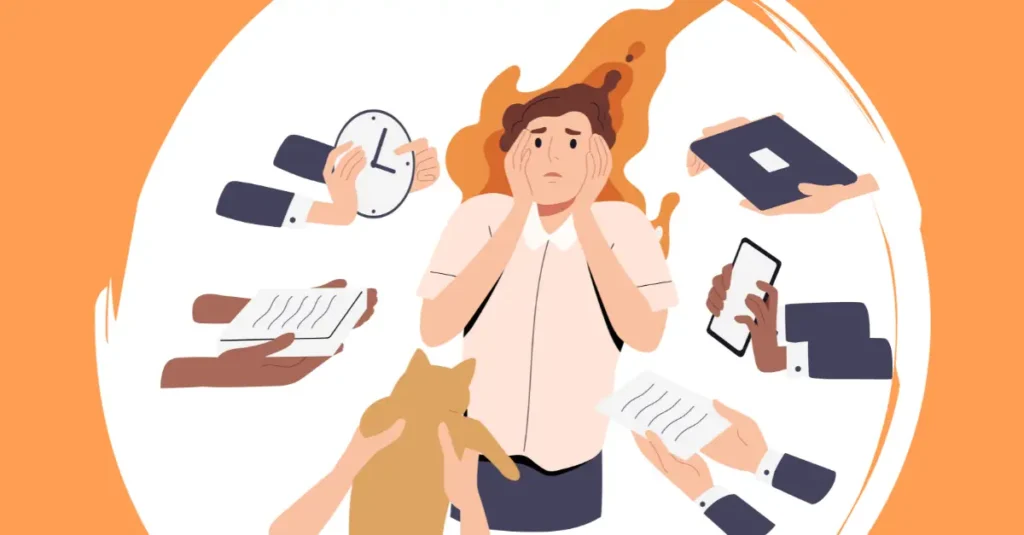
That uncomfortable little tension you feel for a second before you convince yourself otherwise?
That is cognitive dissonance in everyday life.
And you experience it way more often than you think.

What Is Actually Happening in Your Brain?
Let’s not make this sound complicated.
Cognitive dissonance is what happens when your beliefs and your actions don’t match, and your brain doesn’t like that mismatch.
Your brain wants consistency. It wants your thoughts, values, and behavior to line up neatly so you can feel like a rational, put-together person.
So when there’s a gap, like “I value health” but “I’m not taking care of myself”, something feels off.
That discomfort is cognitive dissonance.
Now here’s the interesting part.
Instead of fixing the behavior, most of the time, your brain chooses the easier option.
It changes the story.
That’s why cognitive dissonance in everyday life doesn’t always lead to better decisions. It often leads to better excuses.
You Don’t Change Your Behavior. You Change Your Explanation
Let’s be honest.
Changing behavior is hard. It requires effort, discipline, consistency, and sometimes admitting that you’ve been wrong.
Changing your thoughts, though? That’s easy.
So your brain goes, “Let’s not do the hard thing. Let’s just make this make sense.”
This is where cognitive dissonance in everyday life becomes almost invisible, because it doesn’t feel like lying to yourself. It feels like reasoning.
You don’t say, “I’m avoiding responsibility.”
You say, “I just need a break.”
You don’t say, “This situation is unhealthy.”
You say, “It’s complicated.”
You don’t say, “I’m contradicting myself.”
You say, “I’m just figuring things out.”
And just like that, the discomfort disappears.
Not because the problem is solved, but because you’ve explained it away.
Everyday Examples You Probably Didn’t Notice
This isn’t some rare psychological concept that only shows up in extreme situations.
Cognitive dissonance in everyday life is constant.
You see it in:
People who care about honesty but lie to avoid conflict
People who value mental health but never take a break
People who complain about their situation but don’t change it
People who say they want growth but stay where it’s comfortable
And before you think, “Yeah, people do that,” just pause for a second.
You do it too.
We all do.
That’s what makes cognitive dissonance in everyday life so powerful. It’s not obvious. It feels normal.
Why Your Brain Does This (And Why It’s Not Entirely a Bad Thing)
Now, before you start judging yourself too hard, let’s understand something important.
Your brain is not trying to sabotage you.
It’s trying to protect you.
That discomfort you feel when your actions and beliefs don’t align? That’s psychologically stressful. It creates tension, uncertainty, and even anxiety.
So your brain tries to reduce that discomfort as quickly as possible.
And the fastest way to do that is not by changing behavior. It’s by changing perception.
That’s why cognitive dissonance in everyday life exists. It helps you maintain a sense of identity and stability.
But here’s the problem.
What protects you in the short term can keep you stuck in the long term.
The Quiet Problem: You Start Believing Your Own Justifications
At first, you know you’re making excuses.
But over time, something shifts.
You stop questioning them.
The story you told yourself to reduce discomfort slowly becomes your reality.
And this is where cognitive dissonance in everyday life becomes dangerous.
Because now, it’s not just about avoiding discomfort.
It’s about distorting reality.
You start convincing yourself that:
“This is just how things are”
“I don’t really need to change”
“It’s not that serious”
And suddenly, growth becomes optional. Change becomes unnecessary.
Not because you’ve evolved, but because you’ve explained away the need to.
The Most Uncomfortable Part: You Know
Here’s the part no one likes.
Deep down, you usually know.
You know when something doesn’t align.
You know when you’re making an excuse.
You know when your actions don’t match your values.
But you also know that fixing it would require effort.
So you sit in that small moment of discomfort… and then talk yourself out of it.
That moment, right there, is cognitive dissonance in everyday life happening in real time.
And most of the time, you choose comfort over honesty.
So What Do You Do About It?
Now this is where things get interesting.
Because the goal is not to eliminate cognitive dissonance in everyday life. That’s impossible.
The goal is to notice it before you automatically fix it with an excuse.
The next time you feel that slight discomfort, pause.
Instead of immediately justifying it, ask yourself:
“What exactly is not matching here?”
“What am I telling myself to feel better?”
“What would the honest version of this look like?”
You don’t even have to change anything immediately.
Just noticing the gap is powerful.
Because awareness interrupts the automatic cycle.
And once you see it clearly, it becomes harder to lie to yourself the same way.
Final Thoughts
Let’s go back to the beginning.
You don’t practice what you preach all the time.
Your actions don’t always match your beliefs.
You contradict yourself more often than you’d like to admit.
That’s not because you’re fake.
That’s because you’re human.
But the difference between staying stuck and actually growing comes down to one thing.
Whether you keep explaining things away…
or you start paying attention to the discomfort instead.
Because that discomfort?
That’s not the problem.
That’s the signal.
And understanding cognitive dissonance in everyday life is not about judging yourself.
It’s about finally seeing the gap between who you think you are… and what you actually do.
And deciding, slowly and honestly, what you want to do about it.
Subscribe to PsychUniverse
Get the latest updates and insights.
Join 3,052 other subscribers!
Niwlikar, B. A. (2026, March 30). Cognitive Dissonance in Everyday Life: The Brutally Honest Truth About Why You Don’t Practice What You Preach. PsychUniverse. https://psychuniverse.com/cognitive-dissonance-in-everyday-life/