Introduction
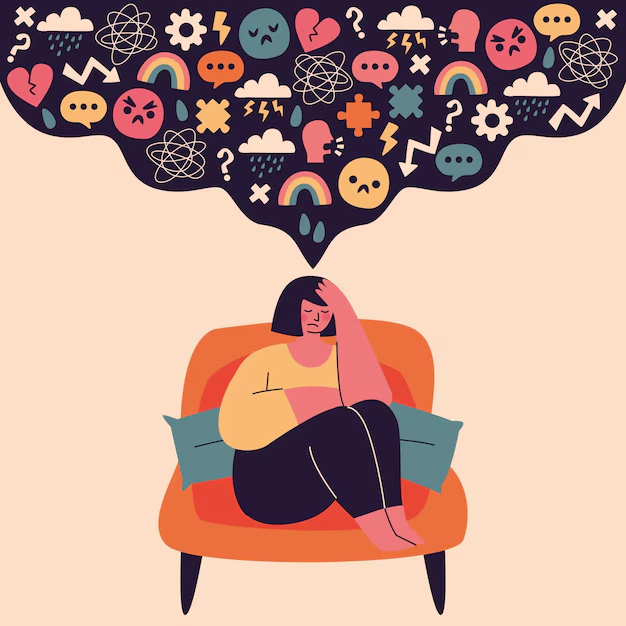
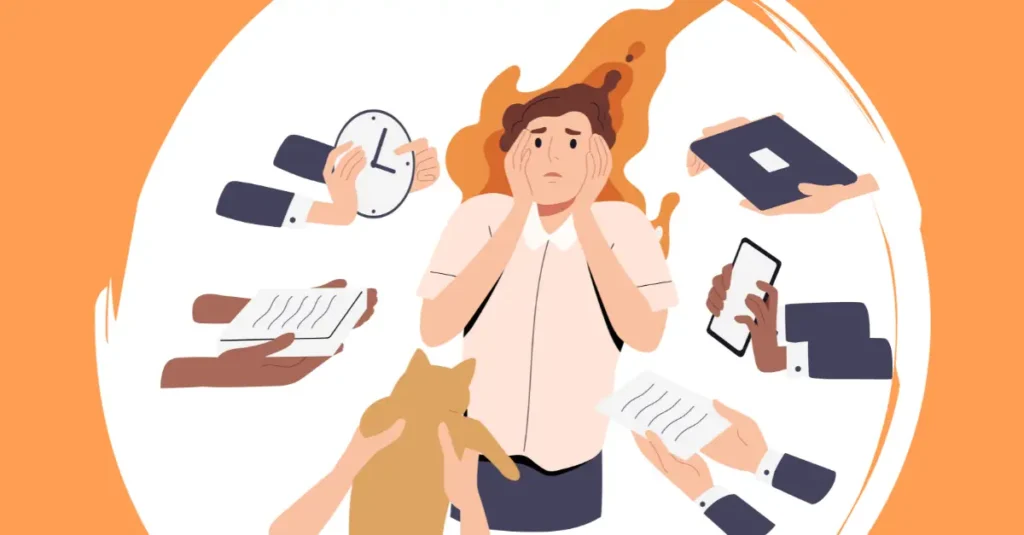
Someone insists online that quitting their job was “the best decision ever,” yet lies awake worrying about bad decisions. A person argues passionately that a relationship ending was mutual and healthy, but feels deep loss in solitude. A consumer justifies an expensive purchase to friends while silently questioning it later.
This psychological split is not hypocrisy—it is cognitive self-protection.
Human beings are deeply motivated to appear consistent, competent, and rational in social contexts, even when internal emotions tell a different story.
Read More: Break Bad Habits
1. Cognitive Dissonance
At the heart of this behavior lies cognitive dissonance, a theory introduced by Leon Festinger (1957). Cognitive dissonance refers to the psychological discomfort experienced when a person holds two or more contradictory beliefs, values, or behaviors.
For example:
- “I am a smart person”
- “I made a bad decision”
These two ideas conflict. To reduce discomfort, the brain does not usually change the self-concept (“I am not smart”). Instead, it changes the interpretation of the decision.
This leads to rationalization:
- “It wasn’t a mistake.”
- “Anyone would have done the same.”
- “It will work out in the long run.”
Public defense becomes a tool to silence internal conflict.
2. Why Public Spaces Intensify Defense
Cognitive dissonance becomes significantly stronger when decisions are visible to others. Social psychology research shows that the more public a commitment is, the more strongly people defend it—even in the face of contradictory evidence (Aronson, 1999).

Public settings activate:
- Fear of judgment
- Threats to social status
- Identity validation
Admitting a bad decision publicly risks appearing incompetent, inconsistent, or weak. As a result, the mind doubles down.
Social media amplifies this effect. Once a decision is posted, liked, commented on, or praised, it becomes socially reinforced. Backtracking would not only challenge the original choice but also disrupt the public identity attached to it.
3. Self-Justification as Emotional Armor
Defending a decision publicly is often less about convincing others and more about convincing oneself.
Studies show that when people justify decisions aloud, their private attitudes often shift to align with what they have said (Bem, 1972). This process—called self-perception theory—suggests that people infer their own beliefs by observing their behavior.
In other words:
“If I’m defending this so strongly, it must be right.”
Public defense acts as emotional armor against regret, shame, and uncertainty.
4. The Role of Ego and Identity
Decisions are rarely just actions—they become extensions of identity.
Choices related to:
- Career
- Relationships
- Politics
- Parenting
- Lifestyle
are deeply intertwined with how people see themselves. Admitting regret threatens not just the decision but the self-story behind it.

Psychologist Dan McAdams (2001) argues that people construct narrative identities—coherent stories that explain who they are and why their life makes sense. Bad decisions disrupt narrative continuity.
Public defense helps preserve that story:
- “This fits who I am.”
- “This was part of my growth.”
Privately, however, emotions do not always cooperate with narrative logic.
5. Why Regret Emerges in Private
When social pressure is removed, suppressed emotions surface. Private spaces allow for:
- Emotional honesty
- Counterfactual thinking (“What if I had chosen differently?”)
- Acknowledgment of loss
Research on regret shows that people feel it most intensely when they believe they were responsible for the outcome and had control over the decision (Zeelenberg et al., 2000).
Publicly, responsibility is reframed or shared. Privately, it is harder to escape.
The Emotional Cost of Chronic Rationalization
Constantly defending questionable decisions without processing regret can have psychological consequences, including:
- Emotional numbness
- Increased anxiety
- Defensive communication patterns
- Reduced self-trust
Over time, individuals may lose access to their authentic emotional signals, relying instead on external validation and justification.
This can lead to a cycle:
- Make a decision
- Defend it publicly
- Suppress doubt
- Repeat
The result is not confidence, but emotional rigidity.
Read More: Sleep and Mental Health
When Defense Becomes Aggression
Interestingly, the more aggressively someone defends a decision, the more likely it is that internal doubt exists.

Studies show that people who feel threatened by opposing views often respond with hostility, certainty, and moralization (Sherman & Cohen, 2006). This is a defensive response, not a sign of conviction.
Strong emotional reactions often signal unresolved dissonance rather than clarity.
Breaking the Pattern
This requires:
- Self-compassion
- Emotional literacy
- Reduced dependence on external validation
Research shows that self-affirmation—reflecting on core values unrelated to the decision—reduces defensiveness and allows for more honest self-evaluation (Steele, 1988).
Admitting regret does not mean failure. It means flexibility.
Conclusion
People defend bad decisions publicly not because they are dishonest, but because the human mind is wired to protect identity, reduce discomfort, and maintain social belonging.
Private regret is not a flaw—it is information. When acknowledged rather than suppressed, it becomes a source of learning, growth, and emotional integration.
The goal is not to stop defending ourselves—but to stop needing defense in order to feel whole.
References
Aronson, E. (1999). The social animal (9th ed.). W. H. Freeman.
Bem, D. J. (1972). Self-perception theory. Advances in Experimental Social Psychology, 6, 1–62.
Festinger, L. (1957). A theory of cognitive dissonance. Stanford University Press.
McAdams, D. P. (2001). The psychology of life stories. Review of General Psychology, 5(2), 100–122.
Sherman, D. K., & Cohen, G. L. (2006). The psychology of self-defense. Advances in Experimental Social Psychology, 38, 183–242.
Steele, C. M. (1988). The psychology of self-affirmation. Advances in Experimental Social Psychology, 21, 261–302.
Zeelenberg, M., van Dijk, W. W., Manstead, A. S., & van der Pligt, J. (2000). On bad decisions and regret. Journal of Personality and Social Psychology, 78(1), 93–106.
Subscribe to PsychUniverse
Get the latest updates and insights.
Join 3,061 other subscribers!
Niwlikar, B. A. (2026, January 1). 5 Importat Reasons Why People Defend Bad Decisions Publicly but Regret Them Privately. PsychUniverse. https://psychuniverse.com/bad-decisions-private-regret/