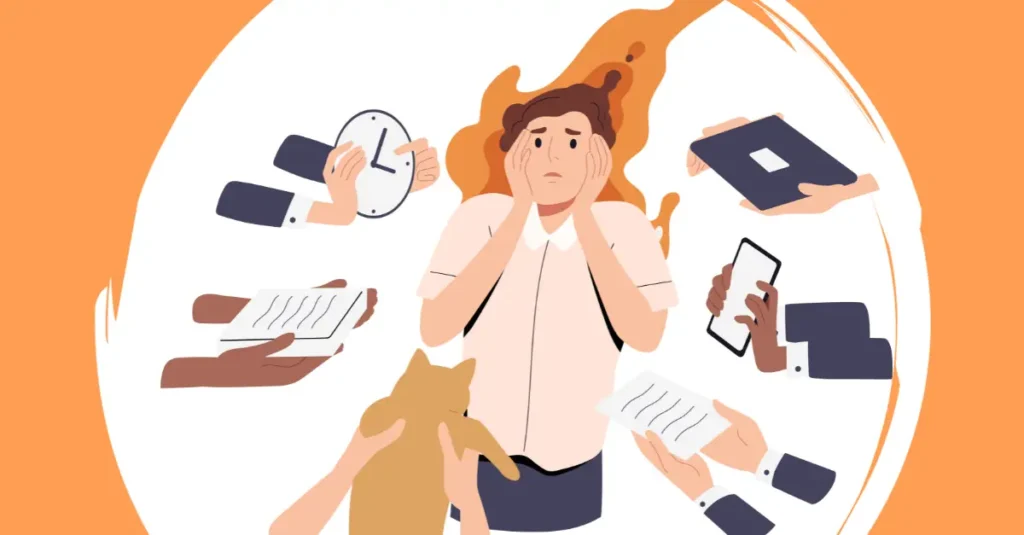
Someone corrects you during a conversation. You immediately explain why they misunderstood. They show you evidence. You question the source. They offer another explanation. You remember an article you read three years ago and suddenly become a research scholar with a personal grudge.
Twenty minutes later, the original point is almost irrelevant. The important thing is that you cannot possibly be the person who was wrong.
This is where Intellectual Humility becomes interesting. It is the ability to recognise that our knowledge is limited, our beliefs may be mistaken and other people might have something worth teaching us. Intellectual Humility does not mean having no opinions. It means holding opinions without treating them as permanent extensions of your identity.
So why does changing our minds sometimes feel more humiliating than defending an obviously questionable argument?

What Is Intellectual Humility, and Why Does It Matter?
Psychologist Mark Leary and colleagues describe the concept in terms of recognising that our personal beliefs might be wrong. Their 2017 research associated it with curiosity, openness, tolerance of ambiguity and greater attention to the strength of persuasive arguments.
In simpler terms, it means being confident enough to admit that you do not know everything. You can believe something strongly while remaining willing to reconsider it when credible evidence appears.
This is not low self-esteem, indecisiveness or intellectual surrender. Nor does it mean treating every opinion as equally valid. An evidence-supported conclusion deserves more weight than someone’s confidently delivered theory about how vaccines contain tracking devices.
Research by Mark Alfano and colleagues identified dimensions including open-mindedness, intellectual modesty, corrigibility and engagement. In other words, being willing to learn also involves being willing to be corrected. <Cite refs={[“turn214865search0″,”turn214865search1”]}/>
Why Does Intellectual Humility Feel Like Losing?
One reason is that our beliefs are rarely just isolated thoughts. They can become connected to our identity, values, intelligence and social groups.
Imagine publicly arguing that a particular career path is useless. You have defended that opinion repeatedly, recommended it to friends and perhaps built part of your identity around being someone who sees through conventional expectations.
Then someone presents convincing evidence that challenges your position.
You are no longer simply reconsidering a career-related opinion. You may feel as though you are reconsidering your judgment, credibility and past decisions.
This is an ego threat. When disagreement feels like criticism of the self, defensiveness becomes tempting. Instead of evaluating the argument, we start defending our reputation. Intellectual Humility becomes difficult when admitting an error feels like admitting that our judgment cannot be trusted.
There is also a social cost. Admitting a mistake in private is one thing. Admitting it in a group where everyone remembers your earlier confidence can feel like announcing your own incompetence.
But changing an opinion is not the same as losing an argument. Sometimes it means the evidence has finally caught up with your assumptions.
Cognitive Dissonance: The Mental Gymnastics of Avoiding Intellectual Humility
Leon Festinger’s cognitive dissonance theory helps explain why contradictory information can feel uncomfortable.
Cognitive dissonance occurs when two or more beliefs, attitudes or behaviours conflict. That inconsistency creates psychological discomfort, motivating us to reduce it.
Suppose you consider yourself an exceptionally fair person but discover that you have judged someone unfairly. You could acknowledge the mistake. Alternatively, you could convince yourself that the person deserved it, that the circumstances were unusual or that your behaviour was not really unfair.
The second option protects your existing self-image without requiring much revision.
The same process can happen during arguments. When evidence challenges a strongly held belief, we may dismiss the source, reinterpret the information or search for explanations that preserve our original position.
This does not mean cognitive dissonance makes everyone irrational. It is a normal psychological process. The interesting part is how easily discomfort can become a reason to defend an idea rather than examine it. <Cite refs={[“turn241778search12″,”turn241778search7”]}/>
Confirmation Bias: Conveniently Finding Evidence That Agrees With Us
Confirmation bias refers to the tendency to seek, notice and interpret information in ways that support existing beliefs.
Peter Wason’s famous selection task illustrated how people can focus on examples that confirm a hypothesis rather than actively testing whether it might be wrong.
Consider someone convinced that a particular diet is the healthiest. They enthusiastically share studies supporting it, remember positive testimonials and dismiss contradictory research as unreliable.
The problem is not necessarily deliberate dishonesty. The information supporting an existing belief can simply feel more convincing. Practising Intellectual Humility means recognising that familiar evidence is not necessarily reliable evidence.
Online environments can make this tendency easier to maintain. Search results, familiar communities and repeated exposure to similar opinions may create the impression that a belief has overwhelming support.
And repetition has a peculiar psychological effect: something can begin to feel true simply because it has become familiar.
Intellectual Humility requires a slightly uncomfortable question: am I looking for information that helps me understand the issue, or information that helps me win?
The Overconfidence Problem: Knowing a Little, Feeling Like an Expert
There is a special confidence that arrives after watching one explanatory video. Suddenly, a subject you had never considered becomes something you are prepared to debate with a specialist.
This brings us to the Dunning–Kruger effect.
In their 1999 study, Justin Kruger and David Dunning examined how people assessed their abilities in areas such as humour, grammar and logical reasoning. They found that participants who performed poorly tended to overestimate their performance. One explanation was that the skills needed to perform well also help people recognise errors in their own performance.
However, the research is not a licence to label every confident person incompetent. It examined particular tasks and patterns of self-assessment, not a universal rule about people who express strong opinions. <Cite refs={[“turn311099search1″,”turn311099search3”]}/>
Expertise can actually make a subject appear more complicated. The more someone understands, the more exceptions, limitations and unanswered questions they may recognise.
Confidence is useful. But confidence without an awareness of limitations can become an excellent way to remain confidently mistaken.
Belief Perseverance: Why We Keep Defending Ideas After the Evidence Changes
Sometimes an opinion survives even after its original supporting evidence has been discredited.
This is known as belief perseverance. Research by Lee Ross, Mark Lepper and Michael Hubbard in 1975 demonstrated that people’s impressions could persist even after they were informed that the feedback on which those impressions were based was false.
Think about a person who has spent years insisting that a particular productivity method is unquestionably effective. Even when their own experience and better evidence challenge that belief, abandoning it may feel like admitting that years of effort were invested in the wrong approach.
The longer we defend an opinion, the more difficult it can become to separate the belief from the time, reputation and emotional investment attached to it.
At some point, we stop evaluating the idea and start protecting our history with it. <Cite refs={[“turn311099search0″,”turn311099search2”]}/>
Social Media and the Performance of Being Right
The internet has made having an opinion remarkably easy. Developing an informed opinion still requires effort, but expressing one takes approximately three seconds and a functioning keyboard.
Social media can reward certainty, outrage and quick responses. A nuanced explanation may struggle to compete with a confident declaration that everyone else is an idiot.
There is also an audience effect. When an opinion has been publicly expressed, changing it can feel socially costly. People may worry about appearing inconsistent, losing approval or disappointing a group with which they identify. Intellectual Humility can be particularly difficult when changing your mind means going against an opinion your entire online audience has already applauded.
This does not mean social media automatically makes people intellectually rigid. But environments that reward public certainty can make thoughtful uncertainty less visible.
Sometimes, the pressure is not simply to be right. It is to look right in front of everyone.
Practising Intellectual Humility Without Becoming a Professional Fence-Sitter
The answer is not to abandon conviction or agree with every person who challenges you. It is to become more deliberate about how you evaluate your own thinking.
Intellectual Humility begins with separating your identity from your opinions. Being wrong about one issue does not make you an unintelligent person. It means one of your conclusions needs reconsideration.
Try asking yourself what evidence would genuinely change your mind. If the answer is absolutely nothing, you may not be evaluating a belief anymore. You may be protecting it.
Seek credible opposing arguments rather than deliberately choosing the weakest version of someone else’s position. Pause when disagreement makes you defensive. Notice whether your response is addressing the evidence or protecting your ego. Ultimately, Intellectual Humility is less about questioning everything you believe and more about knowing when a belief deserves to be questioned.
And practise saying, “I don’t know.” Not every silence needs to be filled with an opinion. Sometimes the most accurate response is also the least dramatic.
Intellectual Humility also involves recognising that uncertainty is not always a problem to eliminate. Some questions genuinely have incomplete evidence, competing explanations or no definitive answer yet.
Being able to acknowledge that is a form of intellectual strength.
Intellectual Humility: Perhaps Being Wrong Isn’t the Real Problem
When did admitting a mistake become more embarrassing than continuing to defend something that might actually be wrong?
Perhaps the problem is that we have started treating opinions like personal possessions. Once we own one, we defend it, display it and become strangely offended when someone questions its quality.
But thinking is not a competition in which the person who changes their mind loses. It is a process of updating what we believe as we encounter better information.
Intellectual Humility does not ask you to stop having opinions. It asks you to stop treating every opinion as something that must be defended at all costs.
The next time someone proves you wrong, you have two choices: spend the next twenty minutes constructing a defence, or discover something you did not know before.
One of those options protects your ego. The other improves your understanding.
And honestly, your ego has probably had enough screen time.
Subscribe to PsychUniverse
Get the latest updates and insights.
Join 3,242 other subscribers!
Niwlikar, B. A. (2026, November 17). When Did Being Wrong Become So Unacceptable? The Psychology of Intellectual Humility. PsychUniverse. https://psychuniverse.com/the-psychology-of-intellectual-humility/