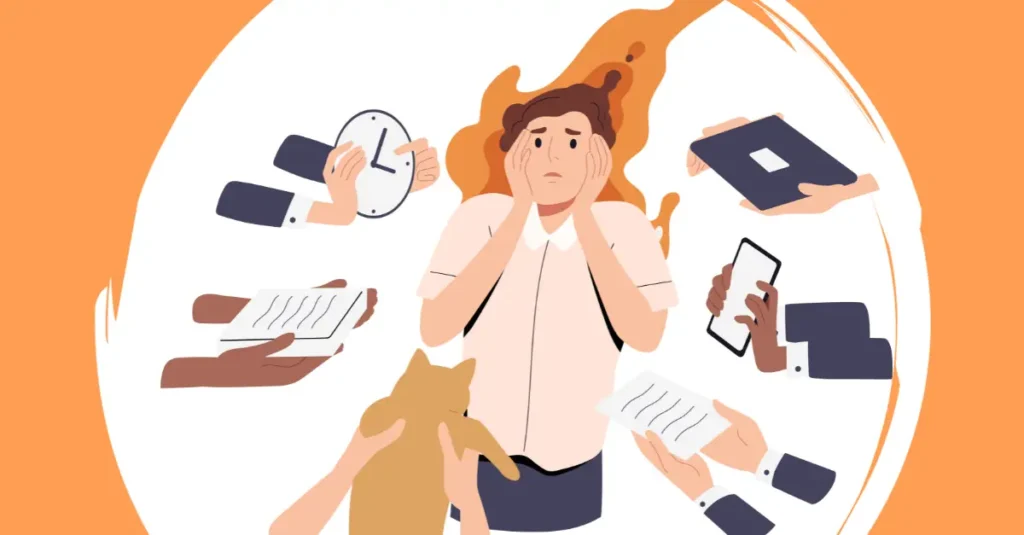
You spend twenty minutes editing a WhatsApp message to your best friend. Too needy? Too dramatic? Should “I miss you” come with a casual “haha” so nobody detects a human emotion? Then you open a chatbot and, without saying hello, explain your family argument, professional jealousy and deepest insecurity.
This is Self-Disclosure to AI: sharing personal feelings, experiences, opinions or private thoughts with a conversational system. It is different from asking for a recipe; it means using a machine to express something you hesitate to tell another person. Self-Disclosure to AI can involve reflection, advice-seeking or simply sorting out your thoughts. It does not automatically signal dependence or friendships in critical condition.

Why Does Self-Disclosure to AI Feel Easier Than Telling a Person?
A human listener brings a whole social situation: they might misunderstand you, remember what you said, look disappointed or mention it at the next family gathering. A chatbot does not visibly wince when you admit you were jealous of a friend’s promotion. There is no awkward silence to decode.
This is evaluation apprehension: concern about how others will judge us. It makes disclosure risky when a thought feels embarrassing or clashes with the person we want others to see. Self-Disclosure to AI can feel less exposing because the immediate audience is not a friend whose opinion matters.
Perceived anonymity can add to that comfort. In a 2019 meta-analysis of 14 studies, Clark-Gordon and colleagues found a positive, though modest and variable, association between anonymity and online self-disclosure. John Suler’s work on the online disinhibition effect also describes how invisibility, asynchronicity and a sense of anonymity can loosen ordinary social restraints. That does not mean the internet reveals our “real” selves. It may simply make some thoughts easier to express in that setting. (Clark-Gordon et al., 2019; Suler, 2004)
That helps explain why Self-Disclosure to AI can feel like a low-stakes confession: you can admit resentment or repeat a worry without managing an immediate reaction. But feeling unjudged is not the same as being guaranteed confidentiality.
What Psychology Says About Self-Disclosure to AI
Self-disclosure has long mattered in relationship research. Sidney Jourard explored revealing the self, while Altman and Taylor’s social penetration theory described how relationships deepen through gradually exchanging more personal information. We often move from safe topics to vulnerability as trust grows.
Disclosure can help us organise experience, name emotions and seek reassurance. When met with responsiveness and reciprocity, it can also build intimacy. Telling a friend something difficult gives them a chance to respond and reveal something of themselves, too.
That is where Self-Disclosure to AI differs: the user may reveal something intimate, but the system does not risk embarrassment or become vulnerable in return. The conversation can feel meaningful without being a reciprocal relationship.
Research does not support a simplistic claim that people always reveal more to chatbots. A 2024 experiment by Croes and colleagues found no overall difference in the intimacy of disclosures to a chatbot and a human, although participants reported less fear of judgment with the chatbot and greater trust in the human. Perceived anonymity was the factor directly associated with disclosure intimacy. So the appeal of Self-Disclosure to AI may be less “AI understands me better” and more “I feel less exposed saying this here.” (Croes et al., 2024)
Does the Chatbot Feel Like Someone Who Is Listening?
A chatbot uses language associated with human interaction: it asks follow-up questions, remembers context within a conversation, responds warmly and can mirror the emotional tone of what you share. These cues can create social presence, the feeling that another social entity is participating in the interaction.
Anthropomorphism is our tendency to attribute human-like qualities or intentions to non-human things. It is not necessarily a mistake or a sign of gullibility; people routinely respond socially to voices, characters, pets and devices. The ELIZA effect takes its name from Joseph Weizenbaum’s 1960s programme, which used simple conversational rules to imitate a psychotherapist. Weizenbaum was struck by how readily people treated its responses as meaningful, even when the system had no deep understanding of what they were saying. This helps explain the social pull behind Self-Disclosure to AI. (Weizenbaum, 1966)
Modern generative systems are more sophisticated than ELIZA, but fluent, emotionally appropriate language is not proof of subjective understanding. Self-Disclosure to AI may be encouraged by perceived responsiveness—the sense that the system is following and acknowledging you. A 2026 study found that relational response styles can increase perceived empathy and closeness. These are user perceptions, not evidence of felt care; Self-Disclosure to AI can feel personal without becoming mutual. (Telari et al., 2026)
The Comfort of a Conversation That Asks Nothing Back
Human conversations require negotiation: does the other person have time, are you repeating yourself, and do you owe them space for their feelings too? A chatbot can be interrupted, corrected or asked the same question again. You can change your mind halfway through a sentence. No small talk required.
For some people, Self-Disclosure to AI is a first draft of a difficult conversation. Writing “I’m angry because I felt ignored” may help distinguish anger from hurt, organise questions and rehearse what to say to a friend, partner or therapist.
But convenience has a trade-off. Human relationships involve shared history, embodied presence, disagreement and genuine reciprocity. A person can challenge your interpretation and work through a misunderstanding with you. A chatbot cannot share the consequences of your choices or take responsibility for the relationship.
When Does Self-Disclosure to AI Become Emotional Reliance?
People may turn to AI when grieving, anxious, ashamed or unsure about a relationship. Others use it despite having strong social connections, simply wanting space to think. Frequency alone cannot diagnose loneliness or dependence.
Articulating a problem can make it easier to examine, and a chatbot may help organise questions before seeking support. Yet Self-Disclosure to AI deserves a closer look when reassurance-seeking becomes repetitive, human conversations are consistently avoided, or chatbot responses become the main basis for major decisions.
The question is what role the interaction plays: does it prepare someone to speak to another person, or become a reason not to? Is it one tool among several, or the only place they can express distress? That matters more than a screen-time tally.
The Privacy Paradox: Feeling Safe Is Not the Same as Being Private
Here is the awkward part: a chatbot can feel confidential without being so. We may imagine a private room and discreet confidant, but conversational comfort does not guarantee confidentiality.
Depending on the service and settings, conversations may be stored or processed in ways users do not anticipate. Policies differ, so avoid sweeping claims about every platform. A 2025 University of Washington study found a gap between how sensitive users considered chatbot conversations and the personal information they reported sharing. (Tran et al., 2025)
Check the service’s privacy policy and controls. Avoid unnecessary identifying details, passwords, financial information or sensitive records; describe a situation without full names or addresses. Self-Disclosure to AI may feel like speaking into a void, but know what happens to your words after you send them.
Does Self-Disclosure to AI Replace Talking to People?
Not necessarily. A chatbot may help someone find words for a difficult conversation, set a boundary or prepare for therapy. It can be a rehearsal room, not the whole performance.
The risk appears when AI’s predictability becomes preferable to human connection every time. People disagree, get tired and respond imperfectly. Inconvenient, yes—but that friction is part of reciprocity. Avoiding it entirely may reduce opportunities to be known.
Self-Disclosure to AI is therefore not automatically a retreat from human connection. Its impact depends on why someone uses it, how they use it and whether it supports or displaces relationships and appropriate professional help.
What Does Your AI Confessional Say About You?
Maybe you are not more honest with a machine; maybe you are less worried about what follows. You may want advice, validation or simply a place to write the same messy paragraph until you understand what you feel.
The irony is hard to miss: we can spend half an hour editing a message to someone who knows us, then hand a chatbot the unfiltered director’s cut. Self-Disclosure to AI tells us something about the conditions under which people feel able to speak—less exposure, fewer immediate consequences and a responsive voice on the other side of the screen.
There is nothing inherently wrong with Self-Disclosure to AI or using that space. Just remember the difference between having somewhere to say something and having someone who can genuinely share the experience with you. A machine may help you find the words. The people in your life are the ones with whom those words can become a relationship.
Subscribe to PsychUniverse
Get the latest updates and insights.
Join 3,205 other subscribers!
Niwlikar, B. A. (2026, November 16). You’re Telling AI Things You Won’t Tell Your Best Friend. Let’s Talk Self-Disclosure to AI. PsychUniverse. https://psychuniverse.com/self-disclosure-to-ai/