You are waiting for the lift. It will arrive in approximately twelve seconds. Naturally, you reach for your phone. The lift has not even had time to disappoint you, and you are already checking Instagram.
You watch something while eating, something else while getting ready, and perhaps a third thing while watching the first two. A website takes three seconds to load and you consider changing your entire personality. Silence enters a conversation and suddenly everyone becomes deeply interested in their water glasses.
At some point, doing nothing became an activity we apparently need to escape.
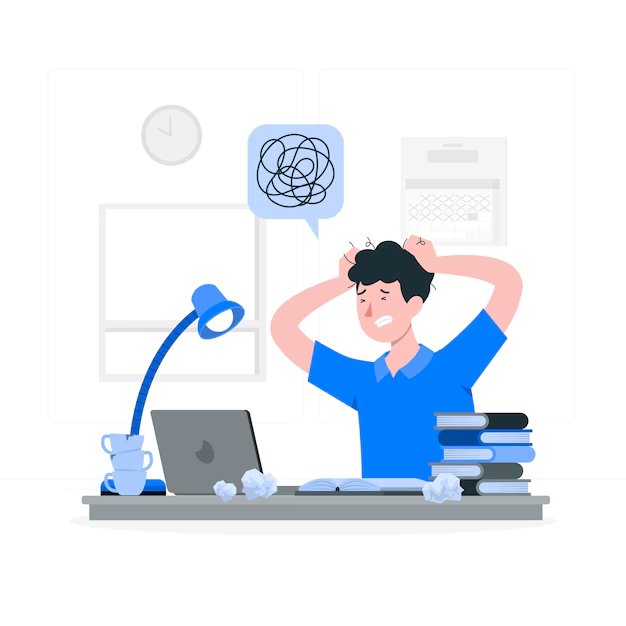
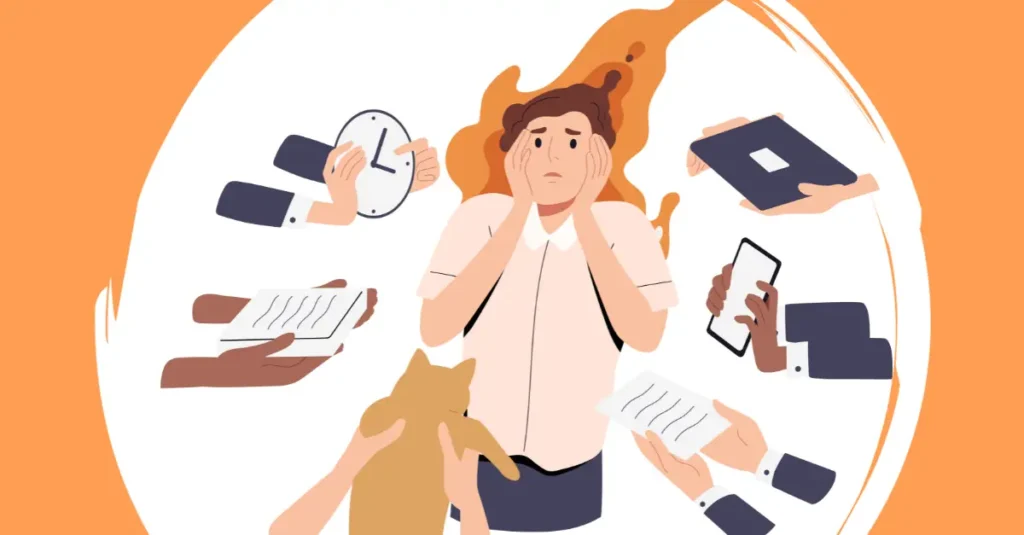
Have we become so accustomed to being entertained that even a tiny gap in stimulation feels unbearable? This is where Low Boredom Tolerance becomes interesting. It is not simply about getting bored easily. It is about how uncomfortable an unstimulating moment can feel, and how quickly we try to make that feeling disappear.

Low Boredom Tolerance: Is Doing Nothing Really That Difficult?
Boredom is more complicated than having nothing to do. Psychologists describe it as an unpleasant state that can arise when we struggle to engage our attention in something satisfying. You may have plenty of things available, but none feels sufficiently interesting, meaningful or absorbing.
John Eastwood and colleagues describe boredom as involving difficulty engaging attention, alongside the feeling that we want to engage but cannot. In other words, boredom is not always a shortage of entertainment. Sometimes it is a problem of connection between our attention and what is in front of us.
Low Boredom Tolerance describes a tendency to find these moments particularly uncomfortable and to seek stimulation quickly. It is a useful descriptive phrase, not a formal psychiatric diagnosis. It also exists on a spectrum: one person can sit through a quiet train ride quite happily; another may treat the same journey as a hostage situation.
Boredom tolerance is not about enjoying every repetitive task or pretending that waiting in a queue is a spiritual experience. It is about being able to experience an uneventful moment without immediately needing to escape it.
Your Attention Has Become Everyone’s Favourite Customer
Your attention is valuable, and digital environments are very good at competing for it.
Attentional capture refers to the way a noticeable, novel or personally relevant stimulus pulls attention towards itself. A notification lights up. A video changes scene. A message arrives. Even when you intend to finish reading a paragraph, something more immediately interesting appears to wave from the corner of your screen.
Short-form content makes this especially easy. There is always another clip, another opinion, another tiny crisis involving a stranger you have never met. Each new item offers the possibility of something more rewarding than the thing you are currently doing.
This does not mean that social media has permanently destroyed your attention span. Attention is influenced by many factors, including sleep, stress, task difficulty, motivation and the environment. But repeated exposure to rapidly changing content can make slower activities feel less immediately rewarding by comparison.
When stimulation is always available, Low Boredom Tolerance can start to look less like a personality quirk and more like a learned response to the environments we spend time in.
The Stimulation Cycle: Pause, Phone, Repeat
Notice what happens in the tiny gaps of your day. You finish a task and open an app. You wait for food and start scrolling. Someone takes a moment to reply, so you check three other platforms before they have finished typing.
Often, there is no conscious decision. A familiar cue, waiting, silence, effort, uncertainty, triggers a familiar response: reach for the phone.
Behavioural learning helps explain why this pattern sticks. If checking your phone occasionally brings an interesting message, funny video or useful update, that reward can reinforce the behaviour. The reward is not guaranteed every time, which can make checking feel especially tempting: perhaps the next refresh will be the good one.
Over time, the sequence becomes automatic. A pause appears; the hand moves. You may not even remember what you intended to check. Congratulations: your thumb has developed a career of its own.
This is one way Low Boredom Tolerance can be maintained. The moment discomfort appears, stimulation removes it quickly. Because the escape works in the short term, there is little opportunity to discover that the uncomfortable feeling might have passed on its own.
Dopamine Is Not Your Brain’s Party Button
Dopamine is often described as the brain’s pleasure chemical. That explanation is convenient, catchy and incomplete.
Dopamine is involved in motivation, reward learning and the anticipation of potentially rewarding experiences. It helps the brain learn which cues and actions may lead to useful or rewarding outcomes. The expectation of a reward can therefore influence behaviour, even before the reward arrives.
Digital platforms can offer frequent novelty and unpredictable rewards. You might find a message, an amusing clip, an update you care about or absolutely nothing. That uncertainty can encourage another check. This repeated anticipation can reinforce the checking habits associated with Low Boredom Tolerance. The appeal is not simply that every notification feels pleasurable; it is that the possibility of something interesting keeps the behaviour going.
This is not the same as saying that every scroll causes addiction or that dopamine gets depleted when you watch videos. The brain is not a phone battery that drops one percentage point every time you open an app.
Still, when instant gratification becomes the default response to discomfort, Low Boredom Tolerance may become harder to challenge. Activities that offer slower rewards can feel less appealing, not necessarily because they have become worse, but because they ask us to wait, persist and pay attention.
Why Has Ordinary Life Started Feeling Like a Loading Screen?
Reading a book requires staying with one stream of information. A conversation asks you to listen without knowing exactly what the other person will say next. Cooking involves repetitive steps. Waiting involves, well, waiting. None comes with a guaranteed stream of novelty.
Repeated exposure to highly stimulating content may shape expectations about how quickly an activity should become interesting. When something is familiar, the initial excitement can fade. For someone experiencing Low Boredom Tolerance, this loss of novelty can make an otherwise enjoyable activity feel difficult to stick with. This is related to habituation: our response to a repeated stimulus can decrease over time.
But slow does not mean meaningless. A conversation may become engaging after the first awkward minute. A book may take a chapter to pull you in. A difficult task may become satisfying only after you have worked through the frustrating beginning.
The problem is that Low Boredom Tolerance can encourage us to leave before engagement has a chance to develop. We switch activities at the first sign of effort, then wonder why nothing holds our attention for long.
Of course, not every boring activity deserves commitment. Sometimes the meeting really is unnecessary. Sometimes the book really is bad. The point is to notice whether you are making a choice or reflexively escaping the first hint of discomfort.
Boredom Might Be Trying to Tell You Something
Here is the plot twist: boredom is not automatically useless.
In the Meaning and Attentional Components model, Erin Westgate and Timothy Wilson explain boredom through a mismatch involving attention and meaning. An activity can be difficult to focus on, insufficiently meaningful, or both. Boredom may therefore signal that something about the current activity is not engaging our mental resources.
It can prompt us to look for a more meaningful challenge, change what we are doing or reconsider what matters to us. However, Low Boredom Tolerance may make it harder to recognise this signal because the immediate response is often to seek distraction rather than understand the feeling. It may also create space for mind wandering: thought that moves away from the immediate task and towards memories, plans, questions and possibilities.
Research by Sandi Mann and Rebekah Cadman found that participants who completed a boring task subsequently performed better on a particular creativity task than those in comparison conditions. That is an interesting finding, not proof that staring at a wall will turn everyone into the next great novelist. Creativity depends on many factors, and boredom does not automatically produce brilliant ideas.
The value may lie partly in what happens when external input quietens down. Without a constant stream of content, the mind has more room to make its own connections.
Low Boredom Tolerance can make that space feel uncomfortable at first. But discomfort is not necessarily evidence that the moment is pointless.
Can You Learn to Be Bored Again?
You do not need to throw your phone into a river, move to a cave or announce a dramatic digital detox. Start smaller.
Let one ordinary pause remain ordinary. Wait for the lift without checking your phone. Eat one meal without a video playing beside it. These moments may feel strangely empty at first. Resist the urge to treat that feeling as an emergency. You are practising staying with an experience rather than immediately replacing it.
Try finishing one task before switching to another. Constantly changing activities can feel productive, but it also creates more opportunities for distraction and makes sustained engagement harder. Give a task a reasonable stretch of uninterrupted attention before deciding that it is unbearable.
Allow silence in conversations. Not every pause needs to be rescued with a joke, a question or a sudden report about something you saw online. Sometimes people are simply thinking. Revolutionary, apparently.
You can also notice the cue that triggers your automatic checking. Are you reaching for your phone because you need information, or because the task has become repetitive? Are you genuinely looking for something, or trying to avoid the small discomfort of waiting?
These small experiments can help reverse low boredom tolerance. The aim is not to eliminate entertainment or force yourself to enjoy dull experiences. It is to make stimulation a choice rather than an automatic reflex.
If Low Boredom Tolerance is connected with persistent distress, difficulty functioning, anxiety, or broader attention concerns, it may be worth exploring those experiences with a qualified professional. Boredom can have several causes, and a single label cannot explain everyone’s experience.
Your Brain Can Survive a Quiet Moment
Perhaps the real issue is not that ordinary life has become unbearably boring. Perhaps we have become accustomed to interrupting it before it has the chance to become interesting.
The next time you are waiting, walking, eating or sitting in silence, notice the urge to fill the gap. You do not have to obey it immediately. Let the moment exist without demanding that it perform.
Because Low Boredom Tolerance might make a three-minute wait feel like an eternity, but the wait is still only three minutes.
Your brain does not need a new episode every time life pauses. Sometimes, it needs to stop asking the universe for autoplay.
Subscribe to PsychUniverse
Get the latest updates and insights.
Join 3,090 other subscribers!
Niwlikar, B. A. (2026, November 6). Your Brain Called. It Would Like a Break From Being Entertained: Understanding Low Boredom Tolerance. PsychUniverse. https://psychuniverse.com/understanding-low-boredom-tolerance/