Let’s be honest.
You were tired at 11PM.
Functional at 11:30.
Scrolling at 12:15.
Questioning your life at 1:20.
And now it’s 2AM and you’re somehow watching a video titled:
“The History of Food Courts in 1980s America”
You don’t even care about food courts.
But here you are.
Because this was never about the content.
This is revenge bedtime procrastination.
And despite how dramatic the name sounds, it’s painfully normal.
It’s not laziness.
It’s not poor discipline.
It’s not even bad time management most of the time.
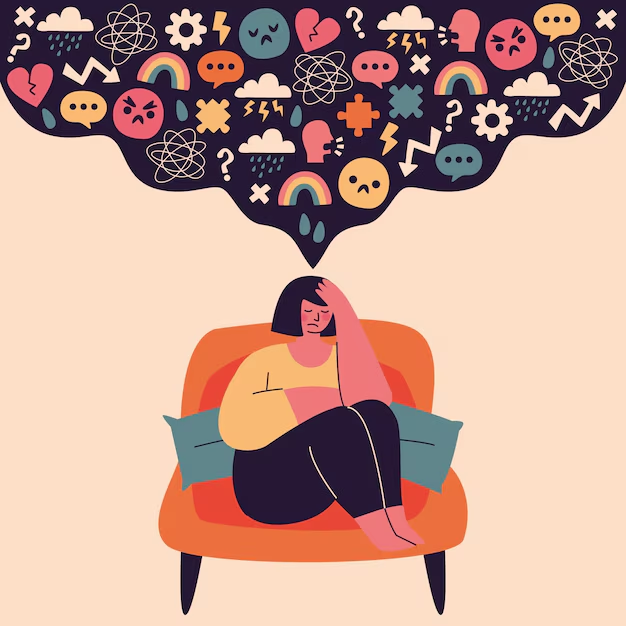
It’s what happens when your brain feels emotionally overmanaged all day and decides that midnight is the only time you truly belong to yourself.
So you stay awake.
Not because you’re energized.
But because you’re resisting the feeling that the day is over before you got anything from it.
 Revenge Bedtime Procrastination
What Is Revenge Bedtime Procrastination?
Revenge bedtime procrastination is the habit of delaying sleep to reclaim personal freedom after a day that felt stressful, demanding, repetitive, or emotionally draining.
Translation:
“Today took too much from me. I deserve some time back.”
Even if that “time back” looks like:
- doomscrolling
- online shopping for things you won’t buy
- reorganizing your Spotify playlists at 1AM
- watching clips you’ll forget instantly
- staring at your ceiling while mentally replaying conversations from 2017
The activity itself barely matters.
The emotional purpose does.
You are trying to recover a feeling—not accomplish anything.
And the feeling is usually autonomy.
The Quiet Resentment Behind Staying Awake
This is the part people don’t talk about enough.
Revenge bedtime procrastination often comes with low-grade resentment.
Not explosive resentment.
Not dramatic resentment.
Just the slow internal irritation of constantly being needed.
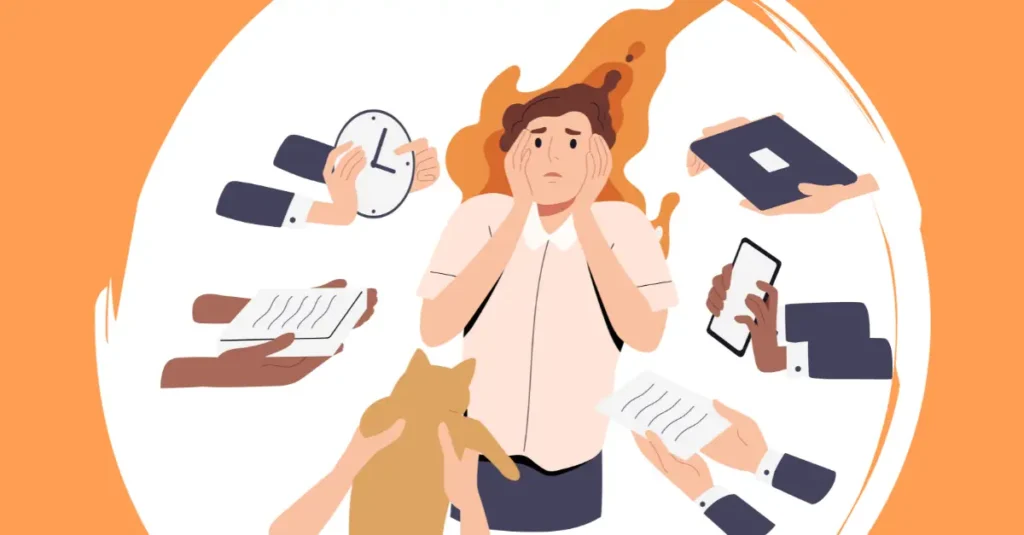
Your entire day becomes reaction-based:
- responding to messages
- attending meetings
- studying
- working
- caregiving
- commuting
- solving problems
- being emotionally available
- pretending to care during conversations you mentally left 20 minutes ago
By the end of the day, your brain feels consumed.
So when bedtime arrives, it doesn’t feel peaceful.
It feels unfair.
Because sleeping means tomorrow starts sooner.
And your brain is basically standing there like:
“Absolutely not. We just got here.”
You’re Not Resting. You’re Reclaiming Ownership
This is what makes revenge bedtime procrastination psychologically interesting.
The goal isn’t actually entertainment.
The goal is ownership.
During the day, your time probably feels rented out to other people:
- your employer
- your responsibilities
- your schedule
- your obligations
- social expectations
- survival itself
Nighttime becomes the only space where nobody is asking anything from you.
No emails.
No performance.
No pretending.
No productivity.
For the first time all day, you can exist without being useful.
That emotional relief is powerful.
Which is why your exhausted brain suddenly becomes very committed to staying awake.
Your Brain Thinks This Counts as Self-Care
Here’s the slightly tragic part:
Your brain genuinely believes this is balance.
Emotionally, revenge bedtime procrastination feels like:
- freedom
- reward
- independence
- recovery
- rebellion
- “me time”
Even though physically it’s:
- draining you
- dysregulating your nervous system
- increasing stress hormones
- wrecking your sleep quality
- making tomorrow harder
But your brain isn’t thinking long-term at 1AM.
It’s thinking emotionally.
And emotionally, staying awake feels justified.
Because after a difficult day, people don’t usually crave health first.
They crave relief.
The “I Deserve This” Loop
This thought quietly drives the entire cycle:
“I didn’t get enough time for myself today.”
That sentence becomes permission.
Permission to ignore sleep.
Permission to disconnect from responsibility.
Permission to stop regulating yourself for a few hours.
And honestly? That logic makes emotional sense.
The problem is that the “reward” starts hurting you almost immediately.
You stay up late because the day exhausted you.
Then you wake up exhausted because you stayed up late.
Now the next day feels even worse.
Meaning you feel even more entitled to late-night freedom.
So the cycle repeats.
Not because you’re irresponsible.
Because your brain keeps trying to compensate for emotional deprivation in the only uninterrupted window it can find.
Why Night Feels Emotionally Different
There’s something psychologically unique about nighttime.
The world gets quieter.
Expectations disappear.
Your phone stops buzzing as much.
Nobody needs anything immediately.
And for many people, that silence feels safer than daytime.
At night, you are temporarily unreachable from the performance of life.
That’s why even boring activities suddenly feel comforting at 1AM.
You’re not enjoying the activity itself.
You’re enjoying the absence of pressure.
That’s a huge difference.
The Petty Little Rebellion of Staying Awake
There’s also a strangely rebellious feeling attached to revenge bedtime procrastination.
A tiny internal protest.
Your body is exhausted, but your brain goes:
“Nobody gets to tell me what to do anymore today.”
Including yourself.
Especially yourself.
So staying awake becomes symbolic.
Not useful.
Not productive.
Not healthy.
But emotionally satisfying.
Like refusing to leave a party you stopped enjoying hours ago simply because you hate being told it’s over.
Why Highly Responsible People Often Do This More
Ironically, revenge bedtime procrastination is extremely common among responsible people.
People who:
- meet deadlines
- take care of others
- stay emotionally composed
- perform well under pressure
- suppress their own needs all day
Because highly responsible people often spend daylight hours in constant self-control.
And eventually self-control gets tired.
At night, the brain pushes back.
That’s why someone can be disciplined in every area of life and still end up eating snacks in bed at 1:43AM while watching conspiracy theories about abandoned malls.
The brain eventually demands unstructured freedom.
Even badly.
The Dangerous Myth: “This Is the Only Time I Have”
This belief keeps the cycle alive:
“Late night is the only time that belongs to me.”
And sometimes, emotionally, that feels true.
But when every form of joy, personality, rest, creativity, and autonomy gets pushed into midnight hours, sleep starts feeling like a threat instead of care.
That’s when bedtime becomes emotionally loaded.
You’re no longer choosing between sleep and wakefulness.
You’re choosing between:
- responsibility and freedom
- obligation and identity
- performance and relief
That’s why simply telling people to “sleep earlier” rarely works.
The issue isn’t information.
It’s emotional compensation.
You’re Probably More Drained Than You Realize
A lot of people think they’re tired because they need sleep.
But sometimes they’re tired because they haven’t psychologically stopped performing all day.
There’s a difference between:
- physical exhaustion
and
- emotional depletion
Revenge bedtime procrastination often happens when emotional depletion goes ignored for too long.
You don’t feel like a person during the day.
You feel like a function.
So nighttime becomes your attempt to recover humanity.
Even if it comes at the expense of rest.
Social Media Makes This Worse
Modern apps are basically engineered for revenge bedtime procrastination.
Infinite scrolling removes stopping points.
Algorithms feed emotional stimulation without requiring effort.
Everything is designed to keep you consuming because tired brains are easier to trap in passive behavior loops.
And late at night, your ability to self-regulate drops dramatically.
So your exhausted brain keeps saying:
- “one more video”
- “one more scroll”
- “one more episode”
Not because you’re deeply entertained.
Because you’re avoiding the emotional finality of ending the day.
This Isn’t Really About Sleep
Sleep is just where the conflict becomes visible.
The real issue is often this:
Your daily life may not contain enough moments where you feel:
- present
- autonomous
- relaxed
- emotionally off-duty
- connected to yourself
So your brain delays sleep trying to force those feelings into existence at the last possible moment.
Which explains why people can procrastinate bedtime even when they’re physically exhausted.
The body wants sleep.
The mind wants relief first.
So What Actually Helps?
No, the answer isn’t becoming a productivity robot who drinks herbal tea at 9PM and “optimizes” sleep cycles for fun.
Usually, what helps is restoring small feelings of control before midnight.
Things like:
- taking intentional breaks during the day
- protecting small moments that feel personal
- reducing nonstop mental stimulation
- having hobbies that aren’t performance-based
- creating transitions between “work mode” and “human mode”
- allowing yourself guilt-free downtime earlier
Because when your brain feels less trapped during the day, it stops demanding revenge at night.
The Goal Isn’t Perfect Discipline
You do not need military-level sleep discipline.
You need a life that doesn’t make you feel emotionally imprisoned until midnight.
That’s the difference.
People rarely procrastinate sleep because they love being tired.
They procrastinate sleep because nighttime finally feels emotionally safe.
Final Thought: You Don’t Hate Sleep—You Hate Losing Yourself
Revenge bedtime procrastination isn’t really about staying awake.
It’s about refusing to end a day that never felt fully yours.
That’s why the behavior feels weirdly emotional.
You’re trying to reclaim:
- control
- identity
- peace
- freedom
- relief
Just in the least sustainable way possible.
And that’s what makes it so human.
You’re not weak for doing it.
You’re just trying—badly, inefficiently, and at 2AM—to feel like your life belongs to you for a minute before tomorrow begins again.