You slept.
You didn’t run a marathon.
You didn’t fight a tiger.
You barely even left your room.
So why are you tired like you’ve been hunted since 2004?
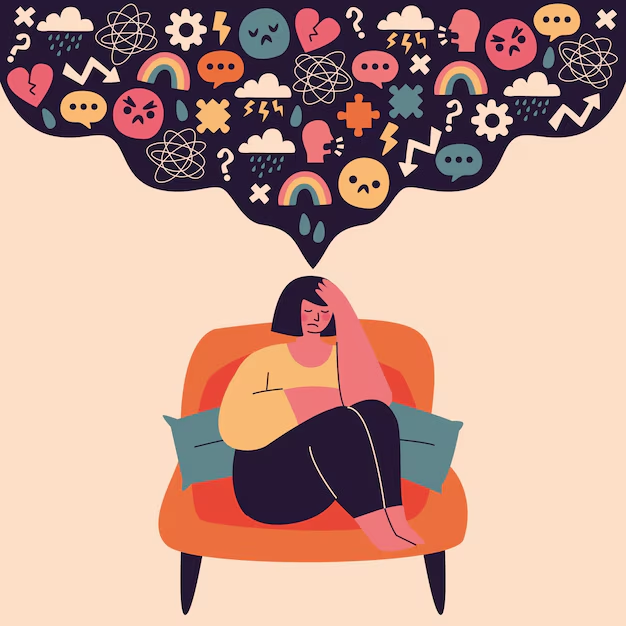
Here’s the part no one tells you: exhaustion today is rarely about physical effort. It’s about invisible threat. It’s about constant activation. It’s about the slow, silent effects of chronic stress building up in your nervous system like unopened emails.
And no, you’re not lazy. You’re neurologically overcooked.
Let’s talk about what’s actually happening.

Acute Stress vs Chronic Stress: Your Body Isn’t Designed for This Lifestyle
Acute stress? Beautiful. Efficient. Heroic.
A deadline. An exam. A sudden problem. Your body activates, releases adrenaline and cortisol, you handle it, you calm down.
System resets.
Chronic stress?
That’s when the stress never clocks out.
The effects of chronic stress begin when your body doesn’t get the memo that the danger is over. It keeps producing stress hormones long after the “threat” is just… notifications, expectations, or overthinking a conversation from three days ago.
Your biology was built for short bursts of survival.
Not for permanent performance mode.
Fight–Flight–Freeze: Yes, Even When You’re Just Scrolling
Every time your brain senses pressure, criticism, uncertainty, or overload, it activates the fight–flight–freeze response.
You know fight. You know flight.
But freeze? That’s the quiet villain.
Freeze doesn’t look dramatic. It looks like:
-
Brain fog
-
“I don’t feel like doing anything”
-
Staring at your screen
-
Wanting to nap even after 8 hours of sleep
One of the most misunderstood effects of chronic stress is this freeze state. Your nervous system essentially says:
“Too much. I’m shutting down.”
You call it laziness. Your body calls it survival.
The HPA Axis: The Hormonal Drama You Didn’t Ask For
Now let’s get slightly nerdy but stay awake.
Your stress response is regulated by something called the HPA axis (hypothalamus–pituitary–adrenal axis). It controls cortisol release.
Cortisol isn’t evil. It’s necessary.
But when the effects of chronic stress kick in, cortisol stops behaving like a helpful alarm and starts acting like that one friend who never leaves your house.
High cortisol for too long leads to:
-
Feeling wired but tired
-
Poor sleep
-
Afternoon crashes
-
Increased anxiety
-
Mood instability
Eventually, the system dysregulates. Cortisol patterns flatten. You stop feeling sharp. You feel dull. Exhausted. Unmotivated.
Not because you’re weak. Because your stress system is misfiring.
Nervous System States: You’re Not Tired, You’re Stuck
Your nervous system operates in different states.
Sympathetic activation: anxious, alert, restless.
Dorsal shutdown: numb, heavy, exhausted.
One of the deeper effects of chronic stress is nervous system oscillation. You swing between:
“I have to do everything right now.”
and
“I cannot move. Don’t talk to me.”
That second one? That’s not laziness. That’s dorsal vagal shutdown. Your body conserving energy because it thinks you’ve been under threat too long.
Modern life keeps us stimulated but never safe.
And safety, real safety, is what restores energy.
Burnout: The Slow Emotional Erosion
Burnout isn’t just about overworking in corporate offices. It’s emotional exhaustion. It’s waking up already tired of things you haven’t even done yet. One of the clearest effects of chronic stress is burnout. You start feeling:
-
Detached
-
Cynical
-
Unmotivated
-
Irritated at small things
And the scariest part? You stop caring. Burnout doesn’t explode. It leaks.
Learned Helplessness: When Your Brain Stops Trying
Here’s where it gets psychologically uncomfortable.
When stress becomes chronic and unpredictable, the brain can develop something called learned helplessness, a concept introduced by Martin Seligman.
If nothing you do seems to reduce the pressure, your brain eventually decides:
“Trying doesn’t matter.”
Another one of the hidden effects of chronic stress is reduced initiative. You procrastinate not because you’re irresponsible, but because your nervous system has learned that effort doesn’t guarantee relief.
Motivation isn’t missing.
It’s exhausted.
Cognitive Effects: Your Brain Is Not “Getting Worse.” It’s Overloaded.
Let’s address the scary part.
Brain fog.
Poor memory.
Low focus.
Snapping at people.
Yes, these are also effects of chronic stress.
Stress impacts the hippocampus (memory center) and increases amygdala reactivity (threat detection). Translation:
You forget small things. You feel reactive. You struggle to concentrate.
It’s not that you’re “losing your intelligence.”
Your brain is prioritizing survival over creativity. And survival mode is terrible for productivity.
Irony.
Why Is This Happening Now?
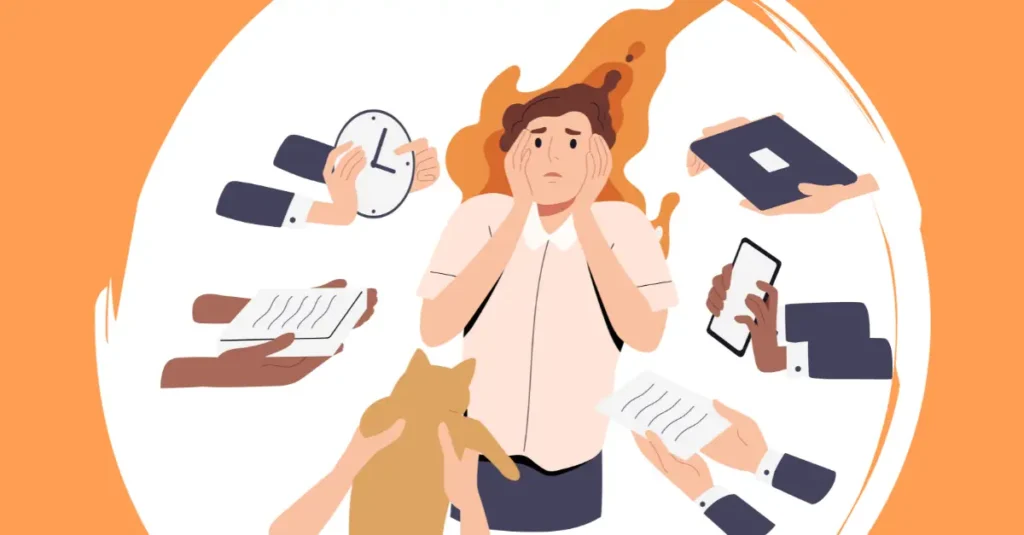
Because modern life is a stress buffet.
Constant notifications.
Productivity obsession.
Academic pressure.
Career uncertainty.
Social comparison.
Emotional suppression.
24/7 digital stimulation.
We are not running from predators. We are running from expectations.
The effects of chronic stress today are amplified because stress is no longer episodic. It’s background noise.
There is no “off.”
And the nervous system never resets.
So, What Do You Actually Do?
Not “just relax.”
Please.
Let’s be serious.
If the problem is nervous system dysregulation, the solution must involve nervous system regulation.
Here’s where you start:
1. Complete Stress Cycles
Physical movement. Shaking. Walking. Stretching.
Stress chemicals need discharge, not intellectual analysis.
2. Reduce Micro-Threats
Turn off unnecessary notifications.
Limit doomscrolling.
Your brain doesn’t differentiate between digital and physical threat signals.
3. Create Predictability
Routine reduces uncertainty.
Uncertainty fuels the effects of chronic stress more than workload does.
4. Protect Real Rest
Rest is not scrolling.
Rest is low stimulation.
5. Set One Boundary
Not ten.
One.
Because chronic activation reduces when exposure reduces.
6. Regulate Before You Motivate
Trying to “discipline” yourself out of nervous system exhaustion is like yelling at a phone with 2% battery.
Charge first.
Then perform.
This Is Your Warning Sign
The effects of chronic stress don’t announce themselves dramatically.
They show up as:
“I’m just tired.”
“I don’t feel like it.”
“I’ll do it later.”
Your body whispers before it collapses. And if you feel exhausted even when you’ve technically done “nothing,” understand this:
Your nervous system has been doing everything. You are not weak. You are overstimulated, under-rested, and chronically activated. And ignoring it doesn’t make you strong. It just makes the crash louder.
So here’s the deal. You can keep calling it “just tired” and drag your 20% energy battery through another year… or you can actually start regulating the system that’s been carrying you in survival mode and cope with stress.
Start small. Move your body. Cut one notification. Sleep like it matters. Set one boundary and tolerate the discomfort. Your nervous system didn’t become dysregulated overnight, but it will respond if you stop treating it like a machine and start treating it like biology.
And if you don’t? It won’t yell. It’ll just slowly shut down.
So maybe don’t wait for the crash to finally take your exhaustion seriously.
Subscribe to PsychUniverse
Get the latest updates and insights.
Join 3,088 other subscribers!
Niwlikar, B. A. (2026, February 26). Always at 20% Energy and Pretending You’re Fine? The Brutal, Hidden Effects of Chronic Stress on Your Nervous System Battery. PsychUniverse. https://psychuniverse.com/hidden-effects-of-chronic-stress-exhaustion/