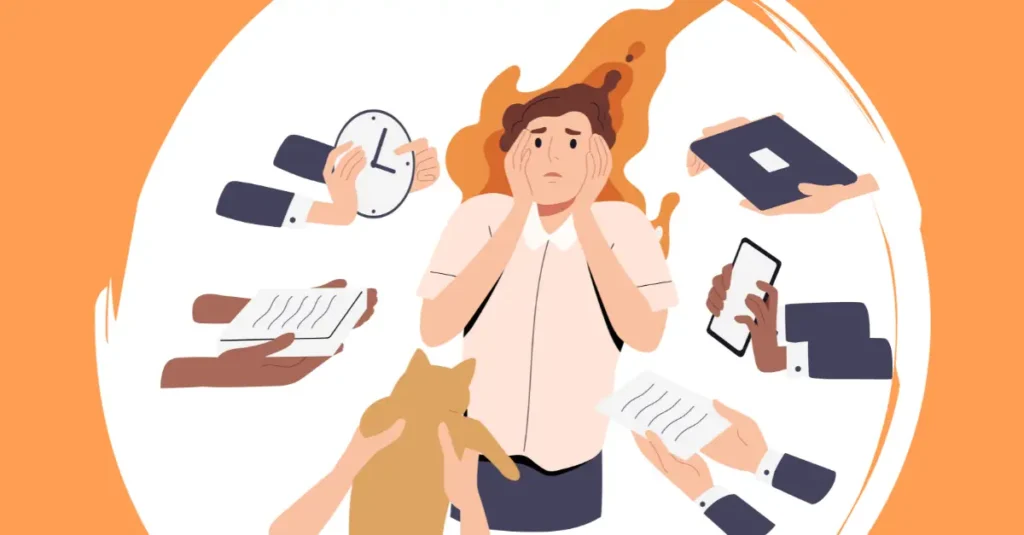
Self-sabotage is one of the most frustrating human behaviors. We set goals, make plans, and genuinely want change—yet somehow we delay, retreat, or undo our own progress. This pattern appears in careers, relationships, health, and personal growth. The result is often shame, confusion, and self-criticism.

But self-sabotage is not a lack of willpower or discipline. It is a psychological strategy rooted in fear, identity, and early emotional learning. What looks like self-destruction is often an attempt at self-protection.
Read More: Ghosting
What Is Self-Sabotage?
Self-sabotage refers to behaviors that interfere with long-term goals or well-being, even when those goals are consciously desired. Common forms include:
- Procrastination
- Avoidance
- Perfectionism
- Self-criticism
- Staying in harmful situations
- Undermining success
These behaviors often operate outside conscious awareness, making them difficult to change through motivation alone.
The Role of the Unconscious Mind
Psychodynamic psychology suggests that much of human behavior is driven by unconscious processes (Freud, 1915). Self-sabotage often reflects an internal conflict between:
- The desire for growth
- The need for psychological safety
When success threatens deeply held beliefs or emotional stability, the mind intervenes—often without permission.
Fear of Failure vs. Fear of Success
While fear of failure is widely discussed, fear of success is equally powerful.
Fear of Failure
- Avoids shame or disappointment
- Protects self-esteem
- Prevents exposure
Fear of Success
- Threatens identity
- Raises expectations
- Increases visibility and responsibility
Research shows that success can activate anxiety when it conflicts with self-concept or relational safety (Berglas & Jones, 1978).
Identity-Based Self-Sabotage
Humans strive for internal consistency. According to self-verification theory, people unconsciously act in ways that confirm their existing self-image—even if it is negative (Swann, 1983).
If someone believes:
- “I’m not good enough”
- “Success isn’t for people like me”
- “I don’t deserve stability”
Then growth creates cognitive dissonance, triggering behaviors that restore familiarity—even at a cost.
Childhood Conditioning and Emotional Safety
Many self-sabotaging patterns originate in childhood environments where:
- Success led to criticism or jealousy
- Visibility resulted in rejection
- Mistakes were punished
Children adapt by minimizing themselves. As adults, achievement can unconsciously signal danger, prompting withdrawal or self-destruction.
The Nervous System and Threat Response
The nervous system cannot distinguish between physical and emotional threats. When growth triggers fear, the body activates survival responses:
- Fight: self-criticism, anger
- Flight: avoidance, distraction
- Freeze: procrastination, paralysis
These responses are automatic and physiological—not character flaws (Porges, 2011).
Perfectionism as a Form of Self-Sabotage
Perfectionism often masquerades as high standards, but psychologically, it serves to:
- Delay completion
- Avoid evaluation
- Protect against judgment
By making success unreachable, perfectionism ensures emotional safety at the expense of progress (Flett & Hewitt, 2002).
Self-Sabotage in Relationships
In relationships, self-sabotage may look like:
- Pushing partners away
- Choosing emotionally unavailable people
- Creating conflict during stability

For those accustomed to emotional chaos, healthy relationships can feel unfamiliar and threatening. Sabotage restores emotional predictability.
Cognitive Biases That Reinforce Sabotage
Several cognitive distortions fuel self-sabotage:
- All-or-nothing thinking
- Catastrophizing
- Impostor syndrome
These distortions skew perception, making avoidance feel logical rather than harmful (Beck, 1976).
Why Motivation Alone Doesn’t Work
Motivation addresses conscious goals, not unconscious fears. Without addressing the emotional drivers behind self-sabotage, change feels exhausting and short-lived.
Sustainable change requires emotional safety—not pressure.
Breaking the Cycle of Self-Sabotage
Effective approaches include:
- Cognitive Behavioral Therapy (CBT)
- Inner child work
- Somatic and nervous system regulation
- Identity-based goal setting
Progress begins when the mind learns that growth is safe.
Replacing Self-Sabotage with Self-Trust
Building self-trust involves:
- Small, consistent actions
- Tolerating discomfort
- Challenging internal narratives
Each time progress is maintained without punishment, the nervous system recalibrates.
Self-Compassion Is Not Optional
Research shows self-compassion improves resilience and motivation more effectively than self-criticism (Neff, 2003). Shame fuels sabotage; compassion interrupts it.
Final Thoughts
Self-sabotage is not an enemy—it is a message. It signals unresolved fear, unmet needs, and outdated survival strategies.
When these patterns are understood rather than fought, they lose their power. Growth becomes less about forcing change and more about making safety compatible with success.
References
Beck, A. T. (1976). Cognitive Therapy and the Emotional Disorders. International Universities Press.
Berglas, S., & Jones, E. E. (1978). Control of attributions about the self. Journal of Personality and Social Psychology, 36(4), 405–417.
Flett, G. L., & Hewitt, P. L. (2002). Perfectionism and maladjustment. American Psychological Association.
Freud, S. (1915). The unconscious. International Journal of Psychoanalysis.
Neff, K. D. (2003). Self-compassion. Self and Identity, 2(2), 85–101.
Porges, S. W. (2011). The Polyvagal Theory. W. W. Norton & Company.
Swann, W. B. (1983). Self-verification. Journal of Personality and Social Psychology, 44(2), 213–224.
Subscribe to PsychUniverse
Get the latest updates and insights.
Join 3,088 other subscribers!
Niwlikar, B. A. (2026, January 22). The Psychology of Self-Sabotage and 4 Powerful Way to Break The Cycle. PsychUniverse. https://psychuniverse.com/psychology-of-self-sabotage/