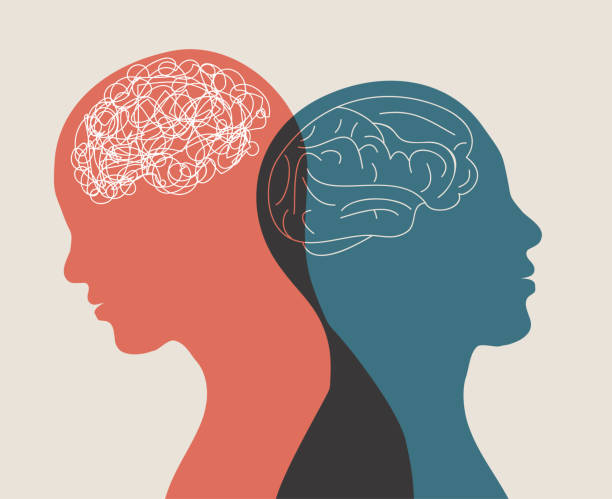
At some point, many people find themselves asking the same painful question: “Why do I always fall for emotionally unavailable people?” These relationships often begin with intense chemistry, mystery, and excitement—only to end in confusion, longing, and emotional deprivation. Emotionally unavailable people may avoid vulnerability, struggle with intimacy, or offer affection inconsistently. Despite the emotional cost, they can feel irresistibly attractive. This pattern is not accidental, nor is it a flaw in character. It is rooted in deep psychological processes shaped by attachment, conditioning, and unmet emotional needs.
Understanding this attraction is the first step toward breaking it.
Read More: Attachment Styles
What Does Emotional Unavailability Look Like?
Emotional unavailability exists on a spectrum and is not always intentional. Common signs include:
- Difficulty expressing emotions
- Avoidance of commitment
- Inconsistent communication
- Prioritizing work, hobbies, or independence over intimacy
- Discomfort with vulnerability
Emotionally unavailable individuals may still be kind, charming, and engaging—making the lack of emotional depth harder to recognize at first.
Attachment Theory
Attachment theory offers one of the most compelling explanations for this attraction. Our earliest relationships shape what our nervous system perceives as “normal” love (Bowlby, 1969).
Anxious Attachment
People with anxious attachment are especially drawn to emotionally unavailable partners because:
- Inconsistency heightens emotional focus
- Distance activates pursuit behaviors
- Winning affection feels like validation
The unpredictability creates emotional intensity, which the brain can mistake for passion.
Avoidant Attachment
Avoidantly attached individuals may seek unavailable partners because:
- Emotional distance feels safe
- Intimacy triggers discomfort
- They can maintain autonomy without confrontation
This pairing often results in the classic anxious–avoidant trap.
The Role of Childhood Emotional Conditioning
Many people who pursue emotionally unavailable partners grew up with caregivers who were:
- Emotionally distant
- Inconsistent
- Overwhelmed or unavailable

Children adapt by learning to suppress needs or earn affection through effort. As adults, they unconsciously replicate these dynamics, attempting to “finally get it right.”
We don’t chase people—we chase unfinished emotional business.
Intermittent Reinforcement and Emotional Addiction
Behavioral psychology shows that intermittent rewards are more powerful than consistent ones (Skinner, 1953). When affection is unpredictable, the brain releases dopamine more intensely.
Emotionally unavailable partners often provide:
- Occasional warmth
- Sudden withdrawal
- Mixed signals
This creates a reward loop that fuels obsession, rumination, and emotional attachment—similar to gambling behavior.
Fantasy Bonding and Potential Over Reality
Emotionally unavailable partners leave space for projection. When emotional intimacy is absent, the mind fills in the gaps.
People may fall in love with:
- Who the partner could be
- Rare moments of connection
- Imagined future intimacy
Psychologically, this allows the relationship to feel meaningful without requiring consistent emotional presence (Firestone, 1987).
Fear of True Intimacy
Ironically, being drawn to unavailable partners can signal a fear of real intimacy. Healthy relationships require:
- Vulnerability
- Emotional exposure
- Mutual dependency

For some, emotional unavailability feels safer because it avoids the risks of being fully seen. The longing feels familiar, but true closeness feels threatening.
Self-Worth and Emotional Validation
Many people unconsciously believe:
- Love must be earned
- Desire equals value
- Being chosen proves worth
Emotionally unavailable partners reinforce these beliefs by withholding affection. Gaining their attention feels like proof of worthiness, even though it comes at an emotional cost.
Cultural Myths About Love
Media often romanticizes emotional distance:
- The “mysterious” partner
- The emotionally closed-off love interest
- Love as something to be fought for
These narratives blur the line between emotional challenge and emotional deprivation, making unavailability appear attractive rather than harmful.
The Nervous System Factor
Attachment is regulated by the nervous system. For those accustomed to emotional unpredictability, calm and consistent love may feel boring or unfamiliar. Healthy relationships can trigger anxiety not because they lack passion, but because the nervous system equates intensity with connection (Porges, 2011).
Why These Relationships Rarely Change
Many stay hoping emotional availability will develop. While growth is possible, emotional unavailability is often rooted in:
- Avoidant attachment
- Unprocessed trauma
- Emotional repression

Change requires self-awareness and active effort. Love alone does not create emotional capacity.
Breaking the Pattern
Breaking this cycle involves:
- Identifying attachment style
- Redefining what attraction means
- Learning to tolerate emotional safety
- Addressing core beliefs about love and worth
Therapeutic approaches such as attachment-based therapy and cognitive behavioral therapy help rewire these patterns.
Learning to Choose Emotional Availability
Emotionally available partners:
- Communicate consistently
- Express emotions openly
- Create emotional safety
At first, this may feel unfamiliar or even uncomfortable. But over time, it allows for connection that is stable, nourishing, and deeply fulfilling.
Final Thoughts
Attraction to emotionally unavailable people is not a failure of judgment—it is a reflection of emotional history. Awareness transforms repetition into choice.
When emotional availability becomes the standard rather than the exception, relationships shift from longing to connection, from uncertainty to trust.
References
Bowlby, J. (1969). Attachment and Loss: Vol. 1. Attachment. Basic Books.
Firestone, R. W. (1987). Fantasy Bonding. Human Sciences Press.
Porges, S. W. (2011). The Polyvagal Theory. W. W. Norton & Company.
Skinner, B. F. (1953). Science and Human Behavior. Macmillan.
Hazan, C., & Shaver, P. (1987). Romantic love conceptualized as an attachment process. Journal of Personality and Social Psychology, 52(3), 511–524.
Subscribe to PsychUniverse
Get the latest updates and insights.
Join 3,088 other subscribers!
Niwlikar, B. A. (2026, January 20). Why We Are Drawn to Emotionally Unavailable People and 4 Ways to Break the Pattern. PsychUniverse. https://psychuniverse.com/attraction-to-emotionally-unavailable-people/