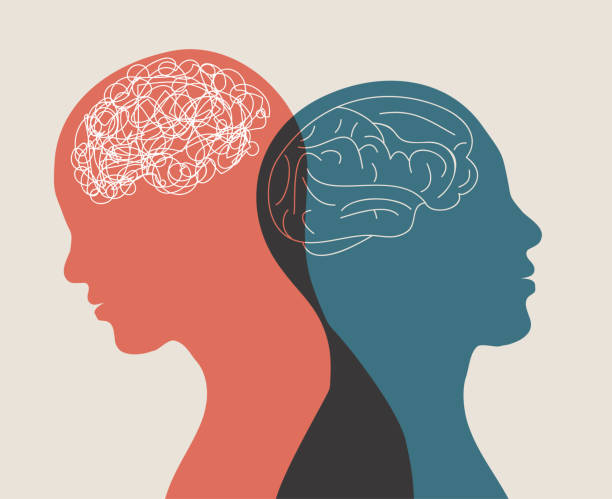
Every January, the modern world becomes obsessed with reinvention. Vision boards are created, resolutions are announced, productivity apps surge in downloads, and motivation peaks—briefly. And yet, by February, enthusiasm fades. Psychologists have long studied this phenomenon, noting that abrupt, individualistic goal-setting often clashes with how the human mind actually adapts to change (Baumeister & Tierney, 2011).
Long before planners, self-help books, or motivational podcasts existed, Indian culture developed a quieter, more sustainable approach to renewal—seasonal festivals rooted in nature, community, and psychology. Festivals such as Makar Sankranti, Pongal, and Lohri were not merely celebrations; they were ritualized mental resets, embedded into everyday life.
These harvest festivals, celebrated across different regions of India, mark transitions—of seasons, of light, of labor, and of emotional states. Without naming it, they addressed core psychological needs: closure, gratitude, hope, belonging, and meaning. In many ways, they functioned as ancient equivalents of modern mental health practices, offering renewal not through pressure, but through rhythm.
Read More: Sleep and Mental Health
The Human Need for Ritualized New Beginnings
Psychologically, humans struggle with ambiguity and prolonged uncertainty. The mind seeks markers—clear “before” and “after” moments—to process change. Research in cognitive psychology shows that temporal landmarks (meaningful points in time) help people psychologically separate past failures from future intentions (Dai, Milkman, & Riis, 2014).
Modern society relies heavily on one such landmark: January 1st. But ancient cultures understood something crucial—the human psyche benefits from multiple resets, spaced across the year, tied to natural cycles rather than abstract calendars.
Indian harvest festivals served this function. They aligned renewal with observable environmental change—the movement of the sun, the harvesting of crops, the end of winter. This alignment grounded psychological transitions in physical reality, making them more believable and emotionally effective.
Makar Sankranti
Makar Sankranti marks the sun’s transition into Capricorn and the beginning of Uttarayan, the northward journey of the sun. Symbolically, it represents a movement away from darkness toward light, warmth, and growth.
From a psychological perspective, this festival embodies cognitive reframing—the ability to reinterpret circumstances in a more hopeful or constructive way (Gross, 2015). The external world may still be cold and challenging, but the direction has changed. This subtle shift matters deeply to the human mind.

Unlike modern goal-setting, which emphasizes immediate transformation, Sankranti honors gradual progress. The days grow longer slowly. Change is not instant; it is directional. Research in behavioral psychology suggests that people are more likely to persist when they perceive improvement as a process rather than a sudden leap (Duckworth et al., 2007).
Even rituals associated with Sankranti—such as flying kites—carry psychological symbolism. Kites rise with effort, balance, and wind resistance, mirroring how growth requires cooperation between personal agency and external conditions.
Sankranti teaches a powerful lesson: a new beginning does not require a perfect start—only a meaningful turn.
Pongal
Pongal, celebrated predominantly in Tamil Nadu, is a four-day harvest festival centered on gratitude—to the sun, the earth, animals, and community. Its central ritual involves cooking freshly harvested rice until it overflows, symbolizing abundance.

In positive psychology, gratitude is one of the most well-researched protective factors for mental health. Studies show that gratitude practices improve emotional regulation, reduce depressive symptoms, and enhance overall life satisfaction (Emmons & McCullough, 2003).
What makes Pongal psychologically profound is that gratitude is not treated as an internal mindset alone, but as a collective, embodied ritual. Gratitude is cooked, shared, sung, and witnessed. This externalization strengthens its emotional impact, as social reinforcement deepens meaning (Fredrickson, 2001).
Modern culture often frames gratitude as something to practice despite scarcity. Pongal does the opposite—it celebrates surplus openly, without guilt. This nurtures what psychologists call an abundance mindset, counteracting the chronic scarcity thinking that fuels anxiety and burnout (Mullainathan & Shafir, 2013).
By pausing agricultural labor to give thanks, Pongal reinforces a crucial psychological boundary: productivity must be followed by acknowledgment. Without this pause, effort becomes exploitation—of land and of self.
Lohri
While Sankranti emphasizes direction and Pongal highlights gratitude, Lohri—celebrated in North India—focuses on closure. Marked by communal bonfires, Lohri symbolizes the end of winter’s harshness and the letting go of the old.
Psychologically, endings are as important as beginnings. Research shows that unresolved emotional experiences linger in the mind, consuming cognitive resources and increasing stress (Zeigarnik, 1927). Ritualized closure helps the brain process completion and prepare for new phases.
The Lohri bonfire serves as a form of symbolic catharsis. People throw offerings into the fire, sing, dance, and gather warmth together. Fire, across cultures, represents purification and transformation. From a neuropsychological standpoint, such multisensory rituals—movement, heat, sound—activate the parasympathetic nervous system, reducing stress and promoting emotional release (Porges, 2011).

Importantly, Lohri is communal. Emotional release is not private or hidden; it is shared. This collective processing reduces isolation, a key factor in psychological distress (Holt-Lunstad et al., 2015).
Lohri reminds us that new beginnings fail without conscious endings. One cannot move forward while emotionally holding on to what has already burned out.
Community
One of the most striking psychological differences between traditional festivals and modern self-improvement culture is community involvement.
Today’s personal development narrative is highly individualistic: your goals, your mindset, your discipline. In contrast, harvest festivals distribute emotional labor across communities. Joy, gratitude, hope, and closure are not solitary tasks; they are shared experiences.
Social psychology consistently shows that belongingness is a fundamental human need (Baumeister & Leary, 1995). Festivals create predictable opportunities for social bonding, strengthening trust and emotional safety. These shared rituals act as buffers against stress, especially during times of environmental or economic uncertainty.
In this sense, Indian festivals functioned as preventive mental health systems, not reactive ones. They normalized rest, celebration, and emotional expression before breakdown occurred.
Seasonal Living vs. Linear Hustle
Another psychological insight embedded in these festivals is the acceptance of cyclical living. Modern productivity culture operates linearly—more growth, more output, endlessly. Nature does not function this way, and neither does the human nervous system.
Harvest festivals acknowledge effort, reward, rest, and renewal as recurring phases. This aligns with contemporary research on burnout, which emphasizes the importance of recovery cycles for sustained performance (Maslach & Leiter, 2016).
By synchronizing human effort with seasonal rhythms, these traditions reduced chronic stress and preserved long-term wellbeing. They taught people when to work hard—and when to stop.
Ancient Wisdom, Modern Relevance
It is tempting to romanticize the past, but the relevance of these festivals is not nostalgia—it is psychological alignment. In an era marked by burnout, anxiety, and disconnection, the principles embedded in Sankranti, Pongal, and Lohri feel urgently necessary.
They offer an alternative framework for renewal:
- Change as direction, not pressure
- Growth rooted in gratitude, not guilt
- Beginnings supported by endings
- Healing experienced collectively, not alone
Before vision boards and productivity hacks, there were rituals that understood the human mind intuitively. They did not promise transformation overnight. They promised continuity, meaning, and balance.
Perhaps the question is not how to invent better self-help tools—but how to remember what we already knew.
References
Baumeister, R. F., & Leary, M. R. (1995). The need to belong: Desire for interpersonal attachments as a fundamental human motivation. Psychological Bulletin, 117(3), 497–529.
Baumeister, R. F., & Tierney, J. (2011). Willpower: Rediscovering the greatest human strength. Penguin Press.
Dai, H., Milkman, K. L., & Riis, J. (2014). The fresh start effect: Temporal landmarks motivate aspirational behavior. Management Science, 60(10), 2563–2582.
Duckworth, A. L., Peterson, C., Matthews, M. D., & Kelly, D. R. (2007). Grit: Perseverance and passion for long-term goals. Journal of Personality and Social Psychology, 92(6), 1087–1101.
Emmons, R. A., & McCullough, M. E. (2003). Counting blessings versus burdens: An experimental investigation of gratitude and subjective well-being in daily life. Journal of Personality and Social Psychology, 84(2), 377–389.
Fredrickson, B. L. (2001). The role of positive emotions in positive psychology: The broaden-and-build theory of positive emotions. American Psychologist, 56(3), 218–226.
Gross, J. J. (2015). Emotion regulation: Current status and future prospects. Psychological Inquiry, 26(1), 1–26.
Holt-Lunstad, J., Smith, T. B., Baker, M., Harris, T., & Stephenson, D. (2015). Loneliness and social isolation as risk factors for mortality. Perspectives on Psychological Science, 10(2), 227–237.
Maslach, C., & Leiter, M. P. (2016). Understanding the burnout experience. World Psychiatry, 15(2), 103–111.
Mullainathan, S., & Shafir, E. (2013). Scarcity: Why having too little means so much. Times Books.
Porges, S. W. (2011). The polyvagal theory: Neurophysiological foundations of emotions, attachment, communication, and self-regulation. Norton.
Zeigarnik, B. (1927). On finished and unfinished tasks. Psychologische Forschung, 9(1), 1–85.
Subscribe to PsychUniverse
Get the latest updates and insights.
Join 3,088 other subscribers!
Niwlikar, B. A. (2026, January 14). Psychology of New Beginnings in Indian Traditions Through 3 Important Festivals. PsychUniverse. https://psychuniverse.com/psychology-of-new-beginnings/