Let’s be honest: Christmas traditions are weird.
We drag trees into our houses.
We hang shiny objects on them.
We eat far too much food on a specific day.
We listen to the same songs every year and somehow still know all the lyrics.
And yet—if one of these traditions doesn’t happen, something feels off.
That’s because Christmas traditions aren’t just cute customs. They’re deeply psychological rituals that support our emotional well-being, strengthen relationships, reduce anxiety, and help us make sense of time, identity, and belonging.
As psychologist Barbara Fiese puts it:
“Rituals are powerful because they transform ordinary moments into meaningful experiences.”
So why do these rituals matter so much—and why does missing them feel like losing a piece of the holiday itself?
Let’s unwrap the psychology behind Christmas traditions
Read More: Teenagers and Risk
1. Rituals Give Our Brains a Sense of Order
Life is unpredictable. Christmas traditions are not.
When the world feels chaotic, rituals provide structure and predictability, which the human brain finds deeply comforting. From a psychological perspective, predictability reduces uncertainty—and uncertainty is one of the biggest triggers of anxiety.
Anthropologist Dimitris Xygalatas explains:
“Rituals exist because they give people a sense of control in situations where they might otherwise feel powerless.”
Every repeated Christmas tradition—whether it’s opening presents in a specific order or watching the same movie every year—signals to the brain: You know this. You’re safe here. This is why people cling to traditions especially tightly during stressful years. The ritual itself becomes an emotional anchor.
2. Christmas Traditions Are Emotional Regulators
Christmas isn’t always happy. It’s often emotional, intense, nostalgic, and overwhelming. Rituals help regulate these emotions. Psychological research shows that ritualized behaviors reduce emotional distress, even when the rituals have no practical function. The symbolic meaning is what matters.
Psychologist Francesca Gino notes:
“Rituals can help people cope with anxiety, loss, and uncertainty by providing emotional structure.”
Lighting candles, singing carols, or sitting down to a special meal creates a transition moment—a pause where emotions can settle. These rituals activate calming neural pathways and can increase oxytocin, the hormone associated with bonding and emotional warmth.
In other words: Christmas traditions literally help us feel better.
3. Shared Traditions Strengthen Social Bonds
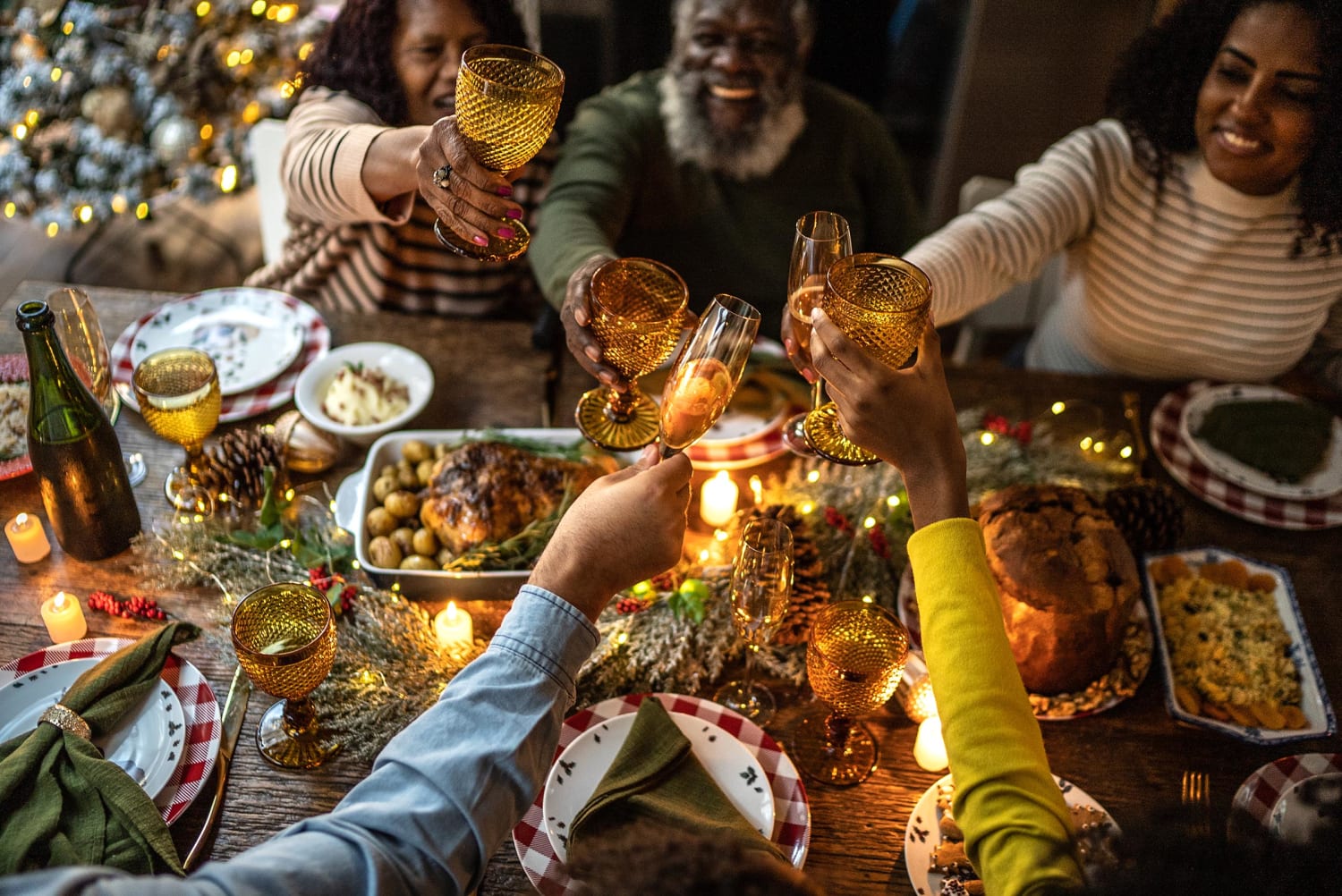
Christmas traditions are rarely solo activities. They’re shared. And shared rituals are incredibly powerful for social bonding. When people perform the same actions together—eating, singing, decorating—their sense of connection deepens. Research in social psychology shows that synchronized behavior increases trust, cooperation, and group cohesion.
Psychologist Harvey Whitehouse explains:
“Collective rituals create a shared emotional experience that binds people together more strongly than ordinary social interaction.”
This is why Christmas dinners matter even when the food is mediocre and the conversations are awkward. The ritual itself reinforces belonging.
You’re not just eating together—you’re participating in something meaningful together.
4. Traditions Satisfy Our Need to Belong
Belonging is a fundamental psychological need. According to Baumeister and Leary’s “belongingness hypothesis,” humans are wired to seek stable, meaningful relationships. Christmas traditions loudly announce:
You are part of this group.
Family traditions, cultural customs, and community celebrations all reinforce social identity. They tell us who we are and where we fit. Psychologist Roy Baumeister writes:
“People are motivated to form and maintain strong, stable interpersonal relationships.”
That motivation is on full display at Christmas—sometimes beautifully, sometimes awkwardly, but always emotionally.
5. Nostalgia
Ah, nostalgia—the emotional MVP of Christmas.
The smell of pine.
The sound of an old carol.
That one decoration that’s been around longer than most family arguments.
Psychologists define nostalgia as a sentimental longing for the past, and research shows it’s surprisingly good for us. Nostalgia has been linked to:
- Improved mood
- Increased self-esteem
- Greater sense of meaning
- Reduced loneliness
Psychologist Constantine Sedikides explains:
“Nostalgia serves a psychological function. It strengthens social bonds and increases feelings of continuity over time.”
Christmas traditions are nostalgia machines. They connect past, present, and future selves in a single moment. You’re not just decorating a tree—you’re remembering who you were, who you are, and who you’re becoming.
6. Traditions Help Us Maintain Identity Over Time
Christmas traditions aren’t just emotional—they’re existential. They answer big questions like:
- Who am I?
- Where do I come from?
- What do I value?
Psychologists argue that rituals help maintain identity continuity, especially during life transitions. Moving away from home, losing loved ones, starting a family—these moments can disrupt our sense of self. Traditions act as identity stabilizers. As psychologist Erik Erikson famously emphasized, identity is shaped through continuity and meaning. Christmas rituals preserve both.
Even when traditions evolve, they still say: This is us.
7. Mindfulness Disguised as Tinsel
Here’s a fun twist: Christmas traditions often function as accidental mindfulness practices. When you’re decorating, baking, or wrapping gifts, you’re:
- focused on the present moment
- engaged in sensory experiences
- temporarily detached from daily stress
Mindfulness research shows that these states reduce stress and improve emotional regulation. Psychologist Jon Kabat-Zinn describes mindfulness as:
“Paying attention on purpose, in the present moment, and without judgment.”
That’s basically what happens when you’re icing cookies and pretending you’re not stressed. Christmas traditions slow time down—even briefly—and that pause matters psychologically.
8. Creativity, Play, and Emotional Expression
Many Christmas traditions involve creativity: decorating, cooking, crafting, writing cards, choosing gifts. Creativity is strongly linked to psychological well-being. It increases feelings of competence, autonomy, and joy. Psychologist Mihaly Csikszentmihalyi, known for his work on “flow,” notes:
“People are happiest when they are actively engaged in meaningful, creative activities.”
Christmas gives adults permission to play—to be silly, imaginative, and expressive. And play isn’t childish; it’s psychologically healthy.
9. Traditions Build Emotional Resilience
For people experiencing grief, loneliness, or stress, Christmas can be painful.
But traditions can also be sources of resilience. Familiar rituals provide comfort, stability, and a sense of continuity when emotions feel overwhelming. Even modified traditions—lighting a candle for someone who’s gone, changing a routine—can help process loss. Psychologist George Bonanno, known for his research on resilience, emphasizes:
“Resilience is not the absence of distress but the ability to adapt meaningfully.”
Traditions offer meaning when words fail.
When Traditions Become Too Much
Of course, not all traditions are helpful. When rituals turn into obligations—when Christmas becomes a performance rather than a connection—they can increase stress. Psychologists warn against rigid traditions that leave no room for flexibility, authenticity, or changing needs.
As family therapist Virginia Satir said:
“Problems are not the problem; coping is the problem.”
Healthy traditions evolve. They should support well-being, not drain it.
Why Christmas Traditions Matter
Christmas traditions matter because humans are meaning-making creatures.
We don’t just celebrate—we ritualize.
We don’t just gather—we belong.
We don’t just remember—we connect across time.
In a world that changes fast, traditions remind us of what stays. So whether your Christmas includes grand feasts, quiet rituals, chosen family, or entirely new traditions—if it feels meaningful, your brain approves.
And honestly? That’s worth celebrating.
References
Baumeister, R. F., & Leary, M. R. (1995). The need to belong: Desire for interpersonal attachments as a fundamental human motivation. Psychological Bulletin, 117(3), 497–529.
Bonanno, G. A. (2004). Loss, trauma, and human resilience. American Psychologist, 59(1), 20–28.
Csikszentmihalyi, M. (1990). Flow: The psychology of optimal experience. Harper & Row.
Erikson, E. H. (1968). Identity: Youth and crisis. Norton.
Fiese, B. H. (2006). Family routines and rituals. Yale University Press.
Gino, F., & Norton, M. I. (2013). Rituals alleviate grieving for loved ones. Journal of Experimental Psychology.
Kabat-Zinn, J. (1994). Wherever you go, there you are. Hyperion.
Sedikides, C., Wildschut, T., & Baden, D. (2004). Nostalgia: Conceptual issues and existential functions. Journal of Personality and Social Psychology.
Whitehouse, H. (2018). Ritual and social bonding. Current Anthropology.
Xygalatas, D. (2014). The cognitive science of ritual. Cambridge University Press.
Subscribe to PsychUniverse
Get the latest updates and insights.
Join 3,087 other subscribers!
Niwlikar, B. A. (2025, December 24). The Psychology of Christmas Traditions and 9 Important Reasons Why Traditions Make Us Feel Good. PsychUniverse. https://psychuniverse.com/psychology-of-christmas-traditions/