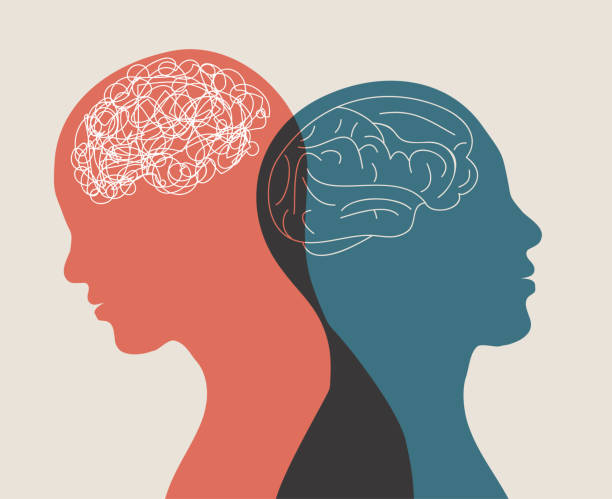
For decades, bilingualism was viewed as a cognitive burden. Teachers and policymakers once believed learning more than one language would confuse children, delay development, and impair academic success. Today, research demonstrates the opposite: bilingualism reshapes the brain in remarkable ways. Far from hindering cognitive growth, speaking multiple languages enhances executive function, creativity, attention control, and problem-solving abilities.
But why does juggling multiple languages strengthen the mind? What happens inside the bilingual brain that results in measurable performance benefits?
Read More: Ragebait
The Bilingual Brain
Unlike monolingual speakers, bilingual individuals must manage two active language systems at all times. Even when speaking only one language, the unused language is not turned off; it remains active in the background (Kroll & Bialystok, 2013). This creates a unique form of cognitive competition.
To navigate this, the brain must:
- Select the appropriate word
- Inhibit the irrelevant language
- Switch when necessary
- Maintain meaning across languages
These processes rely heavily on the executive control network, which includes the prefrontal cortex, anterior cingulate cortex, and basal ganglia.
This constant “mental workout” strengthens these regions, much like regular exercise strengthens muscles.
Executive Function
Executive function refers to the set of cognitive processes responsible for:
- Inhibitory control
- Task switching
- Working memory
- Planning
- Cognitive flexibility
Bilinguals tend to outperform monolinguals in tasks that tap these abilities (Bialystok, 2009; Costa et al., 2009).
1. Inhibitory Control
To speak one language while suppressing another requires strong inhibitory control. This skill transfers to other domains: bilingual individuals are often better at ignoring distractions and focusing on relevant information.
In one classic task—the Stroop test—bilinguals show faster reaction times and greater accuracy. Their brains are trained to manage interference.
2. Cognitive Flexibility
Switching between languages strengthens cognitive flexibility, the ability to adapt to changing rules and contexts. This skill improves:
- Problem solving
- Creativity
- Perspective-taking
- Adaptability under pressure
Children raised bilingual demonstrate earlier development of this ability compared to monolingual peers (Poulin-Dubois et al., 2011).
3. Working Memory
Some studies suggest bilinguals have stronger working memory, particularly when tasks involve verbal information (Engel de Abreu, 2011). Managing two language systems may expand the brain’s capacity to temporarily hold and manipulate information.
Bilingualism and Problem-Solving
Some ways in which bilingualism affects problem solving includes:
1. Improved Divergent Thinking
Divergent thinking—the ability to generate multiple solutions to a problem—is enhanced in bilingual individuals. This may stem from their experience selecting among several linguistic expressions to convey a single idea.
Studies show bilinguals perform better on tasks such as:
- Generating alternate uses for common objects
- Creative storytelling
- Open-ended reasoning tasks
2. Enhanced Metalinguistic Awareness
Bilinguals develop a stronger awareness of language structure, meaning they understand language as a system rather than just a tool. This awareness aids in problem-solving tasks that require:
- Abstract thinking
- Symbolic reasoning
- Pattern recognition
3. Better Social Problem-Solving
Because bilinguals often navigate multiple cultural contexts, they may develop more nuanced social reasoning. Research suggests they demonstrate more advanced theory-of-mind abilities (Kovács, 2009), which improves conflict resolution and interpersonal problem-solving.
Neurological Changes
Neuroimaging studies reveal structural and functional changes in the bilingual brain.

1. Gray Matter Density
Bilinguals show increased gray matter density in:
- Left inferior parietal lobule
- Dorsolateral prefrontal cortex
- Anterior cingulate cortex
These regions support executive control, attention, and working memory (Mechelli et al., 2004).
2. Enhanced White Matter Integrity
White matter facilitates communication between brain regions. Bilingualism appears to preserve its integrity, especially in older adults (Luk et al., 2011). This contributes to sustained cognitive health.
3. More Efficient Neural Processing
Even when bilinguals perform at the same level as monolinguals, their brains often use fewer neural resources, indicating greater efficiency (Grady et al., 2015).
The Delayed Onset of Cognitive Decline
One of the most striking findings in bilingual research is its protective effect on aging. Bilingualism is associated with a delayed onset of dementia symptoms by an average of 4–5 years (Bialystok, Craik, & Freedman, 2007).
This effect is attributed to cognitive reserve—the brain’s resilience built through lifelong mental engagement.
The continuous practice of switching languages strengthens neural networks the brain can later rely on to compensate for age-related deterioration.
Challenges and Misconceptions
While bilingualism has cognitive advantages, it is not without complexity.
1. The Temporary “Lag” Myth
Some bilingual children show slight temporary delays in vocabulary in each language. But total vocabulary across both languages is often equal or greater than monolingual peers (Pearson et al., 1993).
2. Not All Bilingual Experiences Are Equal
Cognitive outcomes depend on:
- Age of acquisition
- Frequency of use
- Context
- Proficiency
Early, balanced bilingualism tends to produce the strongest cognitive effects, but late learners see benefits as well.
Conclusion
Bilingualism is more than a communication skill—it is a cognitive asset that reshapes the brain’s architecture and enhances problem-solving abilities. From stronger executive function to improved creativity and delayed cognitive decline, its benefits extend across the lifespan.
As globalization increases and multilingualism becomes more common, understanding the cognitive advantages of bilingualism becomes not only scientifically relevant but socially important. Far from being a developmental hindrance, bilingualism is one of the most powerful tools for cognitive flexibility in a complex world.
References
Bialystok, E. (2009). Bilingualism: The good, the bad, and the indifferent.
Bialystok, E., Craik, F., & Freedman, M. (2007). Bilingualism as a protection against the onset of dementia.
Costa, A., Hernández, M., & Sebastián-Gallés, N. (2009). Bilingualism aids conflict resolution.
Engel de Abreu, P. (2011). Working memory in bilingual children.
Grady, C. et al. (2015). Neural efficiency in bilingual adults.
Kovács, Á. (2009). Early bilingualism enhances cognitive control.
Kroll, J., & Bialystok, E. (2013). Understanding the bilingual mind.
Luk, G. et al. (2011). Lifelong bilingualism maintains white matter integrity.
Mechelli, A. et al. (2004). Structural plasticity in the bilingual brain.
Pearson, B., Fernández, S., & Oller, D. (1993). Lexical development in bilingual infants.
Poulin-Dubois, D. et al. (2011). Bilingualism and cognitive flexibility.
Subscribe to PsychUniverse
Get the latest updates and insights.
Join 3,085 other subscribers!
Niwlikar, B. A. (2025, December 11). 3 Important Ways Bilingualism Changes the Brain. PsychUniverse. https://psychuniverse.com/bilingualism/