Introduction
We’ve all been there: you walk out of a meeting or a social gathering convinced you made a great impression—only to later discover that others thought differently. Or you think you expressed empathy clearly, but the recipient feels unheard. Such mismatches between how we think we are coming across and how others actually perceive us are more common than you might imagine. In psychology, one way of framing this is through what I’ll call the “perception gap”: the difference between our self‐view (or our view of others) and how others view us (or themselves). Understanding this gap can sharpen selfawareness, improve communication, and deepen social connection.
Read More: Attention and Notification
What Is the Perception Gap?
The perception gap refers broadly to the divergence between the way a person views a situation, behaviour, or identity, and the way others view that same person, situation or behaviour. In simpler terms: “How I see me (or you) vs. How you (or others) see me (or you).”
For example: in a recent longitudinal study of undergraduate students (N = 5,192), researchers found that students who perceived their peers as more empathic reported higher well-being and more friendships—but the students consistently underestimated how empathic their peers thought they were themselves. The authors term this an “empathy perception gap.” (Pei et al., 2025)
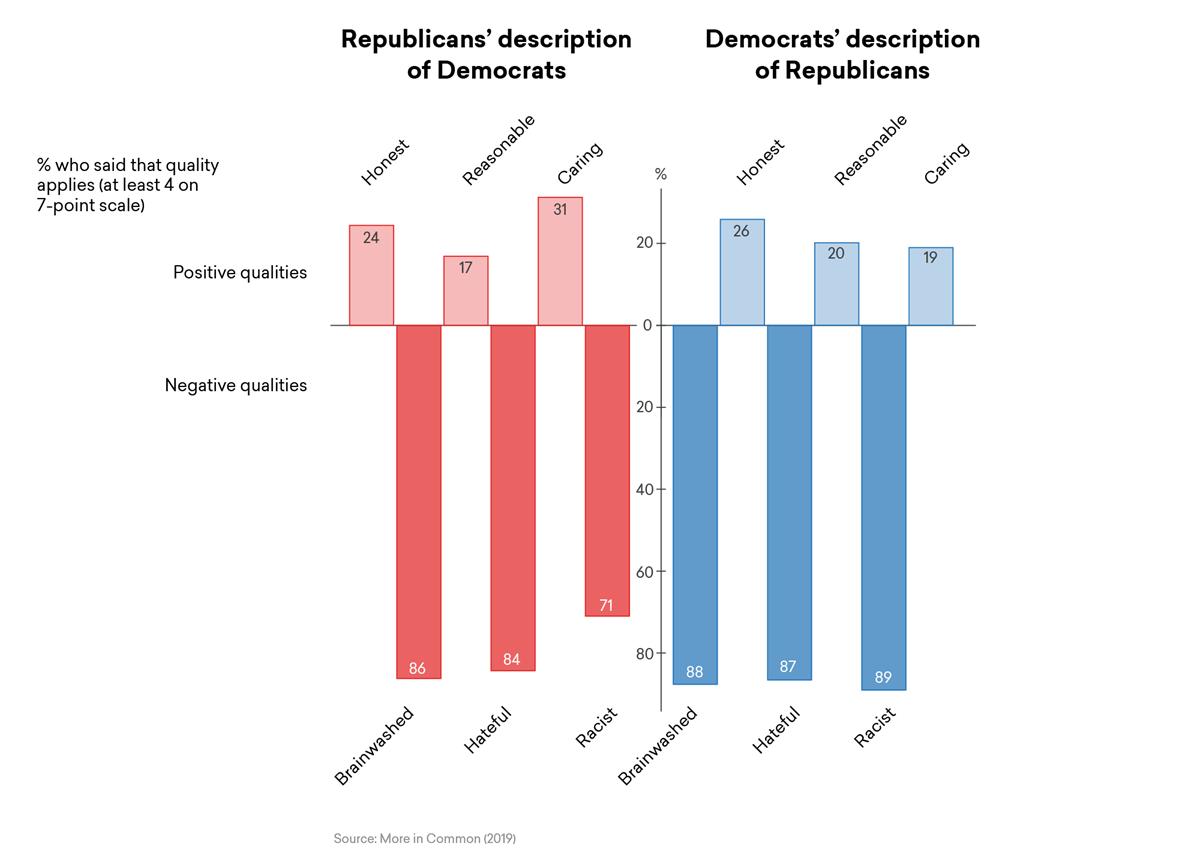
Thus there is a documented gap: people systematically see others as less empathic than the others see themselves. (Pei et al., 2025)
In addition, classic social-psychology research on empathy gaps (e.g., Van Boven & Loewenstein, 2005) notes that people struggle to estimate how others feel or how they themselves will feel in different states—a related phenomenon of “hot-cold empathy gap”.
Why Does This Gap Matter?
The perception gap is far from trivial. It has implications in multiple domains:
Social connection and well-being
In the study mentioned above, students who viewed their peers as more empathic (even if the peers rated themselves as such) had better current and future psychological well-being. Feeling that others are empathic builds trust, increases willingness to be vulnerable, and thus fosters deeper connection. (Pei et al., 2025)
But because individuals underestimate others’ empathy, they may withdraw or fail to seek support—even when support is available. That self-limiting belief undermines relationships and mental health.
Communication and misunderstanding
When you believe you’ve communicated clearly but the other person forms a different impression, that gap can lead to conflict, disengagement or frustration. In professional settings, a perception gap between leadership and employees (for instance, about empathy, transparency or responsiveness) may lead to lower morale, lower trust and mis-aligned expectations.
Identity, self-presentation and blind spots
Our self-view includes our intentions, values and motives—but others only observe our actions and expressions. The difference between our internal map and the external territory often creates blind spots. We may assume “They know I meant well,” while others view the impact differently.
When we ignore the perception gap, we risk assuming that no one cares or understands us—and yet the reality might be that others did care or tried to reach—but we missed the signal.
Organisational and societal scale
On a larger scale, perception gaps contribute to polarization. If groups believe the “other side” misunderstands them, they may draw back, harden stances, or fail to engage. Mis-perceptions about others’ intentions, values or feelings feed mis-trust.
In sum, narrowing the perception gap helps interpersonal functioning, mental health, team cohesion, and social harmony.
What Drives the Perception Gap?
Several psychological processes underlie why we don’t align how we see ourselves (or others) with how others see us (or themselves).

Cognitive biases & projection
We tend to assume others think like us, feel like us, and share our intentions (social projection). When they don’t, we may attribute the difference to flaws in them rather than flaws in our assumptions. (Van Boven & Loewenstein, 2005)
Moreover, we focus on our intentions rather than our impact. We know why we acted; others only see what we did. That disparity produces mis‐alignment.
Limited or opaque feedback
Often we receive little direct, honest feedback about how we come across. Without that data, we fill in the gaps with assumptions. Also, the feedback we do receive may be filtered by politeness, social desirability, or misunderstandings.
Different vantage points
Each person inhabits their own mental state, background, mood, culture, and context. What seems clear to us might be opaque to them. For instance, we know what we intended; they don’t. So our internal map differs from their external view.
Research on empathy gaps shows that people struggle to appreciate how another person’s visceral state (e.g., hunger, stress, fatigue) skews their reactions. (Van Boven & Loewenstein, 2005)
Ambiguity of social signals
Non-verbal cues, tone, timing, context matter. We may think we mouthed the right words, but cues such as posture or expression may send a different signal. Others interpret based on their own filter. That layered complexity introduces noise and increases the gap.
How to Narrow the Perception Gap
Bridging this gap is possible—with deliberate effort, reflection, and feedback culture. Here are practical strategies:
Solicit honest feedback
Ask trusted peers, colleagues or friends: “How did my comment come across today?” “Would you say I seemed open or defensive?” Make space for honest input and listen without defending. Feedback gives you data on how others see you.
In organisational settings, this can be built into culture (360 feedback, peer reviews, open-check-ins).
Clarify intentions and check impact
Sometimes we assume our intention is clear. But intention alone doesn’t guarantee perception. It helps to share: “I’m saying this because…” or “My intention here is…” Then follow up by asking: “Did it come across that way?”
This simple step aligns internal map with external view by surfacing the intention and tracking reception.
Enhance perspective‐taking
Put yourself in the other person’s shoes: What cues are they attending to? What context do they bring? What might distract or bias them?
Research on empathy interventions shows mixed but promising results—but even simple efforts to consider another’s vantage help reduce surprise and mis‐reading. (Behler et al., 2022)
Increase diversity & challenge echo-chambers
We are often surrounded by people who think like us. That reduces exposure to alternative perceptions and reinforces our self-view. Engage with people whose viewpoints differ; ask them how they see you, or how they interpret your behaviour.
This broadens your calibration of how you’re perceived in different contexts.
Build feedback loops & reflection
After key interactions (meetings, talks, conversations) reflect: “How did I think it went? How did the other side behave? What signals did they send? Was there a mismatch?” Over time you build a mental library of alignments and mis‐alignments which increases your self‐awareness.
In a team context, schedule regular de-briefs and invite open conversation about perception, communication and alignment.
Real‐World Examples
Workplace scenario: A manager assumes her open-door policy signals approachability but notices team members avoid her. She asks the team: “When you come in, do you feel safe raising concerns?” The feedback: the door is open physically but her posture and tone feel rushed, making them hesitate. By clarifying her intention (“I want to hear your concerns; I’m here for you”) and adjusting her posture (sitting down, using slower pace), she closed part of the gap.
Personal relationship scenario: You tell your partner “I’m fine” when you’re not. You believe you communicated that you’ll talk later. Your partner perceives you as shutting them out. The gap arises because your internal map (I’ll talk later) didn’t translate into external signal (closed body, short tone). By saying explicitly “I’m stressed, I’ll come back in ten minutes, thanks for waiting” you reduce ambiguity and align perception.
Challenges & Limitations
It’s worth noting some caveats:
-
Feedback is rarely perfect. People filter what they say; suffer-fear of hurting you, politeness, or their own biases. So feedback is valuable, but you must evaluate it critically.
-
Not all perception gaps can be eliminated. People’s perceptions are colored by their mood, bias, fatigue, culture, context. You may align your behaviour, but others still interpret through their lens.
-
Overfocusing on how you’re perceived can lead to anxiety, self-monitoring, or in‐authenticity. The goal is not perfection, but alignment awareness.
-
Research on interventions is still developing. For example, empathy‐enhancing training shows promise but modest impact. (Behler et al., 2022)
Conclusion
We often assume that “how I see myself” is roughly the same as “how others see me.” But the perception gap reminds us that the map is not the territory—and others have different vantage points.
Recognising the gap is the first step; soliciting feedback, clarifying intentions, broadening perspectives and reflecting regularly are the next.
By doing so, we close the gap not to please others, but to connect more genuinely, communicate more clearly, and live with greater self-awareness.
References
Behler, A. M. C., et al. “Closing the empathy gap: A narrative review.” Social and Personality Psychology Compass, vol. 16, no. 9, 2022.
Pei, R., et al. “Bridging the empathy perception gap fosters social connection.” Nature Human Behaviour, 2025.
Van Boven, L., & Loewenstein, G. “A dual judgment model of empathy gaps in emotional perspective taking.” Personality and Social Psychology Bulletin, 2005.
Subscribe to PsychUniverse
Get the latest updates and insights.
Join 3,088 other subscribers!
Niwlikar, B. A. (2025, November 27). The Perception Gap and 4 Important Reasons Why It Matters. PsychUniverse. https://psychuniverse.com/perception-gap/