
Mental Health

Self-Optimization

Self Optimisation: 4 Powerful Mechanisms Driving It

Self optimisation has become a defining feature of contemporary culture. In a society obsessed with productivity, performance, and progress, improving oneself is no longer optional—it is expected. We track sleep, monitor habits, set measurable goals, and consume endless advice on how to be our best selves. At its best, self optimisation fosters mastery, growth, and […]

Self Optimisation: 4 Powerful Mechanisms Driving It Read More »
pain

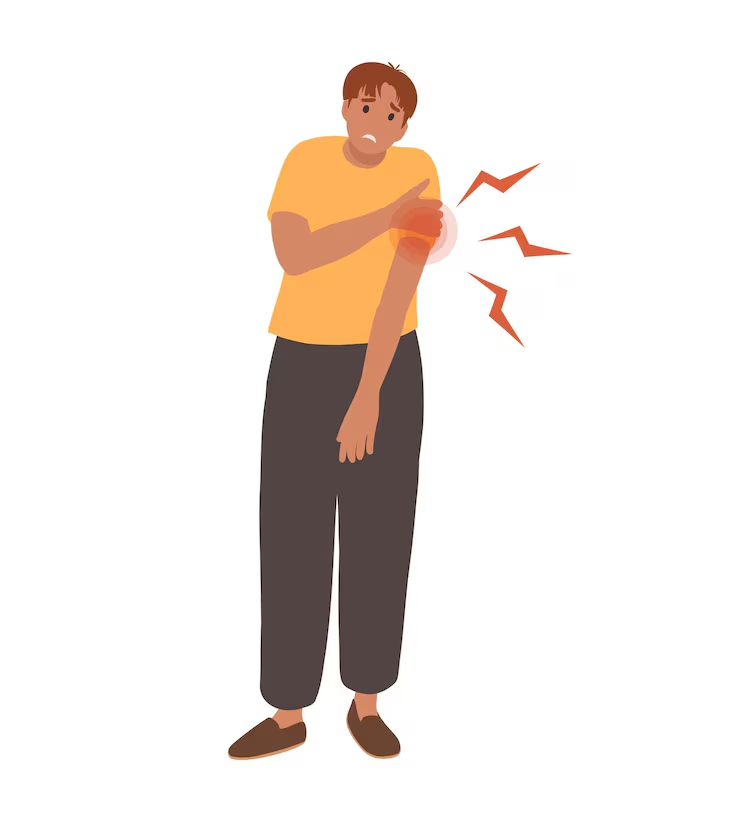
Why We Remember Pain Differently Than Pleasure and 4 Important Ways to Establish Balance

Introduction Think back to a time you stubbed your toe, went through heartbreak, or received devastating news. Now recall a moment of pure joy — a delicious meal, a celebration, a beautiful sunset.Which memory feels more vivid?Chances are, the pain stands out more sharply. This imbalance is no accident of memory; it’s a feature of

Why We Remember Pain Differently Than Pleasure and 4 Important Ways to Establish Balance Read More »

empathy

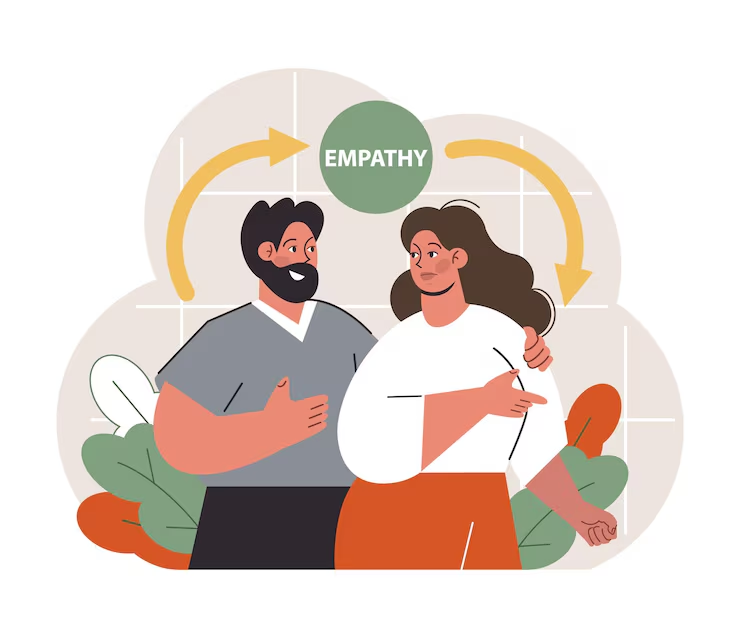
The Empathy Paradox and 4 Important Ways to Use it as a Renewable Resource

Empathy is often hailed as the glue of human connection — the ability to feel and understand what others are going through. We tell our children to be empathetic, train healthcare workers to practice empathy, and praise political leaders who appear to “feel our pain.” Yet, paradoxically, too much empathy can sometimes make us less

The Empathy Paradox and 4 Important Ways to Use it as a Renewable Resource Read More »

notification

The Cognitive Cost of Notifications and 5 Important Strategies to Reclaim Attention

Introduction You’re working on an important project, lost in thought — and then ding! A message pops up. You glance at it, decide it’s nothing urgent, and return to work. But something’s changed. You’ve lost your rhythm, your flow, and your train of thought. This everyday experience illustrates a powerful, invisible phenomenon shaping the modern

The Cognitive Cost of Notifications and 5 Important Strategies to Reclaim Attention Read More »

creativity

The Psychology of Creativity and 3 Important Networks of Creativity

Introduction We often think of creativity as lightning—sudden, unpredictable, and uncontrollable. The myth of the “creative genius” suggests that only a few gifted minds are capable of producing great ideas, while the rest of us merely admire them. Yet modern psychology paints a different picture. Creativity isn’t a mysterious gift—it’s a process rooted in the

The Psychology of Creativity and 3 Important Networks of Creativity Read More »

overthinking

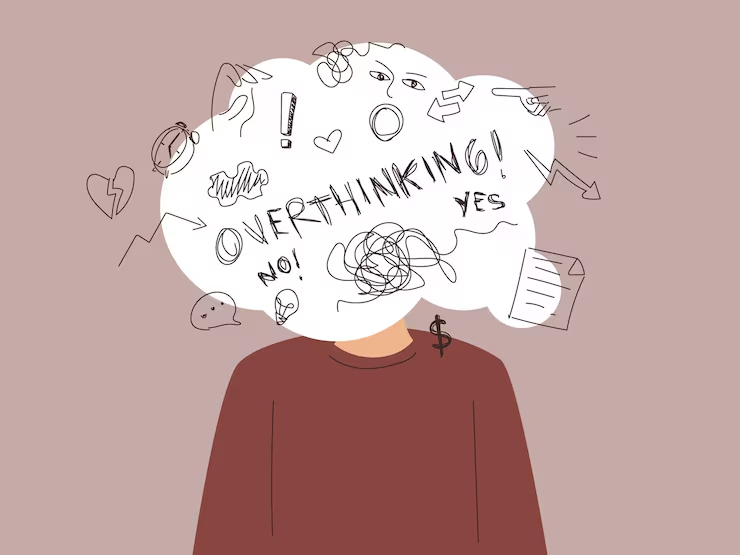
The Science of Overthinking and 3 Important Cognitive Mechanisms of It

Introduction It’s 2 a.m., and your mind is still replaying that awkward conversation from earlier. You know it’s pointless, but your brain refuses to stop spinning. This cycle of relentless thought, often called overthinking or rumination, is a mental trap that countless people experience. It’s not just a bad habit—it’s a deeply ingrained psychological pattern

The Science of Overthinking and 3 Important Cognitive Mechanisms of It Read More »

quiet breakup

The Quiet Breakup and 5 Important Reasons Why Emotional Detachment Happen

When we think about breakups, we tend to imagine dramatic endings: shouting matches, tearful farewells, or the sudden sting of rejection. But many relationships end in silence — not with a bang, but with a fade. One or both partners slowly disengage, emotionally retreating long before anyone says the words “it’s over.” This phenomenon, often

The Quiet Breakup and 5 Important Reasons Why Emotional Detachment Happen Read More »

silent decision

The Psychology of Silent Decisions and 5 Important Mechanisms Behind Inaction

Most of us imagine decision-making as a loud, active process — weighing options, making choices, taking bold action. Yet much of our psychological life is shaped not by the decisions we make, but by the ones we don’t. The moments of inaction, the deferred choices, the unmade moves — these “silent decisions” are everywhere. Whether

The Psychology of Silent Decisions and 5 Important Mechanisms Behind Inaction Read More »

LOADING BAR

The “Loading Bar” Effect and 4 Mechanisms That Control It

Introduction Picture yourself waiting for a download to complete. A thin bar creeps from left to right—10 %, 25 %, 50 %, 100 %. Even though nothing else has changed, you feel more at ease simply because you can see progress. This simple psychological reaction illustrates what we might call the “Loading Bar Effect.” Humans

The “Loading Bar” Effect and 4 Mechanisms That Control It Read More »

silence

The Psychology of Silence and 3 Important Benefits of It

Introduction Our world prizes constant communication—meetings, notifications, online chatter. Yet research suggests that silence, rather than speech, often yields deeper thought, empathy, and composure. The psychology of silence reveals that pausing can enhance mental health, strengthen relationships, and foster creativity. Read More: Sleep and Mental Health Defining Silence Silence is more than the absence of

The Psychology of Silence and 3 Important Benefits of It Read More »

Scroll to Top